
 English
 Français
Article Overview: This guide helps procurement managers and sourcing teams prepare for supplier evaluation and RFQ in the packaging machinery market. It covers key decision criteria, validation steps, common pitfalls, and how to structure your request for quotation to achieve the optimal balance of cost, throughput, and quality.
What Should You Validate Before Sending an RFQ for Packaging Machinery?
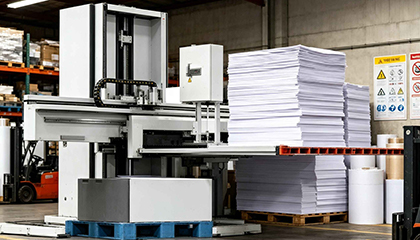
Before issuing an RFQ, high-intent buyers must verify that their internal requirements are clearly defined and that potential suppliers can meet those needs. The following procurement checkpoints help reduce the risk of misalignment and costly change orders later in the project.
- Production throughput targets – Define your required output per shift or per hour. Ask suppliers to confirm cycle times and changeover speeds under realistic conditions.
- Material compatibility – Specify the exact substrates (paper, film, corrugated board) and dimensions you will process. Packaging machinery must handle your material range without frequent adjustments.
- Integration with existing lines – Assess how the new equipment will connect to upstream and downstream processes. For example, a paper unloader or stack turner may need to match conveyor heights and control protocols.
- Quality specifications – Establish acceptable tolerances for cut accuracy, register variation, or seal integrity. Request documented quality data from reference installations.
- Service and spare parts availability – Verify the supplier's local service network and parts inventory. Ask about mean time to repair (MTTR) and typical response times.
These checkpoints form the basis for a targeted RFQ that yields comparable bids. Without them, you risk receiving proposals that cannot be evaluated side by side.
How Do You Balance Cost, Throughput, and Quality in Packaging Lines?
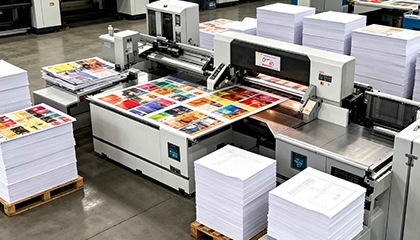
Balancing these three factors requires trade-offs that depend on your operational priorities. For example, a high-speed slitter or rewinder may offer exceptional throughput but demand more frequent maintenance, raising total cost of ownership. Conversely, a slower, more robust machine might deliver higher uptime and consistent quality at a lower purchase price. Procurement teams should evaluate total lifetime cost rather than initial capital expenditure alone.
Consider the following decision criteria when comparing packaging machinery options:
- Cost per produced unit – Include energy consumption, consumables, and operator training in your calculation.
- Throughput versus flexibility – A dedicated high-speed line may be cost-effective for long runs, while modular equipment better suits diverse job mixes.
- Quality consistency – Look for integrated sensors and servo controls that reduce scrap and rework. For instance, intelligent servo systems on paper unloaders can minimize alignment errors.
- Maintenance requirements – Review the supplier's recommended maintenance intervals and the availability of predictive diagnostics.
Using a weighted scoring model against these criteria helps quantify trade-offs and supports a defensible purchase decision.
Which Supplier Capabilities Matter Most for Packaging Machinery?
Supplier evaluation goes beyond the machine specification sheet. Key capabilities to assess include:
- Production capacity and lead time – Evaluate a supplier's production capacity to ensure they can deliver within your project timeline. Look for evidence of scalable manufacturing and inventory management.
- Customization experience – Ask for case studies where the supplier adapted a standard machine to a customer's unique process. For example, custom pile turner configurations for specific paper sizes.
- Quality certifications – Check for ISO 9001, CE marking, or other relevant standards. These indicate systematic quality management.
- Technical support and training – Determine what documentation, on-site commissioning, and operator training the supplier offers. This directly impacts ramp-up speed.
- References from similar applications – Contact references in the same industry segment. Ask about reliability, after-sales support, and actual performance versus promises.
You can find detailed insights on comparing systems and costs in our packaging machinery comparison guide. Additionally, understanding the full range of products available—from paper loaders to cutting machines—helps you identify potential synergies.
What Are Common Pitfalls in Packaging Machinery Procurement?

Even experienced procurement teams can encounter pitfalls that delay projects or inflate costs. Awareness of these risks improves your evaluation process.
- Overlooking total cost of ownership (TCO) – A low purchase price often leads to higher maintenance, energy, or consumable costs. Always request TCO estimates.
- Ignoring line integration complexity – Packaging machinery rarely operates in isolation. For example, a high-speed paper cutting machine requires compatible unloader and stack turner systems to achieve rated throughput. Verify that the entire line is engineered together.
- Underestimating training needs – Complex controls and automation demand skilled operators. Include training costs and time in your implementation plan.
- Inadequate spare parts planning – Long lead times for critical spares can cause costly downtime. Negotiate a recommended spares list and local stock arrangements.
- Failure to test with your own materials – Insist on a trial run with your actual substrates, especially if you use specialty paper or films. This reveals real-world performance.
Avoiding these pitfalls requires disciplined RFQ design and thorough supplier due diligence. Read our article on intelligent packaging machinery automation to see how automation can reduce integration risk.
How to Structure Your RFQ for Packaging Machinery Suppliers
A well-structured RFQ ensures that suppliers provide comparable, actionable proposals. Include the following sections:
- Executive summary – State the project scope, timeline, and budget range.
- Technical specifications – Detail material properties, production rates, quality tolerances, and utility requirements.
- Service expectations – Specify warranty, site acceptance tests, training, and after-sales support.
- Commercial terms – Request a breakdown of purchase price, installation, freight, and duties. Ask for TCO projection over five years.
- Supplier information – Ask for company profile, relevant experience, financial stability, and references. Encourage suppliers to highlight their production capacity solution for your volume.
- Compliance and certifications – Require evidence of safety certifications and environmental compliance.
Using a standardized RFQ format saves time during evaluation and reduces the chance of missing critical data.
FAQ
What is the typical lead time for packaging machinery?
Lead times vary by complexity and supplier workload. Standard machines may ship in 8–12 weeks, while custom configurations can take 16–20 weeks. Always confirm current lead times during RFQ evaluation and consider supplier production capacity as a factor.
Should I prioritize speed or reliability in packaging machinery?
This depends on your production model. For high-volume, low-mix operations, speed may be paramount. For job shops with frequent changeovers, reliability and flexibility often deliver better overall efficiency. Balance both through a total cost of ownership analysis.
How do I compare different suppliers' proposals effectively?
Use a weighted scoring matrix that includes throughput, quality, TCO, service response, and references. Request that suppliers present data in a common format. Our comparison guide offers a structured approach.
What maintenance support should I expect from a packaging machinery supplier?
Expect a maintenance schedule, remote diagnostics capability, and a local service network. Some suppliers offer spare parts kits and training for your maintenance team. Review the paper cutting line maintenance intervals guide for detailed recommendations.
Conclusion
Procuring packaging machinery is a high-stakes investment that demands preparation. By validating your requirements, balancing cost-throughput-quality trade-offs, evaluating supplier capabilities, and structuring a clear RFQ, you reduce implementation risk and position your project for success. Use the checkpoints and questions in this guide during supplier meetings and before signing any contract. For further assistance, explore our technology innovation page to understand how modern controls and automation can improve line performance.
Related site pages: Home, Company, About Hpm, Sustainability, Certificates, Paper Cutting Machine.