
 English
 Français
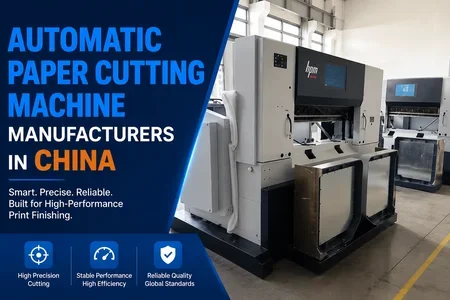
The packaging industry is undergoing a significant transformation as manufacturers seek to improve efficiency, reduce waste, and maintain precision across increasingly complex production lines. Automation has moved beyond standalone machines into fully integrated systems that manage the entire material flow from paper stacking to final cutting. For technical buyers and operations leaders, understanding how these components work together is essential for making informed investment decisions. This article provides a neutral, evidence-based overview of the key technologies, integration strategies, and operational considerations that define modern packaging machinery automation.
Core Components of an Automated Packaging Line
An automated packaging line for paper and paperboard typically consists of several linked stations: paper unloading, pile turning, alignment, feeding, cutting, and sometimes additional finishing steps. Each station must operate in precise coordination to avoid bottlenecks or quality defects.
Paper unloaders are the first critical component. They receive stacks of paper from pallets and feed them into the production line. Modern intelligent servo system paper stack unloaders, covering sizes from 1050 mm to 1650 mm, use servo-driven mechanisms to control stacking speed and alignment automatically. This reduces the need for manual intervention and minimizes paper damage during transfer.
Pile turners and air alignment tables are often used after unloading to aerate, align, and turn paper stacks. For example, air alignment pile turners with touch screens provide precise alignment through air jets and vibration, preparing the paper for consistent feeding into the cutter. This step is crucial for preventing misaligned cuts and sheet jams.
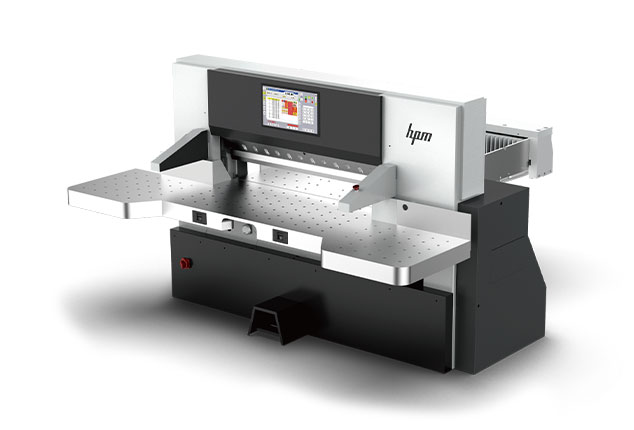
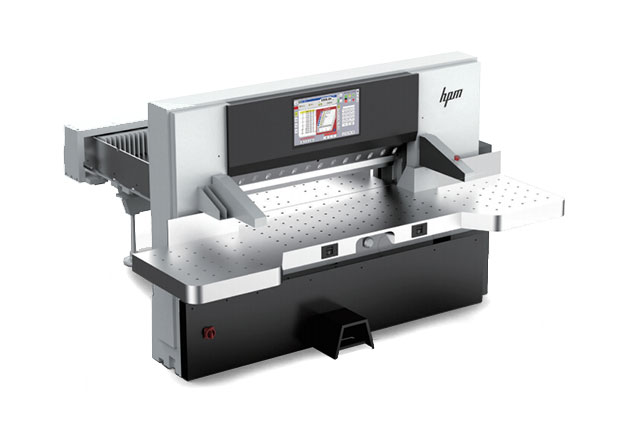
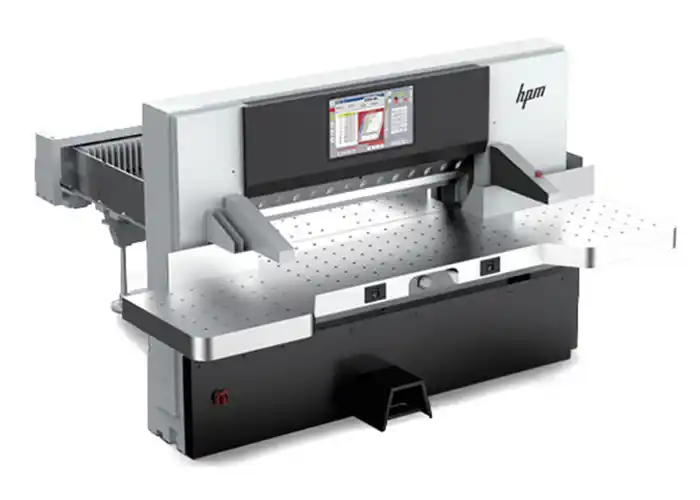
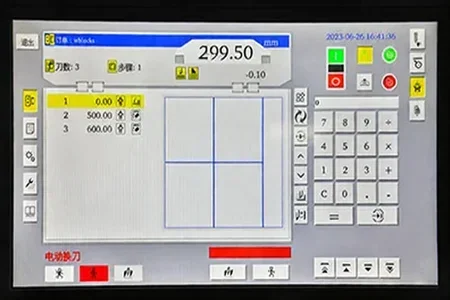
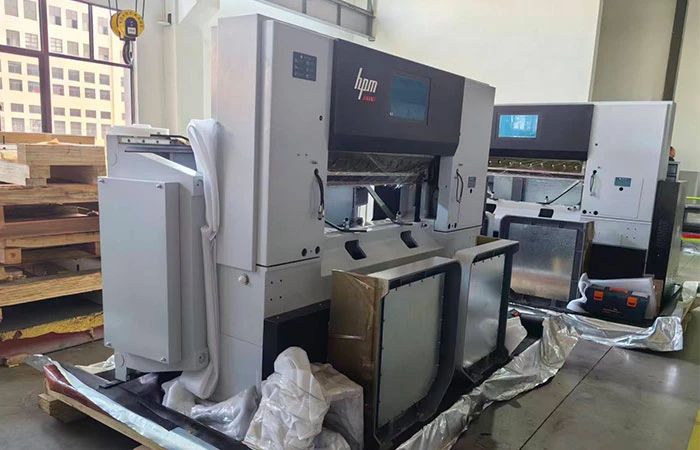
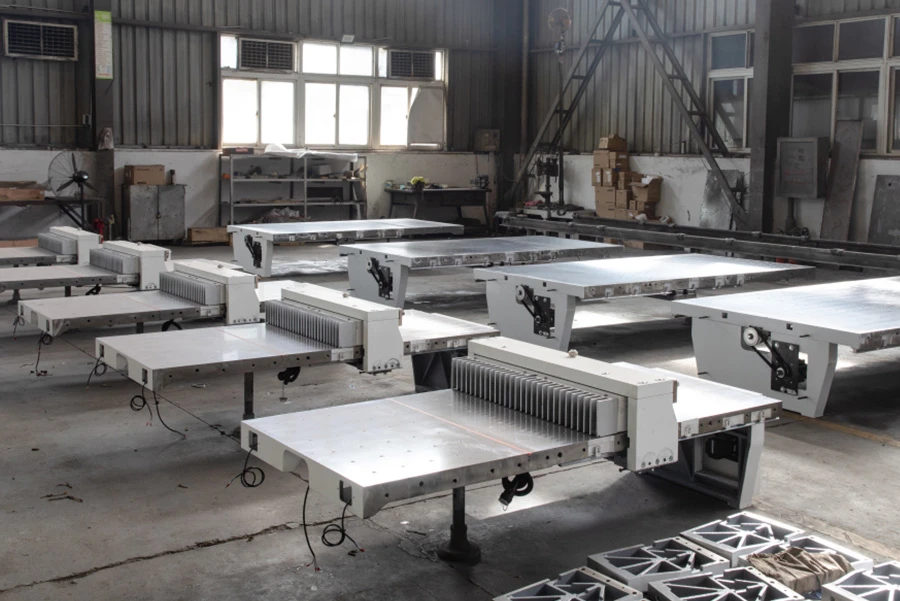
Paper cutting machines represent the core of the finishing line. High-speed automatic cutters, such as models with 22-inch touch screens and 38 m/min cutting speed, use program control systems to execute complex cutting patterns with repeatable accuracy. Some models integrate double hydraulic systems for energy efficiency and consistent clamping force. These examples highlight how intelligent control and robust mechanical design work together to meet high-volume demands.
Intelligent Control Systems: Servo and Hydraulic Integration
The intelligence of a modern packaging line depends heavily on its control architecture. Two of the most common actuation technologies—servo systems and hydraulic systems—are increasingly integrated to balance speed, precision, and force.
Servo systems are used for positioning tasks where accuracy and dynamic response are critical. In paper feeders and cutters, servo motors control the movement of paper grippers, side guides, and knife bars. They offer high repeatability and can adjust in real time based on sensor feedback. For instance, the intelligent servo system in paper stack unloaders allows for smooth acceleration and deceleration, reducing wear and improving throughput.
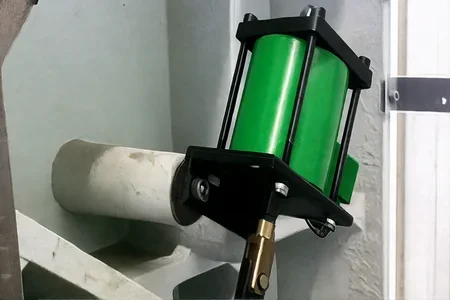
Hydraulic systems provide the large force needed for clamping paper stacks during cutting. Double hydraulic designs, as seen in some cutter models, offer energy savings by using accumulators and variable pumps. The combination of servo-driven feeding with hydraulic clamping ensures that even thick paperboard stacks are held securely while the knife delivers a clean cut. Understanding how these technologies complement each other is essential for specifying a line that matches your material types and production volumes.
One practical consideration is the control software. Most modern machines feature programmable logic controllers (PLCs) with touch screen interfaces that allow operators to save job recipes, monitor production in real time, and integrate with factory management systems. This connectivity enables data collection for predictive maintenance and overall equipment effectiveness (OEE) tracking.
Operational Considerations: Safety, Maintenance, and Troubleshooting
Automation does not eliminate the need for careful operational practices; it changes them. Safety is a paramount concern, especially around cutting machines with fast-moving blades and high clamping forces. Key safety steps include verifying that safety interlocks and light curtains are functional, ensuring operators are trained on emergency stop procedures, and conducting daily checks on hydraulic pressure and knife sharpness.
Routine maintenance focuses on lubrication, filter replacement, and sensor calibration. Hydraulic systems require periodic fluid analysis to detect contamination, while servo systems need to be checked for encoder alignment and drive health. Common faults in paper loaders—such as paper jams, misalignment, or feed inconsistencies—can often be traced to worn grippers, misadjusted sensors, or incorrect air pressure. A systematic troubleshooting approach, such as checking each component in sequence, can minimize downtime and help in-house maintenance teams resolve issues efficiently.
Matching Automation Scalability to Production Demands
Not every packaging plant needs a fully integrated, high-throughput line. The right level of automation depends on factors such as daily sheet volume, variety of job sizes, material formats, and labor availability.
For plants running thousands of sheets per shift, a dedicated paper cutting line for high-volume jobs may justify the investment in automated feeders, cutters, and stackers. Such lines often include servo-driven unloaders, automatic pile turners, and high-speed cutters with conveyor output, reducing manual handling and the risk of repetitive strain injuries.
For facilities that handle large-format paperboard over 2 meters, specialized large-format rear-loading cutters are necessary. These machines enable safe and efficient processing of oversized sheets without requiring oversized building modifications.
For lower volumes, a semi-automatic configuration with manual feeding and an automatic cutter may offer a better cost-to-benefit ratio. The key is to analyze your current and projected job mix, and to choose equipment that can scale either through modular add-ons or software upgrades. Many suppliers now offer options for retrofitting older machines with servo drives and new control systems, extending the life of existing assets.
Frequently Asked Questions
What is the typical ROI for automating a paper cutting line?
ROI depends on labor savings, waste reduction, and throughput gains. In a hypothetical medium-volume plant, replacing manual feeding with an automatic unloader can reduce labor by 1-2 operators per shift and improve cutting accuracy, leading to payback in 12-18 months. Each installation should be evaluated based on specific operational data.
Can existing manual cutters be upgraded with servo controls?
Yes, many older cutters can be retrofitted with aftermarket servo drive kits and new PLC controllers. This can improve accuracy and speed without the cost of a full machine replacement. However, mechanical condition, frame rigidity, and knife quality must be assessed first.
What maintenance is required for servo-driven paper feeders?
Servo motors require minimal routine maintenance beyond keeping them clean and ensuring proper cooling. Regular checks include verifying encoder feedback, inspecting belts or couplings for wear, and testing the braking system. Lubrication of moving parts according to the manufacturer's schedule is also important.
How do I ensure consistent cut quality across different paper grades?
Consistency starts with proper paper conditioning (temperature and humidity) and ends with knife sharpness and clamping pressure. Advanced cutters store job recipes that automatically adjust clamping force, knife descent speed, and backgauge positioning based on material type. Operators should always validate settings with test cuts for new lots.
What safety certifications should automated cutting lines have?
In most markets, automated cutting machines must comply with CE or UL standards. Look for features such as two-hand run controls, safety light curtains, emergency stop buttons, and interlocked guards. Regular audits by an external safety engineer are recommended to maintain compliance.
Conclusion
Intelligent packaging machinery automation is no longer a competitive advantage—it is becoming a baseline requirement for efficient production. By integrating servo-controlled feeding, hydraulic clamping, and programmable control systems, manufacturers can achieve higher throughput, lower waste, and improved worker safety. The journey from paper stacking to cutting involves careful selection of each component, thorough operator training, and a maintenance strategy that embraces both mechanical and software aspects. Technical buyers and operations leaders should evaluate automation options based on their specific volume, material mix, and long-term scalability goals. Starting with a clear understanding of the core technologies and their interactions will lead to more confident investment decisions and smoother production transitions.