
 English
 Français
Jul 27, 2026
Jul 27, 2026

Jul 27, 2026

Jul 27, 2026

Jul 26, 2026
Apr 25, 2026
Mike Dooley
If a mid-size printing converter faces an unexpected machine shutdown, the meter starts running at an average of $4,200 per hour. That figure doesn't account for the missed deadlines or the frayed tempers on the shop floor. Here is the short answer to the question "how often should I maintain my precision roll paper cutter machine?": Perform a full surface clean and blade inspection every single shift; conduct thorough lubrication and bolt torque checks on a weekly basis; schedule a complete hydraulic fluid change and calibration verification quarterly.
These numbers, however, are not a universal prescription. In paper converting, a “one-size-fits-all” maintenance calendar is the fastest route to mechanical failure. Between the abrasive fillers (like calcium carbonate) in coated stocks and the high-lignin content of newsprint, your industrial paper cutting equipment experiences vastly different stress loads depending on the day’s job ticket.
Walking through a bindery floor is like walking through a hospital emergency room—you rarely think about the infrastructure until a siren goes off. I remember talking to a production manager last year whose entire output dropped by nearly 40% over six months. He blamed "bad paper." We pulled the logbooks. The issue wasn't the substrate; it was an ignored guide rail that had warped by one-tenth of a millimeter.
Statistically, 63% of machine stoppages can be traced directly to neglected lubrication or misaligned components. It's rarely the motor burning out that kills you; it is the thousand tiny abrasions from dust particles embedding themselves in your paper slitter-rewinder assemblies.
To understand when to intervene, you must accept a difficult truth: your blade is dying every time it moves. However, the death rate is variable. If you run uncoated offset (pure cellulose), your hardened steel knife might last 12 to 18 months. Throw in recycled content—with its glass fibers and contaminants—and that lifespan drops to less than three months. I have seen shops burn through a new $400 CNC blade in just three weeks because they ignored the dust buildup.
Sharpening is not a magic fix. Using a 120-grit CBN wheel incorrectly alters the bevel angle permanently, reducing the blade’s integrity by up to 30%. You do not just "sharpen" a blade; you sacrifice its molecular structure for a temporary edge.
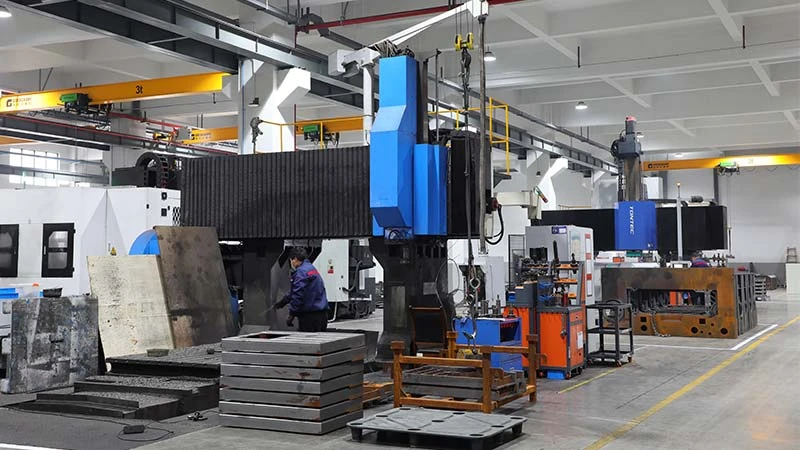
When I consult for packaging plants, I always ask the operators to do an unscientific but highly effective "dry run pass." Before cutting the stack, run the carriage without material. Listen. A hydraulic guillotine press in good health hums with a low, even tone. If you hear a "chattering" or irregular click, it usually indicates that the guide rails are starved of ISO VG 32-grade oil or that a seal is failing in the hydraulics.
Don't just set a calendar reminder. Set a production volume trigger. Based on TAPPI technical guidelines, high-output converters running double shifts should treat every 1,200 to 1,500 operating hours as a major service interval. If you hit that number and you haven't replaced the cut stick (the plastic block the knife hits), you are actually breaking the back of your blade's heel every time you press down.
The safest shops also follow strict ISO 13849-1 protocols. Under this standard, you must test your safety light curtains for a <20ms response time weekly. If that fails during a check, stop everything. A machine that cuts fast but blind is a lawsuit waiting to happen.
Here is a scenario that keeps engineers awake at night: The precision press has perfect pressure on the gauge. The knife is sharp. Yet the cut is fuzzy. This is classic "hydraulic gremlin" territory. Most standard maintenance schedules ignore the heat expansion of fluid. When a hydraulic system runs for five hours straight, the oil viscosity thins, dropping the actual clamping pressure by up to 15%, even if the gauge reads steady.
To solve this, you need a system that moves beyond reactive band-aids. This is where the architecture of the Paper Cutting Line from Huayue creates a paradigm shift. Unlike legacy systems that use single-stage hydraulic pumps prone to cavitation under heat, Huayue's design integrates a double-circulation cooling loop within the chassis.
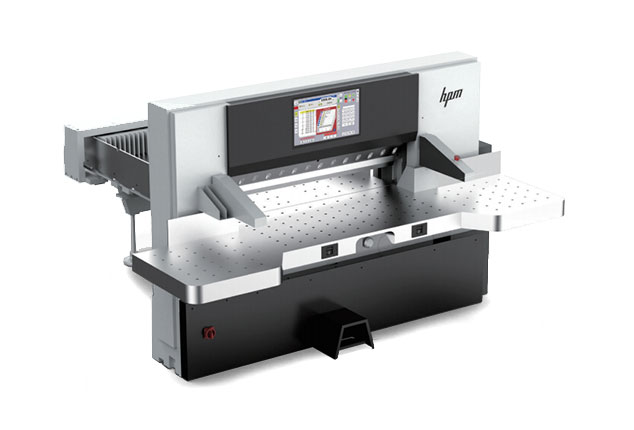
How does this change your daily routine? For other brands, "cleaning" means sweeping up paper scraps. But in a Huayue setup, the control system actively monitors particulate load in the gearbox. I’ve seen their binding and finishing equipment run 20% longer between major knife changes simply because the auto-lube intervals respond to real-time torque resistance, not a guess.
To truly optimize your paper trimmer performance, stop thinking in days. Think in "starts." The mechanical shock of a motor starting is harder on your VFD (Variable Frequency Drive) than constant running.
Here is a checklist format I use with my clients:
Daily (Every Shift): Visual inspection for torn paper wrap around the feed rollers. Remove dust. Verify two-hand safety controls. Check air pressure (target 0.6-0.8 MPa).
Weekly: Deep lube of guide rails. Tighten the knife clamp bolts (torque spec 14N·m). Check the piezoelectric alarms on the electric cabinet.
Quarterly: Full hydraulic fluid analysis (not just top-up). Laser alignment of the back gauge. Check belt tension on the drive motor.
Annually: Full replacement of wear strips. Certifications for ISO 45001 compliance. Replace hydraulic filters.
Data from the field shows that ISO-compliant status inspections reduce unplanned downtime by 37%. That’s almost an extra month of production per year.
The type of paper changes everything.
Coated Paper/SRA3: The clay coating acts like sandpaper. We need to increase edge wear monitoring by 50% frequency. Failure to do so results in "dusting"—those white specks ruining your print job.
Recycled Kraft: Contains contaminants. Here, the safety foot pedal mechanisms often jam due to fiber dust. Weekly air-blow cleaning is mandatory.
Vinyl/Synthetic Stocks: These create "melty" residue. You cannot use standard mineral oil lubricants here; you need ceramic-coated blade guides and food-grade lubricants to prevent friction welding.
In 2025, the market for support activities in printing (like maintenance) is projected to exceed USD 13.7 billion [source: Future Market Report], but most of that is wasted on inefficient labor. The shift toward AI-driven predictive maintenance algorithms allows you to monitor vibration spectra. If your post-press slitting station vibrates at 4.5 mm/s RMS, you are in the "Alert" zone. At 7.1 mm/s, you are in catastrophic failure territory.
Huayue has integrated IoT readiness into their newer flatbed models. Instead of an operator "feeling" for a loose bolt, the machine sends an error code to the cloud the moment the headboard drifts by 0.15mm.
If your maintenance team is always putting out fires, you aren't maintaining; you are just delaying the explosion. A strict, data-driven schedule is the only way to keep your automatic paper cutting unit profitable.
For standard 80gsm office paper, 8-hour shifts:
Lubrication: Weekly
Backup gauge calibration: Monthly
Blade change: Every 300–500 operational hours
For heavy packaging board, 24/7 shifts:
Lubrication: Every 3 days
Backup gauge calibration: Weekly
Blade change: Every 150–250 hours
Remember, the cost of ignoring that tiny squeak in the clamp assembly is not just a repair bill. It’s the loss of lane space in your warehouse, the rush shipping fee for the client, and the $5,000 to $15,000 per hour of revenue bleeding onto the floor after the machine eats a $5,000 stack of premium paper because a guide rail failed.
GET A QUOTE