
 English
 Français
Jul 18, 2026
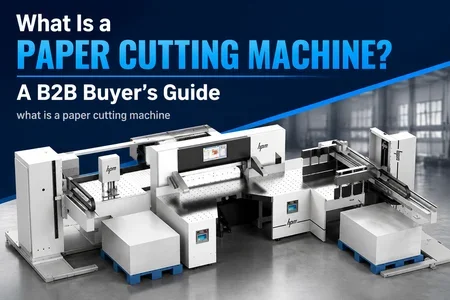
Jul 18, 2026
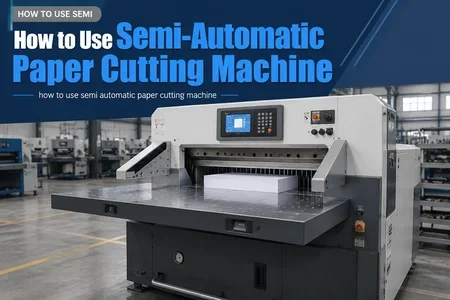
Jul 17, 2026
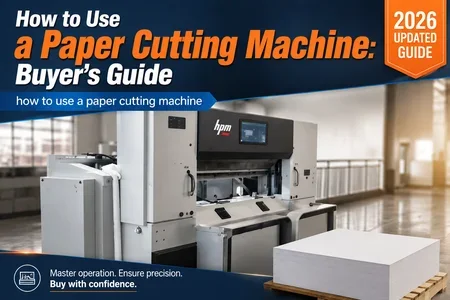
Jul 14, 2026
May 12, 2026
Mike Dooley
Article Overview: This article provides procurement managers, sourcing teams, and project engineers with a practical framework for evaluating automated paper cutting lines. It covers the key benefits of automation, decision criteria for selecting equipment, a supplier evaluation checklist, implementation risks, and methods to quantify ROI. Use this guide to prepare your RFQ and reduce procurement mistakes.
The paper product industry continues to face rising labor costs, increasing quality expectations, and tight delivery schedules. For factories producing items such as notebooks, A4/A3 copy paper, printing sheets, and packaging inserts, manual cutting processes are often a bottleneck. An automated paper cutting line, integrating loading, cutting, and unloading systems, can transform production efficiency.
Automation reduces direct labor dependency, improves cut accuracy, and increases throughput. However, the investment is significant, and the wrong choice can lead to operational disruptions. Therefore, a systematic approach to evaluation and procurement is essential.
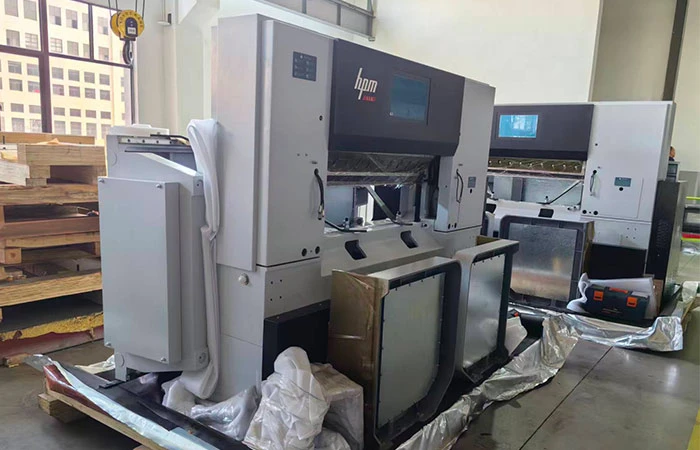
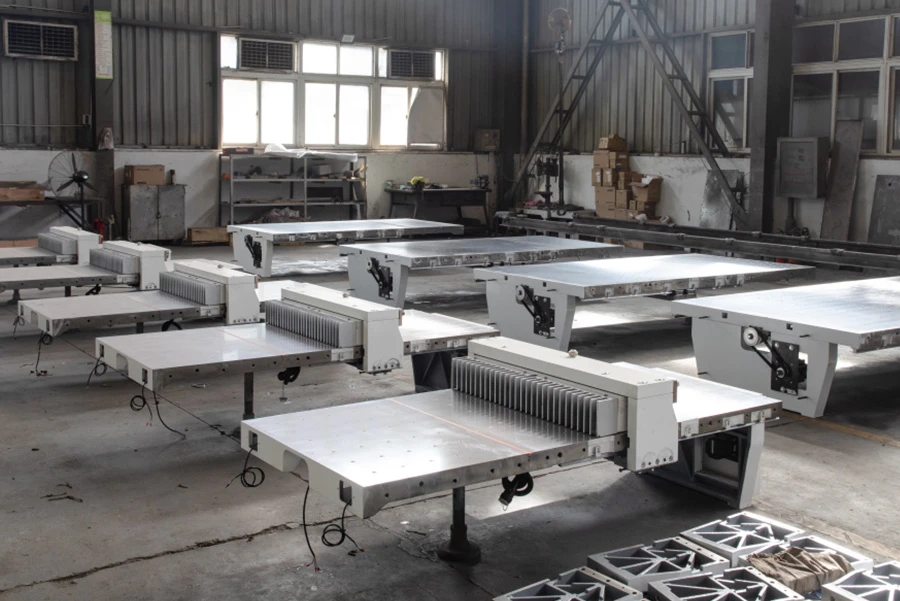
Before issuing an RFQ, your team should define the technical and operational requirements that align with your production goals. The following criteria are critical:
Determine your required cuts per minute and the typical sheet sizes. For high-volume operations, a line with a servo-driven cutting machine and automatic pile handling can achieve 38 meters per minute or more. Ensure the system's speed matches your printing press output to avoid bottlenecks.
Automated material flow from the press to storage and then to the cutter is a major efficiency driver. Look for integrated solutions that include a paper stack loader, a paper cutter, and a paper unloader. The loader should handle stacks up to the required height (e.g., 1450–1650 mm width range) and align them automatically. The unloader should stack finished piles neatly for packaging.
Consistency in cut dimensions directly impacts product quality and waste. Hydraulic clamping systems, combined with intelligent CIP4 or AI-powered alignment technologies, ensure accuracy within tight tolerances. Verify that the cutting machine has programmable back gauge control and the ability to store job recipes.
Consider the degree of automation you need. Options range from semi-automatic with manual feeding to fully integrated lines with IoT-enabled monitoring and predictive maintenance. For factories aiming for Industry 4.0 readiness, select a line that supports data connectivity for OEE tracking.
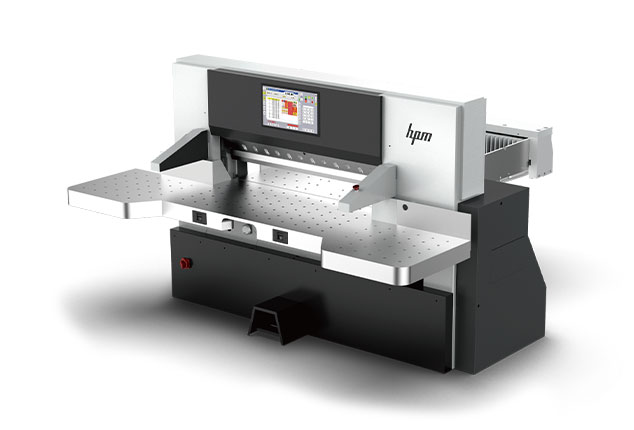
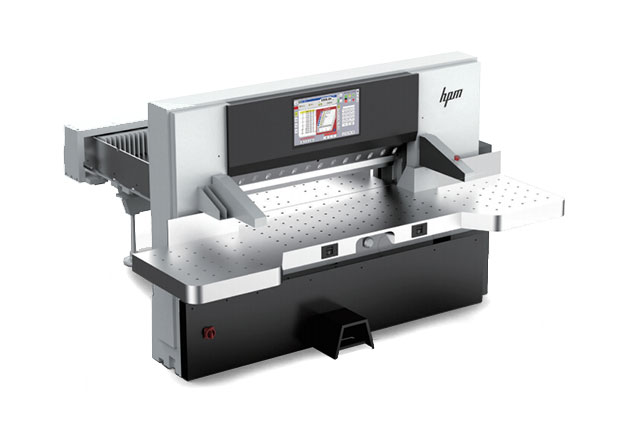
For more details on specific machine capabilities, review the paper cutting machine specifications to match your requirements.
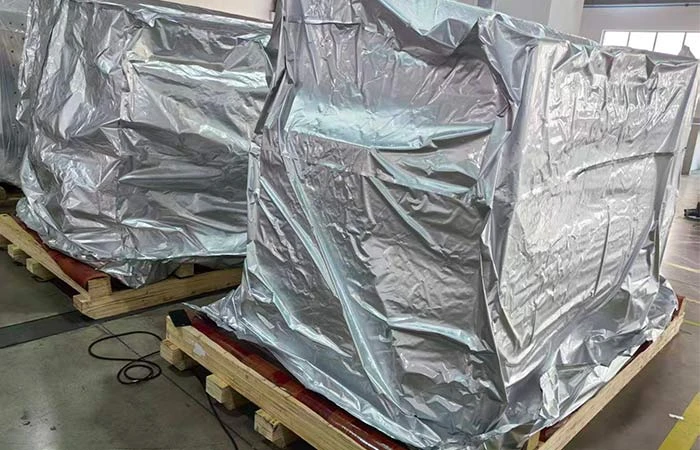
Once you have internal requirements, evaluating potential suppliers is the next critical step. Use this checklist to avoid common procurement pitfalls:
Consider supplementary equipment like the paper loader and paper unloader to complete the line; integrated systems often perform better than mismatched components.
Adopting a new automation line carries risks. Anticipating these helps prevent project delays and cost overruns.
The new line must physically and logically interface with upstream printing and downstream finishing. Mitigation: Provide detailed floor plans and process flow during RFQ. Request a simulation or timeline for installation and commissioning.
Automated lines require different skills than manual cutting. Mitigation: Include comprehensive training in the contract. Plan for a ramp-up period where production speed is lower.
Servo drives, sensors, and control software require specialized maintenance. Mitigation: Ask the supplier for a recommended spare parts list and a preventive maintenance schedule. Some suppliers offer remote diagnostics.
Installation, foundation preparation, electrical upgrades, and commissioning can add 15–30% to the budget. Mitigation: Request a turnkey quote that includes all installation and startup services. Clarify warranty terms.
For a structured approach to selecting a complete cutting and handling line, refer to the solution page that outlines different application scenarios.
To justify the investment, you need a clear business case. The main contributors to ROI include:
Calculate the payback period by comparing these savings against the total installed cost. Many factories see payback within 18–24 months. For further information on maximizing efficiency, explore efficiency solutions that address specific production challenges.
Depending on production volume and labor savings, most paper product factories achieve payback within 18 to 24 months. High-volume operations may see even faster returns.
Typical widths range from 1050 mm to 1650 mm, with cut heights up to 210 mm. Custom configurations are available for specific applications.
Yes, most modern lines can be integrated via conveyors or automated guided vehicles. Provide your press specifications during RFQ for a compatibility assessment.
Regular lubrication of guide rails, inspection of hydraulic systems, calibration of sensors, and checking knife sharpness are essential. Follow the manufacturer's maintenance schedule.
Automating the cutting process in a paper product factory is a strategic investment that can significantly reduce costs, improve quality, and increase throughput. However, success depends on careful planning, a thorough supplier evaluation, and proactive risk management. Use the decision criteria and checklist provided in this article to prepare your RFQ and negotiate a contract that meets your operational needs. Involve your project engineers and sourcing team early in the process, and consider a site visit to an existing installation to validate performance claims.
As a next step, review your current production data and identify your primary pain points. Then, approach a shortlist of suppliers with a clear specification. For further guidance, the company page offers insight into one manufacturer's capabilities, but always compare multiple options to find the best fit for your factory.
GET A QUOTE