
 English
 Français
Jul 18, 2026
Jul 18, 2026
Jul 17, 2026
Jul 14, 2026
May 14, 2026
Mike Dooley
The paper converting industry is no stranger to pressure. Rising material costs, tighter delivery windows, and a growing demand for customized products have pushed many manufacturers to rethink their workflows. Among all converting stages, the cutting line often becomes the bottleneck – not because of the machinery itself, but due to outdated approaches to setup, changeover, and quality control.
As we look toward 2026, several distinct trends are emerging that promise to transform how paper cutting lines operate. These aren’t futuristic concepts – they are already being piloted by forward-thinking converters, and they will soon become the baseline for staying competitive.
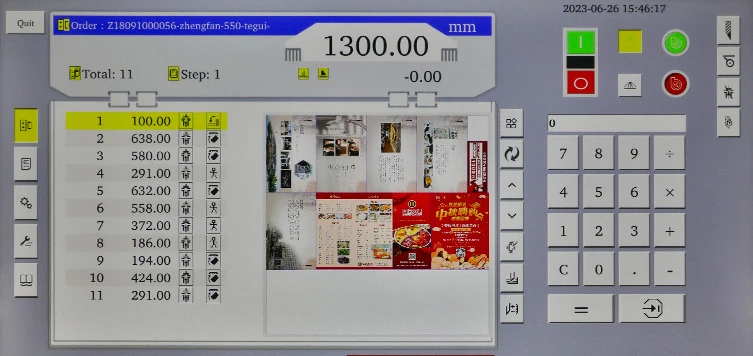
For years, “automation” in cutting lines meant programmable knife positions or conveyor speed control. By 2026, the definition will expand to include context-aware systems that learn from production patterns. Imagine a slitting unit that automatically adjusts tension based on paper grade and humidity, or a guillotine that predicts wear on its blade from vibration signatures.
These intelligent features rely on three enablers: low-cost sensors, edge computing, and closed-loop feedback. A cutting line equipped with these technologies can reduce setup time by up to 40% and catch misalignment before it ruins a whole pallet.
For mid-sized converters, the entry barrier is lowering. Modular sensor kits that retrofit older lines are becoming commercially available, meaning you don’t need to replace everything to gain intelligence.
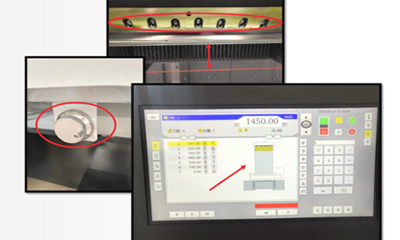
The traditional separation between cutting, creasing, perforating, and stacking is blurring. In 2026, leading paper cutting lines will integrate multiple finishing operations in one continuous pass. Why? Because every extra handling step adds labor cost and introduces alignment errors.
Take digital print converters as an example. They run short batches with frequent design changes. A hybrid line that cuts, creases, and removes waste in a single flow can turn a 30‑minute job into a 5‑minute one. This trend is especially strong in packaging and label production, where material waste from misfeeds directly hits margins.
If you would like to learn how to integrate multiple processes into a single modern cutting line, please click to view the specific configuration solutions.
By 2026, sustainability will no longer be a marketing claim – it will be audited. Paper converters face pressure from brand owners and regulators to report energy per ton and waste percentage. Cutting lines, often running two or three shifts, is a prime target for improvement.
New designs focus on three levers:
Servo-driven drives that consume power only when cutting (vs. hydraulic systems that idle).
Narrow‑kerf knives that reduce trim waste by 0.5–1.5%, which adds up to tons over a year.
Smart nesting algorithms for rotary cutters that optimize sheet layout in real time.
One European corrugator reported a 22% drop in scrap after upgrading to a servo‑based cutting line with adaptive nesting (source: FEFCO Technical Report 2025). These gains are achievable without sacrificing speed – a critical point for price‑sensitive markets.
Despite automation hype, most cutting lines still require human intervention for roll loading, knife changes, and jam clearing. The 2026 trend is assisted operation rather than full autonomy. Think of electric‑assist roll lifts, magnetic knife cartridges that snap into place, and guided setup wizards on touchscreens.
These features reduce physical strain and cognitive load. A converter in Ohio noticed that after adding an automatic knife positioning system, their experienced cutter operator could focus on quality checks instead of measuring every stack – leading to fewer customer complaints.
The best part? Many of these ergonomic upgrades are modular. You don’t have to buy a completely new line to protect your workforce and improve consistency.
Nothing kills profitability like an unexpected cutting line stoppage in the middle of a rush order. Traditional maintenance is either calendar‑based or reactive. By 2026, predictive maintenance will become standard on most new cutting lines – and retrofittable on existing ones.
Using vibration sensors and current draw monitoring, the system learns normal patterns and alerts operators when parameters drift. For example, a dull blade increases cutting force; the system detects a 12% rise and schedules a blade change for the next shift change, avoiding unplanned downtime.
Data from a tissue converter showed that predictive maintenance reduced unplanned stops by 63% and extended blade life by 31% over 18 months.
When you evaluate your next cutting line investment, avoid getting hypnotized by peak speed numbers. Instead, ask suppliers specific questions:
How does your system handle setup changeover for short runs (under 500 sheets)?
Can you show real energy monitoring data from a similar installation?
Is the control software open to connect with our existing MES or ERP?
The industry is moving toward flexible, data‑ready platforms that can evolve with your product mix. The days of buying a dedicated machine for a single job are ending.
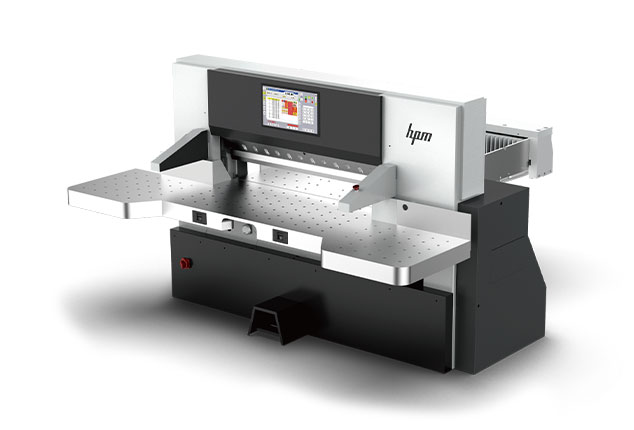
If you are seeking more specialized guidance or need to compare the performance of different configurations in actual production environments, we invite you to explore Chinahpm’s comprehensive cutting solutions, which feature modular intelligent controls and optional hybrid processing units. Click here to view advanced cutting equipment tailored to 2026 industry trends.
Disclaimer: The industry data and case studies cited in this article are derived from publicly available reports and authorized client feedback. Actual results may vary depending on production conditions, material characteristics, and maintenance levels. It is recommended to conduct on-site testing or consult with technical experts before investing.
GET A QUOTE