
 English
 Français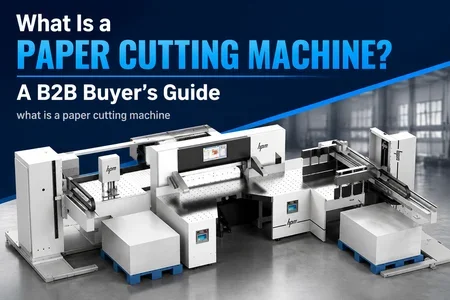
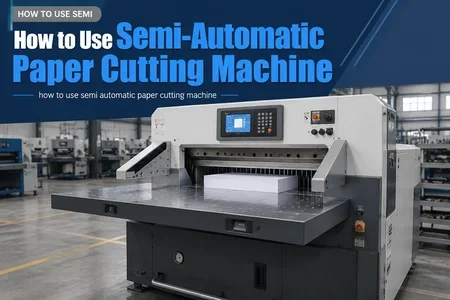
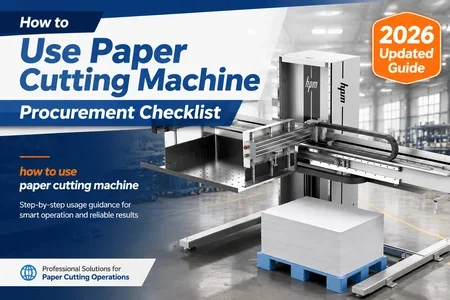
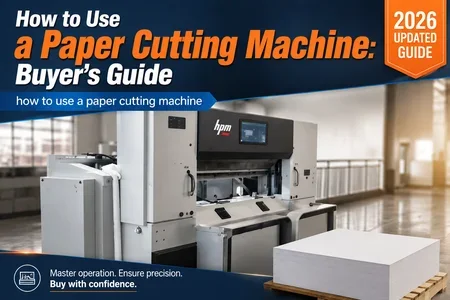
Article Overview: This guide explains what a paper cutting machine is, its core functions, and how procurement teams can approach supplier evaluation and RFQ preparation. Aimed at sourcing managers and decision-makers, it covers key features, common mistakes, and actionable steps to reduce risk when investing. You will learn what a paper cutting machine can do for your production line and how to select a reliable partner. For a closer look at integrated paper cutting machine solutions, refer to our dedicated page.
What Is a Paper Cutting Machine? Understanding the Core Equipment
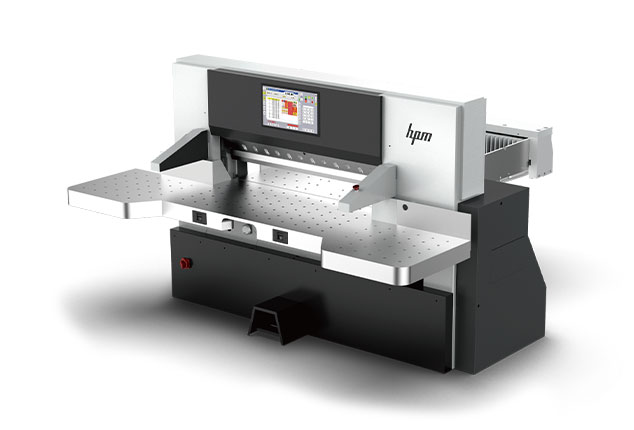
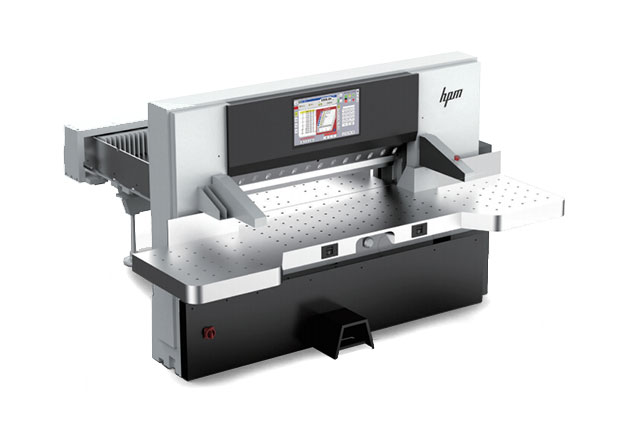
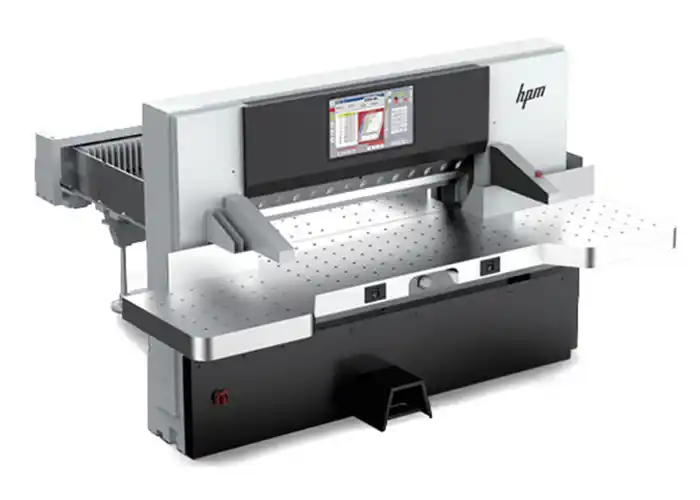
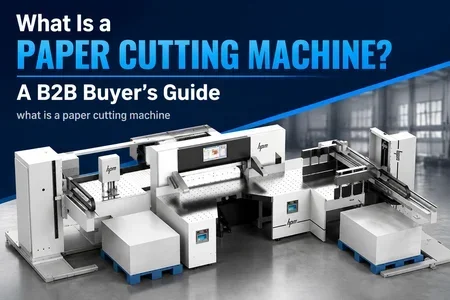
A paper cutting machine, also known as a guillotine cutter, is an industrial device designed to trim stacks of paper or paperboard to precise dimensions. It is a staple in printing houses, packaging converters, and paper product factories. The machine uses a sharp blade mounted on a heavy steel beam to cut through a pile of sheets in a single stroke, controlled by a programmable backgauge and often integrated with automated loading and unloading systems.
When procurement teams ask “what is a paper cutting machine,” they typically need to understand not just the basic mechanism but also the different configurations available. For example, a standalone cutter differs from a fully integrated cutting line that includes pile turners, joggers, and unloaders. The choice between semi-automatic and fully automatic models affects throughput, labor requirements, and overall investment.
For buyers, the critical takeaway is that a paper cutting machine is not a commodity; it is a capital asset that must match your specific production volume, material types, and precision requirements.
Phase: Define Your Cutting Needs
Before evaluating suppliers, document your typical workload: sheet size, paper weight, daily volume, and required cut accuracy. This baseline is essential for comparing what each paper cutting machine model can deliver.
What Is a Paper Cutting Machine's Role in Your Workflow?
Understanding what a paper cutting machine does within a production line helps you assess whether a standalone unit or an integrated solution fits better. In a typical print-to-package workflow, paper cutting occurs after printing but before folding, binding, or converting. The machine’s precision directly affects downstream operations: inaccurate cuts create waste and delay finishing processes.
Modern paper cutting machines also include programmable logic controllers (PLCs) for storing job recipes, reducing setup time for repeat orders. Automated material handling—such as front-loading and rear-unloading systems—can further streamline the process. When procurement managers ask “what is a paper cutting machine” in the context of ROI, they should consider not only the purchase price but also the machine’s ability to reduce manual handling and improve job-to-job changeovers.
- Precision: Measured in ±0.1 mm or better; critical for packaging and high-end printing.
- Productivity: Cuts per minute and pile height capacity affect output.
- Integration: Compatibility with existing feeders, joggers, and palletizers.
How Do You Choose the Right Paper Cutting Machine for Your Facility?
Selecting the right paper cutting machine requires matching technical specs to your operational goals. Key parameters include maximum cutting width, cut height (stack thickness), clamping force, backgauge repeatability, and safety features. For high-volume environments, an automatic paper cutting machine with integrated loaders and unloaders reduces labor bottlenecks. For lower volumes, a semi-automatic model may offer better cost efficiency.
Another important factor is material compatibility. While standard paper cutting machines handle paper and paperboard, some can process thin cardboard, plastic sheets, or foil—but this must be verified with the manufacturer. Always request a list of compatible substrates before shortlisting suppliers.
Step 1: Specify Your Material and Volume Requirements
List the paper grades, dimensions (e.g., 70gsm to 400gsm), cut sizes, and daily shift volume. Include future growth projections. This information allows suppliers to recommend an appropriately sized paper cutting machine.
Step 2: Request Detailed Technical Specifications
Ask for maximum cutting width, cut height, clamping force, backgauge repeatability, and safety features. For integrated lines, also ask about conveyor speed and loader/unloader capacity.
Step 3: Inquire About Service, Spare Parts, and Warranty
Determine preventive maintenance intervals, spare parts availability, and typical response time for technical support. Evaluate whether the supplier offers installation and training as part of the package.
Using these steps ensures that your RFQ leads to comparable quotes and that you fully understand what a paper cutting machine will cost over its lifecycle. For more details on what a paper cutting machine system can include, visit our paper cutting machine product page.
What Are Common Procurement Pitfalls to Avoid?
Even experienced buyers can fall into traps when selecting a paper cutting machine. Being aware of these mistakes helps you avoid costly errors.
- Underestimating material handling needs – The cutter itself is only part of the system; manual loading and unloading create bottlenecks.
- Ignoring safety compliance – Industrial cutters require safeguarded zones, two-hand controls, and CE or UL certification for your region.
- Overlooking software compatibility – Some machines use proprietary software that may not integrate with your existing MIS or workflow automation.
- Choosing based solely on price – A low initial quote often hides higher operating costs from lower build quality or limited support.
To avoid these, cross-check what each supplier includes with their standard offering. Request references from similar production environments.
How Does Supplier Evaluation Impact Your Investment?
The quality of a paper cutting machine depends heavily on the manufacturer’s engineering and after-sales capabilities. When you are close to a purchase decision, evaluate potential suppliers on the following criteria:
- Production capacity: Visit the factory or review their production capacity to see if they can deliver on time and with consistent quality.
- Technology innovation: Ask about recent upgrades in blade material, control systems, and safety features.
- Certifications: Check for ISO 9001, CE, or other relevant certificates that validate manufacturing standards.
By understanding what a paper cutting machine can do, you can better benchmark different suppliers. Remember that the cheapest option is rarely the best value. Focus on total cost of ownership, including energy consumption, blade replacement, and maintenance labor.
FAQ
What is a paper cutting machine used for?
A paper cutting machine is used to cut large stacks of paper or paperboard into smaller, exact sizes for printing, packaging, or other finishing processes. It is essential for achieving consistent dimensions in high-volume production.
How do I choose between a semi-automatic and an automatic paper cutting machine?
The choice depends on your production volume and labor cost. Semi-automatic machines require operators to manually handle paper feed and removal, while automatic machines include loaders and unloaders that reduce labor and increase throughput. For runs above 10,000 sheets per shift, automatic is usually more economical.
What safety features should I look for in a paper cutting machine?
Essential safety features include light curtains, two-hand activation, mechanical brakes, and emergency stop buttons. Compliance with local safety standards (e.g., CE, UL) is non-negotiable.
How long does a paper cutting machine last?
With proper maintenance, an industrial paper cutting machine can last 15–20 years. Key factors include the quality of the blade, linear guides, and the control system.
Can a paper cutting machine handle materials other than paper?
Some machines can cut thin cardboard, plastic sheets, or foil, but this must be confirmed with the manufacturer. Standard designs are optimized for paper and paperboard.
Conclusion
Selecting the right paper cutting machine is a strategic decision that affects production efficiency, product quality, and operating costs. By understanding what a paper cutting machine is and how to evaluate it against your specific requirements, you can approach supplier discussions with confidence. Use the RFQ steps and procurement checklists in this guide to reduce risk and ensure that your investment delivers long-term value. Begin by clarifying your internal needs and then systematically compare options from reputable manufacturers who demonstrate strong production capacity and after-sales support.