
 English
 Français
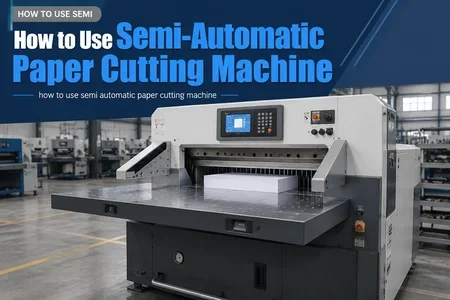
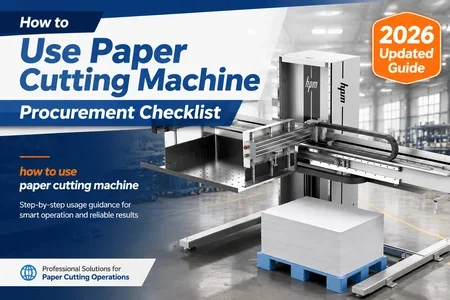
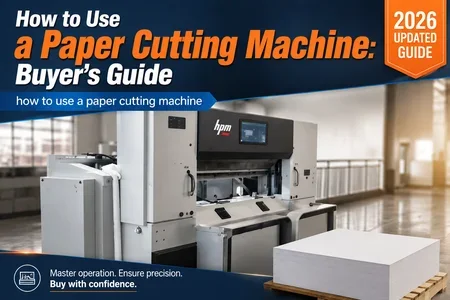
Article Overview: A paper pile turner is a specialized machine that flips, aligns, and prepares stacks of paper for downstream processing such as cutting or printing. By automating the labor-intensive manual flipping step, it addresses a common bottleneck that slows job changeovers and reduces consistency. This article explains the core functions of a paper pile turner, examines its key technical features, and discusses how it fits into a modern paper cutting line.
The Pre-Press Bottleneck: Why Manual Paper Flipping Slows Production
In any print shop or finishing operation, the time between receiving a printed sheet and feeding it into a cutter or press is often underestimated. Manual paper flipping — turning over a stack of printed sheets to prepare the next side for processing — is a repetitive, physically demanding task. Operators must lift heavy piles, align them by hand, and repeatedly jog the stack to ensure even edges. This step can take 10–15 minutes per pallet, especially when dealing with large-format sheets or thick paper.
Beyond time lost, manual flipping introduces variability. Human alignment is rarely perfect, leading to registration errors, misaligned cuts, and increased waste. For shops running multiple short runs per day, the cumulative effect is significant: reduced effective throughput and higher scrap rates. The manual process also poses ergonomic risks, contributing to operator fatigue and potential injury.
An automated paper pile turner directly addresses these pain points. By mechanizing the flip and alignment, it standardizes preparation quality and cuts the time to under two minutes per pallet. This eliminates a key waiting step in the overall workflow, allowing cutting machines and presses to operate more continuously.
How an Automated Paper Pile Turner Works
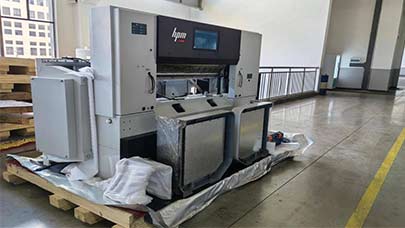
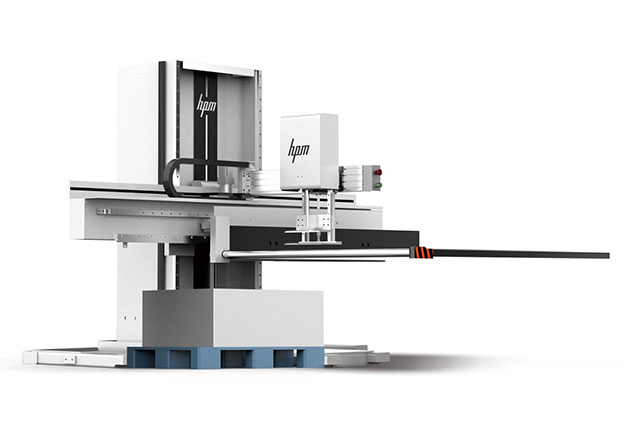
A paper pile turner is designed to flip, align, and prepare paper piles for processing. The machine typically consists of a sturdy frame, a rotating clamping mechanism, and an air table. The operator loads a pallet of paper onto the machine's platform. The clamp secures the stack, and the entire pile is rotated 180 degrees. During rotation, an air table or vibrating jogger aligns the sheets to a common edge, ensuring a uniformly square stack.
Many modern pile turners incorporate debris removal — a built-in blower or vacuum system that extracts paper dust and loose particles before the flipped pile is released. This improves the cleanliness of subsequent cutting or printing operations and extends the life of cutting blades and press blankets.
Evidence from product specifications confirms that units such as the 130/150/170 Air Alignment Pile Turner feature a stable design with automatic paper pile feeding and touch screen control. The touch screen allows operators to set parameters like clamping pressure, jogging duration, and rotation speed. Automated feeding and debris removal capabilities further streamline the process, making the pile turner a self-contained pre-press station.
For example, a hypothetical mid-size print shop running 50 pallets per day could reduce total manual flipping time from over 10 hours to less than two hours by using a pile turner, freeing operators for higher-value tasks.
Key Technical Features to Evaluate
When selecting a paper pile turner, technical buyers should focus on several core features:
- Air Alignment System: Instead of purely mechanical jogging, an air table uses directed air jets to float the sheets slightly, allowing them to settle into alignment with minimal friction. This reduces sheet damage and improves stack consistency.
- Clamping Mechanism: Look for servo-controlled, adjustable clamps that can handle various pile heights and sheet sizes without distorting the edges.
- Touch Screen Control: An intuitive interface simplifies job recipe storage and recall, enabling rapid changeovers between different paper types or formats.
- Debris Removal: Integrated dust extraction or blowing functions keep the work area clean and reduce contamination in downstream equipment.
- Stability and Build Quality: A heavy-duty steel frame minimizes vibration during rotation, which is critical for maintaining alignment at higher speeds.
These features directly translate to operational benefits: faster setup times, reduced waste, and less operator intervention. Many pile turners are offered in different widths — for example, 130 cm, 150 cm, and 170 cm models — to match common paper sizes used in packaging and commercial printing. Compatibility with existing paper cutting machines should be confirmed early in the evaluation process.
Integrating a Paper Pile Turner into Your Production Line
A paper pile turner does not operate in isolation. It becomes part of an automated material handling chain that may include paper loaders, paper unloaders, and cutting machines. When placed upstream of the cutter, the pile turner delivers perfectly aligned stacks ready for feeding, reducing the cutter's jogging time and improving accuracy.
Space planning is straightforward: most pile turners have a footprint roughly the same as a pallet plus the machine's frame. They can be positioned flush against the cutter infeed or integrated with conveyor systems. Some models include an automatic feeding table that transfers the flipped pile directly to the cutter's loading zone.
Operators require minimal training — the touch screen interface typically walks them through the process. Maintenance is limited to periodic cleaning of the air nozzles and lubrication of moving parts, as highlighted in general paper cutting line maintenance guidelines. For shops already using auxiliary equipment such as joggers or stack lifts, adding a pile turner extends the automation chain without introducing a new skill set.
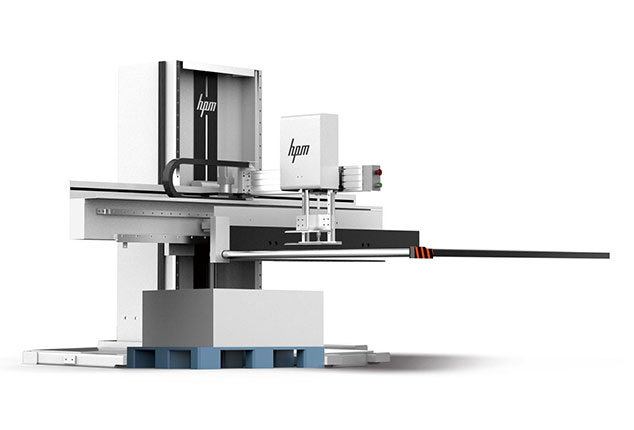
Businesses aiming for end-to-end process improvement should explore efficiency solutions that bundle pile turners with other automation components. Such an approach ensures that cycle times are balanced and that no single machine becomes a new bottleneck.
Measuring the ROI of Automated Pile Turning
Quantifying the return on investment for a paper pile turner requires examining three cost areas: labor, waste, and throughput.
Manual flipping typically consumes 10 to 15 minutes per pallet with two operators. At an average labor cost of $25 per hour, a shop processing 30 pallets per day saves roughly $150 to $225 in direct labor daily — or $37,500 to $56,250 annually for a 250-day year. Reduced ergonomic strain also lowers indirect costs related to absenteeism and workers' compensation.
Waste reductions stem from improved alignment accuracy. Misaligned sheets cause off-register cuts, which scrap the printed work. A pile turner with air alignment can reduce misalignment waste by 50–70%, potentially saving thousands of dollars per year depending on material cost and print volume.
Faster job changeovers increase the effective capacity of the cutting line without requiring additional equipment. For a shop operating near capacity, that incremental throughput can defer or eliminate the need for a second cutter, representing a significant capital saving.
Payback periods for mid-range pile turners typically fall between 12 and 18 months in shops with moderate to high daily pallet volumes. These figures assume the machine is integrated properly and operators are trained to use it during changeover, not just as a standalone station.
Frequently Asked Questions
What types of paper can a pile turner handle? Most models support standard offset, coated, and uncoated papers from 50 gsm up to 400 gsm, and can accommodate mixed piles as long as the stack height is within the clamp's range.
How much floor space is needed? A typical 150 cm model occupies about 2.5 m × 2 m, plus access clearance for pallet loading. Exact dimensions vary by manufacturer.
Does a pile turner require compressed air? Many models use an integrated blower for the air table, so a compressed air line is not always required. Check specifications for air alignment versus pneumatic clamp operation.
Can it handle pre-cut sheets? Yes, as long as the sheets are stacked uniformly. Pre-cut stacks may be used as long as the pile height and sheet size fit within the machine's limits.
What maintenance is typical? Daily removal of paper dust from air nozzles and sensors, weekly lubrication of guide rails, and occasional inspection of belts and clamps.
Conclusion
Automated paper pile turners represent a straightforward, high-impact investment for any print shop or finishing operation that relies on manual flipping. By cutting prep time by up to 80%, improving alignment consistency, and integrating seamlessly with existing cutting lines, they unlock capacity and reduce waste. Technical buyers and operations leaders should evaluate models based on air alignment capability, touch screen control, and debris removal features to match their specific paper sizes and production volumes. When paired with complementary equipment such as paper loaders and unloaders, a pile turner is a key component in building an efficient, scalable paper processing workflow.