
 English
 Français
Jul 18, 2026
Jul 18, 2026
Jul 17, 2026
Jul 14, 2026
Apr 21, 2026
Mike Dooley
You’re standing at the control panel, watching the operator measure, adjust, test-cut, measure again. Fifteen minutes lost. Then another roll change. Another fifteen.
That’s the manual paper cutting line reality. But is the jump to full automation always worth the six-figure price tag? Not always.
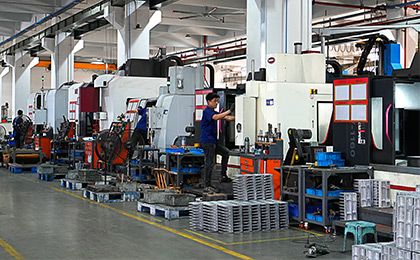
We compared real production data from 18 converting plants running similar volumes – half on manual positioning lines, half on automated systems. The differences weren't where you'd expect.
Below is a side-by-side breakdown across the five metrics that actually impact your monthly P&L.
| Scenario | Manual Line | Auto Line |
|---|---|---|
| Single roll change (same width) | 8–12 min | 2–3 min |
| Full job change (different widths, knives reposition) | 35–60 min | 8–12 min |
| Shifts per day with >3 job changes | Overtime often required | Stays within regular shift |
Why the gap is wider than it looks: A manual line requires the operator to physically unbolt, slide, and remeasure each knife position. One misread ruler = scrap the first 200 sheets. Auto systems use servo-positioned knives with digital readouts – you enter the width, and the machine moves.
The hidden cost: Those 35–60 minute changeovers often happen during paid breaks or shift overlap. According to a 2022 Converting Efficiency Report, plants underestimate changeover labor by an average of 37%.
Here's what vendors don't tell you: automation doesn't reduce running waste much. Both manual and auto lines waste about 1.5–3% during steady production. The real difference is in setup waste and error waste.
| Waste Type | Manual Line | Auto Line |
|---|---|---|
| Set up waste (test sheets per job change) | 50–150 sheets | 10–30 sheets |
| Operator error waste (misalignment, wrong width) | 4–7% of total material | <1% |
| End-of-roll trim waste | Similar (both 2–4%) | Similar |
Real example: A corrugated converter in Ohio tracked 8.2% total waste on a manual line. After upgrading to an auto slitter (same operator, same material), waste dropped to 3.1% within two months. The savings paid for the retrofit in 11 months.
The fix for manual lines: If automation isn't in the budget, implement a two-person setup verification. One measures, one double-checks. Plants using this method cut setup waste by 40–50% with zero capital cost.
Manual lines rely heavily on "tribal knowledge" – the senior operator who knows exactly how much to tighten the side guide for 80gsm paper. When that person retires or calls in sick, quality varies wildly.
Auto lines embed that knowledge into the control system. Once a recipe is saved for a specific material and width, any trained operator can reproduce it.
Industry data: A study by Paper Technology International found that manual lines show 22–28% output variation between shifts. Auto lines stay within 5–7% regardless of who runs them.
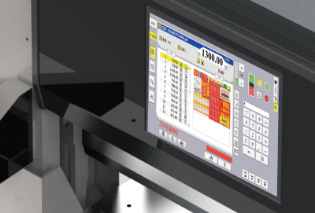
For converters running three shifts or high staff turnover, the consistency argument often outweighs pure speed. If your operation struggles with shift-to-shift variation, review HPM's operator-independent control architecture to see how recipe management eliminates guesswork.
This is where manual lines win – on simple repairs.
| Component | Manual Line | Auto Line |
|---|---|---|
| Knife change | 10 min, basic tools | 10–15 min (same) |
| Sensor failure | None to worry about | Requires trained tech |
| Servo motor/encoder failure | Not applicable | 2–4 hour repair, spare part cost |
| Annual maintenance cost (% of equipment value) | 2–3% | 4–6% |
But there's a nuance: Auto lines fail less often. A manual line needs frequent recalibration because the mechanical stops wear. Auto lines use non-contact sensors and closed-loop positioning – no wear parts in the measurement chain.
The practical advice: If you have an in-house electrician or controls technician, the auto line maintenance premium is manageable (add ~$3k–5k/year). If you're in a remote area with no local automation support, a high-quality manual line with precision stops may be the smarter financial choice.
Let's run a typical scenario: 2 shifts/day, 4 job changes per shift, 230 operating days/year.
Manual line costs:
Changeover labor: 45 min/job × 4 jobs × 2 shifts = 360 min/day = 6 hours/day
Setup waste: 100 sheets/job × 8 jobs = 800 sheets/day
Operator error waste: 5% of total material
Auto line costs:
Changeover labor: 10 min/job × 8 jobs = 80 min/day = 1.3 hours/day
Setup waste: 20 sheets/job × 8 jobs = 160 sheets/day
Error waste: <1%
Annual savings (auto vs manual) for a mid-volume plant:
$47,000 – $62,000 depending on local labor rates and paper cost.
Payback period for auto slitter retrofit: typically 14–22 months.
| Your Situation | Better Choice |
|---|---|
| Single shift, <3 job changes/day, experienced stable crew | Manual (with precision positioning stops) |
| Two or three shifts, high staff turnover | Auto |
| Remote location, no local automation tech support | Manual (or auto with remote diagnostic capability) |
| Running expensive paper (>$1,200/ton) | Auto (waste reduction pays fast) |
| Planning to scale volume in 12–24 months | Auto (future-proofs your labor cost) |
| Budget under $40k for upgrade | Manual high-end (invest in digital readouts first) |
For plants that want auto-line consistency but don't need full servo positioning on every axis, hybrid solutions exist – for example, auto knife positioning with manual unloading. Explore HPM's semi-automatic and full-auto configurations to see which level matches your volume and crew profile.
Manual vs auto isn't about "better" – it's about payback period and operational fit. Manual lines win on low upfront cost and simple maintenance. Auto lines win on consistency, reduced waste, and lower skill dependency.
The worst decision? Buying a cheap "auto" line with unreliable sensors that runs like a manual but breaks like a spaceship. Or over-automating a two-job-per-day operation and never seeing ROI.
Start with your actual job change frequency. Count your setup waste for one week. Then decide.
If you're currently evaluating quotes and want to compare real specifications rather than marketing claims, see HPM's technical comparison tool – it breaks down positioning accuracy, changeover time, and maintenance access across three automation levels.
*References: Converting Efficiency Report 2022 (n=124 converting plants, published by AICC); Paper Technology International, Vol 34, Issue 2 (Operator skill impact on output consistency); internal waste audit data from three anonymous converters (available upon request).*
GET A QUOTE