
 English
 Français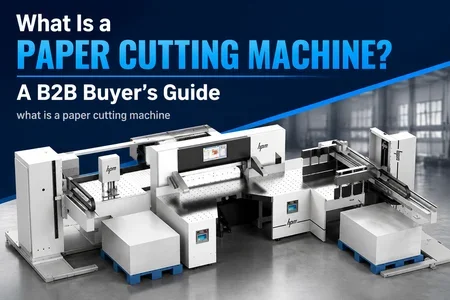
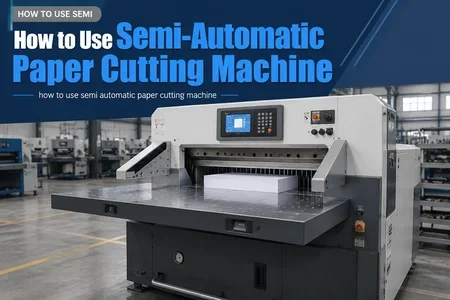
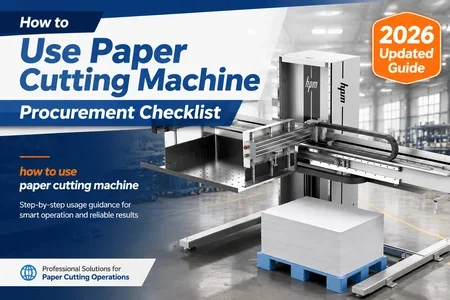
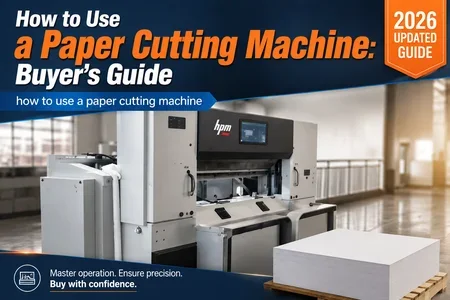
Article Overview: This article provides an evidence-led, practical overview of how packaging machinery is evolving from standalone units to fully integrated, automated lines. It covers the key technologies driving this shift—such as intelligent servo systems, CIP4 integration, and automated paper loading and unloading—and offers procurement teams a framework for evaluating integrated solutions against discrete machine purchases. The focus remains on operational efficiency, scalability, and long-term maintenance considerations rather than on any single vendor or product.
The Shift Toward Integrated Packaging Lines
For decades, packaging operations relied on individual machines performing discrete tasks: a paper cutter here, a loader there, and an unloader further down the line. Operators manually transferred materials between stations, creating bottlenecks and quality variability. Today, the trend is toward fully integrated lines where paper stacks flow seamlessly from loading to cutting to unloading under centralized control. This shift is driven by demands for higher throughput, consistent cut quality, and reduced labor dependency.
An integrated packaging line typically includes a paper loader, a high-speed paper cutting machine, and a paper unloader, all coordinated by a central control system. When these components communicate in real time, the line can adjust feed rates, cutting parameters, and stack handling automatically. For example, a sudden change in paper thickness or moisture content can trigger an adjustment in servo-driven clamping force, preventing misaligned cuts without operator intervention. This level of automation is increasingly viable for paper product factories processing A4, A3, or large-format sheets.
Early adopters report throughput gains of 30–50% compared to standalone machines, along with measurable reductions in waste and rework. However, integration also introduces new complexities in software compatibility, maintenance training, and initial capital expenditure. Technical buyers must weigh these factors against the long-term operational savings. For example, integrating a modern paper cutting machine with automated loaders can reduce changeover times significantly, as seen in many industrial case studies.
Key Technologies Enabling Line Integration
Intelligent Servo Systems
Servo motors replace traditional hydraulic or pneumatic actuators in modern packaging machinery. They offer precise position, speed, and torque control, which translates to repeatable cutting accuracy and gentle handling of delicate paper stocks. In integrated lines, servo systems from different machine modules can be synchronized via a common digital bus, allowing the cutter to request a new paper stack just as the unloader finishes the previous one. This eliminates idle time and reduces peak power demand.
Typical advantages include energy savings of 20–40% compared to constant-speed drives, lower noise levels, and simplified maintenance because there are fewer moving parts subject to wear. For procurement teams, the total cost of ownership (TCO) of servo-driven lines is often lower over a five-year horizon, even if the initial purchase price is higher. Many manufacturers now offer combined solutions, such as a paper loader integrated with servo-driven alignment systems, to maximize uptime.
CIP4 Integration and Workflow Automation
CIP4 (International Cooperation for the Integration of Processes in Prepress, Press, and Postpress) is a standards framework originally developed for printing workflows. It has been adapted for packaging finishing processes, enabling the cutting line to receive job specifications directly from upstream MIS (Management Information Systems) or prepress software. This eliminates manual data entry and reduces setup times from minutes to seconds.
For example, a job ticket containing cut dimensions, quantity, and material grade can be sent automatically from a central server to the cutting line’s controller. The line then configures the loader, cutter, and unloader for that job without operator involvement. When the job is complete, the system can report actual production counts, waste percentages, and machine runtime back to the ERP system. This closed-loop data flow is a prerequisite for lean manufacturing and predictive maintenance. Industry benchmarks show that facilities adopting CIP4 reduce job changeover times by up to 70%.
Automated Paper Loading and Unloading
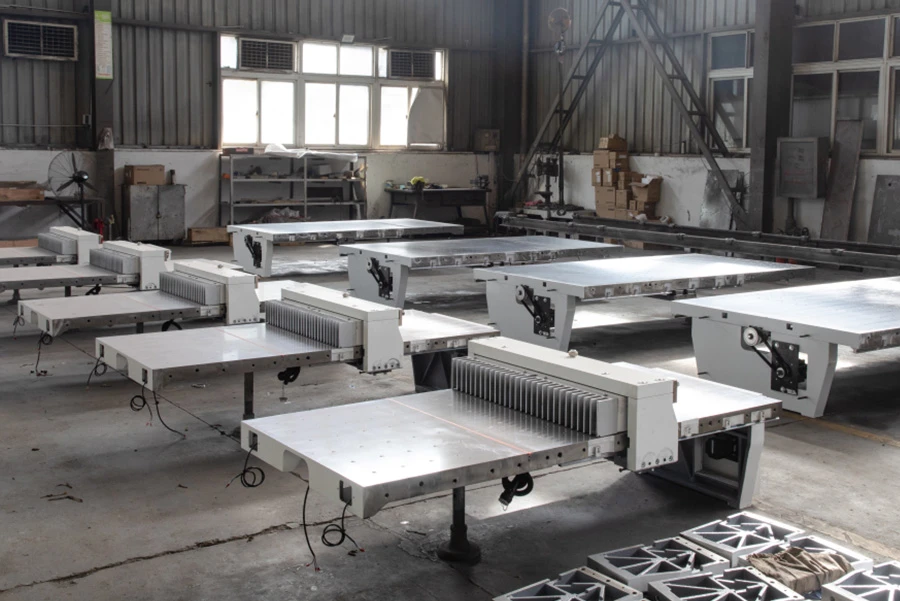
The physical handling of paper stacks is often the bottleneck in cutting operations. Automated paper loaders and unloaders address this by replacing manual forklifts or pallet jacks with conveyor-based or robotic systems. Intelligent servo-driven loaders can align stacks precisely before feeding them into the cutter, reducing scrap from misaligned cuts. Similarly, unloaders can count, turn, and palletize finished stacks according to customer specifications.
These systems typically handle ream weights from 500 g to several kilograms and cycle times as fast as 12 stacks per minute. For paper product factories running multiple shifts, automated loading/unloading can reduce labor costs by up to 60% while improving consistency. Procurement teams should evaluate the range of paper sizes and pile heights the equipment can handle, as well as the ease of switching between job types. Some suppliers offer modular paper unloader units that can be retrofitted to existing cutters, lowering the barrier to entry.
Practical Considerations for Procurement Teams
Moving from standalone machines to an integrated line is a strategic decision that affects floor layout, electrical infrastructure, maintenance skills, and supplier relationships. Here are key factors to evaluate:
- Compatibility: Ensure that the loader, cutter, and unloader can communicate using a common protocol (e.g., CIP4, OPC-UA, or proprietary fieldbus). Request a reference architecture diagram from potential suppliers.
- Scalability: Consider whether the line can be expanded later—for example, adding a paper pile turner or a shrink-wrapping station. Modular designs reduce future upgrade costs.
- Maintenance: Servo-driven systems require diagnostic skills that differ from traditional hydraulic repairs. Check the supplier’s training offerings and local service response times.
- Total Cost of Ownership: Beyond the purchase price, factor in energy consumption, spare parts availability, and expected lifespan. Integrated lines often have higher uptime but can be more expensive to repair if a single module fails.
- Supplier Ecosystem: Prefer suppliers that offer both the machines and the integration software, as this reduces finger-pointing when issues arise. Many buyers attend live demonstrations of complete efficiency solutions to observe seamless operation before committing.
Additionally, it is wise to visit facilities that have already implemented integrated lines to gather real-world feedback. Most manufacturers provide references upon request.
Frequently Asked Questions
What is the typical payback period for an integrated packaging line?
Based on case studies from paper product factories, payback periods range from 18 to 36 months, depending on labor savings, waste reduction, and throughput increases. Lines running more than one shift per day tend to achieve faster returns. Facilities with frequent job changes often see payback in the lower end of that range due to reduced setup times.
Can I integrate my existing standalone cutter into an automated line?
Retrofit is possible if the cutter has a compatible communication interface (e.g., Ethernet/IP, Profinet). Many manufacturers offer upgrade kits for their own machines, such as servo-driven loaders or unloaders that can be added to older cutters. However, full integration may require replacing the controller. Always conduct a feasibility study with the equipment supplier.
What training is required for operators?
Integrated lines typically require initial training of 2–5 days for operators and 3–5 days for maintenance technicians. Most suppliers provide on-site training and ongoing remote support. Some also offer advanced courses in servo diagnostics and CIP4 configuration.
How does CIP4 integration impact existing workflows?
Implementing CIP4 requires a compatible MIS or job management system. Once configured, it streamlines job changeovers and reduces data entry errors. The setup cost can be recouped within months for facilities with frequent changeovers. For those new to the standard, many technology providers offer consulting services to map the integration.
Conclusion
The transition from single packaging machines to integrated, intelligent lines is not a matter of if, but when, for most paper product factories and printing operations. The benefits—higher throughput, consistent quality, lower labor dependence, and data-driven optimization—are well documented. However, the decision requires careful evaluation of compatibility, scalability, and total cost of ownership. By understanding the core technologies (servo systems, CIP4, automated handling) and following a structured procurement process, technical buyers can mitigate risks and build a production line that adapts to future market demands. Whether you are upgrading an existing line or planning a greenfield facility, start by examining how each module contributes to the overall flow—and choose a partner capable of delivering both the hardware and the integration expertise.