
 English
 Français
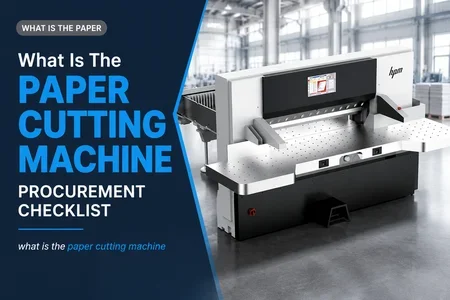
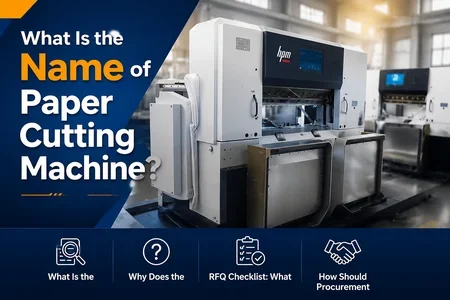
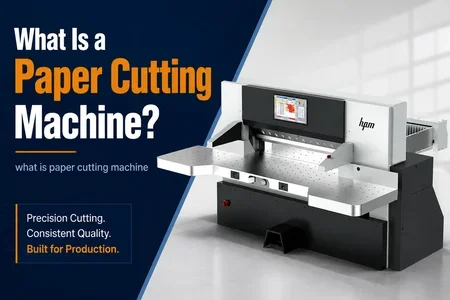
Article Overview: This guide answers the core question, "what is the paper cutting machine called," by examining the terminology, machine categories, and technical differentiators that matter most to procurement teams. Readers will gain a structured evaluation framework covering specification alignment, supplier qualification, cost-risk tradeoffs, and implementation outcomes, all anchored to real-world industrial paper cutting solutions.
What Is the Paper Cutting Machine Called in Industrial Contexts?
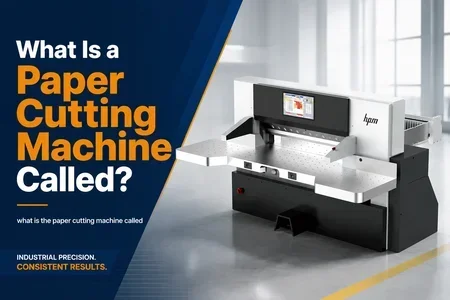
When procurement professionals ask, "what is the paper cutting machine called," they are rarely looking for a single, universal name. In industrial environments, the answer depends on the machine's configuration, automation level, and intended application. The broad category is typically referred to as an industrial paper cutter or paper cutting machine, but operational teams use more precise labels to differentiate capabilities.
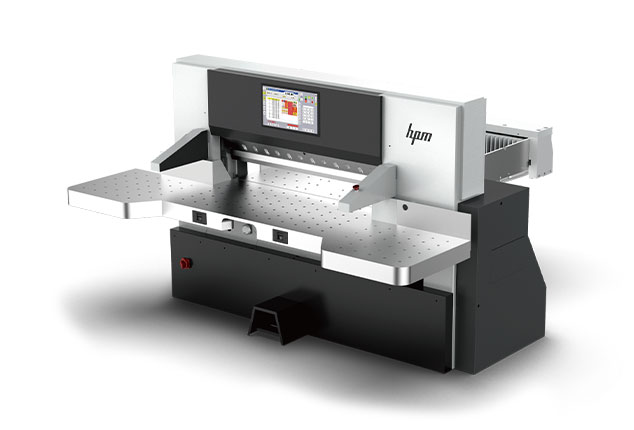
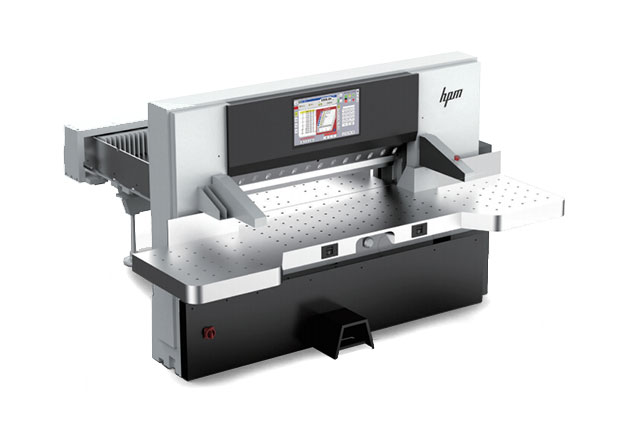
The most common term encountered in high-volume print finishing and converting plants is the programmable guillotine cutter. This machine uses a heavy, straight blade that descends vertically onto a clamped stack of paper, delivering precise, square cuts at high speed. When specifications require cutting reams, large-format sheets, or laminated substrates in a single stroke, buyers often search for a hydraulic paper cutting machine or a heavy-duty ream cutter. These terms emphasize the power source and the machine's ability to handle substantial stack heights without compromising accuracy.
For operations that prioritize workflow integration, the terminology shifts toward system-level descriptions. A paper cutting line or automated cutting system includes not only the cutter itself but also integrated components such as paper loaders, joggers, and unloaders. Understanding what the paper cutting machine is called in this context helps buyers communicate requirements clearly to suppliers and avoid mismatches between quoted equipment and actual production needs. The naming convention often signals whether a machine is a standalone unit or part of a broader paper cutting machine solution designed for continuous, lights-out operation.
Why the Correct Terminology Matters for Procurement Teams
Getting the name right is a critical first step in the procurement process. When a buyer initiates a request for quotation using imprecise language—for instance, asking generically for a "paper cutter"—they risk receiving proposals for office-grade trimmers instead of the industrial equipment their facility requires. Conversely, using the exact phrase "what is the paper cutting machine called" during internal alignment discussions helps cross-functional teams standardize on a shared vocabulary before engaging suppliers.
Supplier qualification becomes more efficient when both parties operate from the same technical lexicon. A reputable manufacturer will immediately recognize whether a buyer needs a programmable guillotine, a three-knife trimmer, or a rotary slitter-rewinder. Each term corresponds to a distinct mechanical design, cutting method, and performance envelope. For example, a facility producing large-format packaging may require a large-format paper cutting solution with a cutting width exceeding 1600 mm, while a label converter might need a narrow-web slitter. The terminology directly maps to machine specifications, making it an indispensable filter during vendor shortlisting.
Moreover, accurate naming supports cost-risk analysis. Machines described as fully automatic paper cutting systems typically carry higher capital expenditure but offer lower per-unit labor costs and reduced repetitive strain injury risk. A buyer evaluating total cost of ownership must understand whether a quoted "paper cutting machine" includes features like automatic pile height detection, air-cushion tables, or touchscreen program storage. These features are often implied by the more specific category names, allowing procurement teams to compare bids on a like-for-like basis and avoid hidden cost traps.
How to Evaluate a Paper Cutting Machine Supplier
Once the correct terminology is established, the next step is evaluating potential suppliers against a structured set of criteria. A methodical approach reduces selection risk and ensures that the chosen paper cutting machine solution aligns with production targets, budget constraints, and long-term scalability goals. The following checklist highlights the most important supplier-fit dimensions.
Phase 1: Technical Requirement Mapping
Begin by documenting your facility's maximum sheet size, stack height, expected daily throughput, and material types (coated, uncoated, board, laminated). Share this specification sheet with shortlisted vendors and request a written confirmation that their proposed paper cutting machine meets each parameter. Pay special attention to the machine's clamping pressure and backgauge precision, as these factors directly influence cut quality and waste rates.
Phase 2: Supplier Capability Verification
Request evidence of the supplier's manufacturing quality controls, such as ISO certifications, in-house testing protocols, and component traceability. Visit the production facility if possible, or arrange a live video walkthrough. Evaluate the supplier's engineering support capacity: can they customize blade angles, table configurations, or software interfaces to match your workflow? A supplier that offers a tailored paper cutting machine approach is better positioned to deliver long-term value than one pushing a one-size-fits-all model.
Phase 3: Total Cost of Ownership Modeling
Move beyond the purchase price. Calculate the ten-year cost profile, including energy consumption, blade replacement intervals, preventive maintenance contracts, and operator training. Ask suppliers to provide reference sites where you can verify uptime statistics and service responsiveness. A machine with a higher upfront cost but lower maintenance burden often delivers superior return on investment, particularly in multi-shift operations.
Throughout this evaluation, keep the core question—"what is the paper cutting machine called"—as a litmus test. If a supplier cannot clearly articulate the machine's category and how it differs from alternatives, that is a red flag. Strong suppliers will not only name the machine correctly but will also explain the engineering tradeoffs behind that naming choice, demonstrating deep product knowledge.
Key Procurement Checkpoints for Industrial Paper Cutting Machines
Successful procurement of a paper cutting machine depends on navigating several decision gates. The following checkpoints help buyers systematically validate their choices and avoid common pitfalls that lead to post-installation regrets.
- Cutting width and stack height: Confirm that the machine's maximum cutting width accommodates your largest standard sheet size with at least 10% margin. Verify the clamp opening and maximum stack height under full compression, as this determines how many sheets can be cut per cycle.
- Blade type and changeover speed: Assess whether the machine uses high-speed steel or carbide-tipped blades, and evaluate the blade change procedure. Quick-change blade systems reduce downtime and are essential for facilities cutting abrasive or recycled materials.
- Programmability and memory: Investigate the number of cutting programs the controller can store and whether it supports graphical programming interfaces. For operations with frequent job changeovers, a machine with extensive memory and barcode-driven program recall significantly reduces setup errors.
- Safety certifications: Verify compliance with international safety standards such as CE, UL, or equivalent. Look for dual-hand controls, infrared light curtains, and mechanical blade guards. Safety features are non-negotiable and must be validated during the factory acceptance test.
- Integration readiness: If the machine will be part of a larger line, confirm that it offers standard communication protocols for upstream and downstream equipment. Ask the supplier about their experience integrating with paper unloaders and auxiliary conveying systems.
Each checkpoint should be documented in a formal evaluation matrix, with weighted scores assigned based on your operation's priorities. This structured approach transforms the procurement conversation from subjective opinion to objective, data-driven decision-making.
How Does a Paper Cutting Machine Solution Improve Production Outcomes?
Investing in the right paper cutting machine solution yields measurable improvements across multiple production metrics. Buyers who frame their purchase decision around outcomes rather than features are better equipped to justify the capital expenditure to financial stakeholders.
One of the most immediate benefits is reduced material waste. Precision-guided backgauges and programmable cutting sequences minimize miscuts, especially on high-value substrates. In one hypothetical scenario, a packaging converter replacing a manual cutter with a programmable guillotine reported a 4.7% reduction in trim waste within the first quarter, translating to significant raw material savings. When evaluating what the paper cutting machine is called, buyers should look for terms that imply high-precision control, such as "servo-driven backgauge" or "closed-loop positioning system."
Labor efficiency is another critical outcome. Automated paper cutting systems reduce the physical demands on operators and enable one technician to manage multiple machines simultaneously. Features like automatic pile height detection and air-cushion tables minimize manual handling, decreasing cycle times and the risk of ergonomic injuries. Procurement teams should quantify these labor savings by modeling the expected reduction in direct labor hours per ton of processed paper.
Finally, a well-chosen paper cutting machine system enhances throughput consistency. Machines with robust clamping mechanisms and vibration-dampened frames maintain cut quality at high speeds, eliminating the need for rework. This reliability is particularly important for just-in-time supply chains where late deliveries incur penalties. By linking machine specifications to these outcome metrics, buyers create a compelling business case that resonates with both operations managers and CFOs.
FAQ
What should buyers understand first about what is the paper cutting machine called?
Buyers should recognize that the terminology reflects machine architecture, automation level, and intended application. Clarifying whether the requirement is for a guillotine cutter, a three-knife trimmer, or a full cutting line ensures that supplier discussions start from a place of mutual understanding and technical accuracy.
How can teams reduce selection risk when purchasing a paper cutting machine?
Teams can reduce selection risk by following a structured evaluation process that includes detailed specification mapping, supplier capability audits, reference site verification, and total cost of ownership modeling. Using a standardized scorecard to compare bids on identical criteria prevents emotional or relationship-based decisions.
What is the difference between a paper cutting machine and a paper cutting line?
A paper cutting machine typically refers to the standalone cutter unit, while a paper cutting line encompasses the cutter plus integrated material handling equipment such as loaders, joggers, and unloaders. The line approach is better suited for high-volume operations seeking end-to-end automation.
Why is it important to verify safety certifications before purchase?
Safety certifications confirm that the machine meets internationally recognized standards for operator protection. Non-certified equipment may expose the buyer to regulatory fines, insurance complications, and, most critically, increased risk of workplace injury. Certification verification should be a mandatory checkpoint in any procurement process.
Conclusion
Answering "what is the paper cutting machine called" is more than a vocabulary exercise—it is the foundation of a sound procurement strategy. By mastering the terminology, mapping it to technical specifications, and applying a rigorous supplier evaluation framework, buyers can confidently select a paper cutting machine solution that delivers measurable production outcomes. The investment rewards those who prioritize precision, safety, and total cost of ownership over short-term price advantages, ultimately strengthening the entire manufacturing operation.
Related site pages: what is the paper cutting machine called, Home.