
 English
 Français
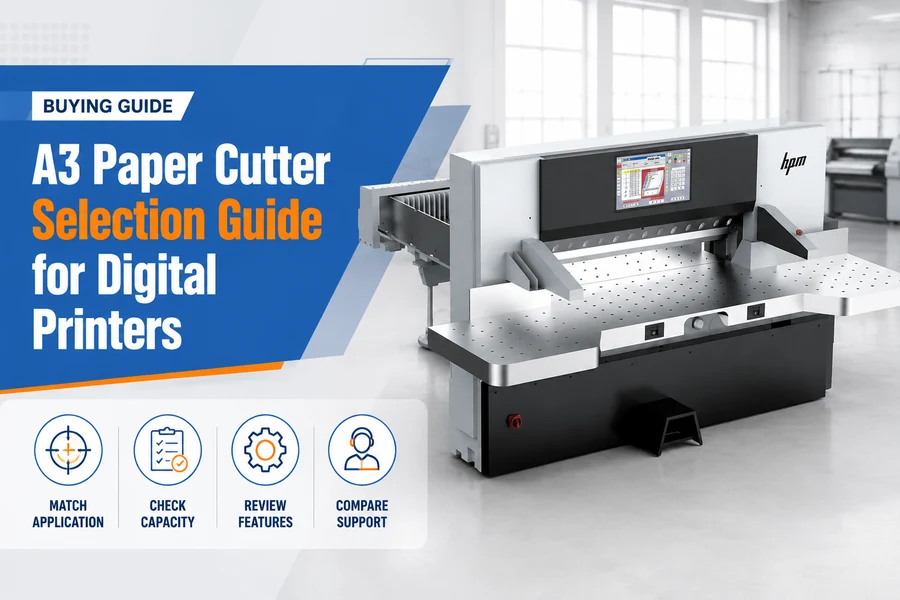
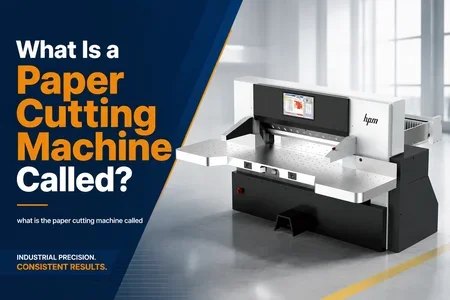
Article Overview: For procurement teams and technical evaluators, this article compares industrial guillotine machines and programmable paper cutters across key decision dimensions. Based on industry evidence and machine specifications, we answer three core questions: the difference between manual and automated cutting, which industries favor manual control, and whether programmable cutters can handle thick stacks. The conclusion provides a decision framework for your operation.

What is the difference between a guillotine and a programmable paper cutter?
A guillotine uses manual setup and blade actuation, offering operator-dependent precision, while a programmable cutter automates backgauge positioning and cut sequences, delivering higher repeatability and lower labor skill requirements.
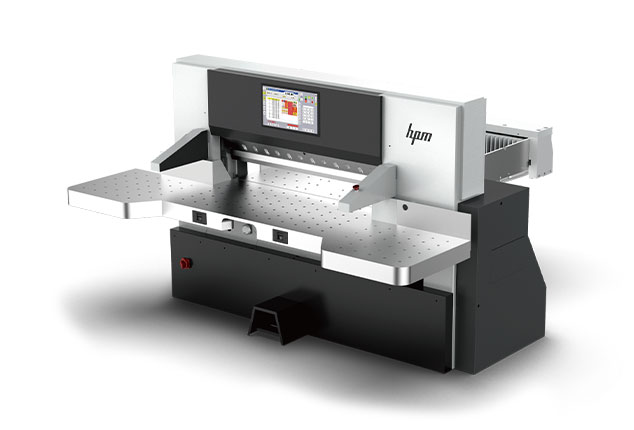
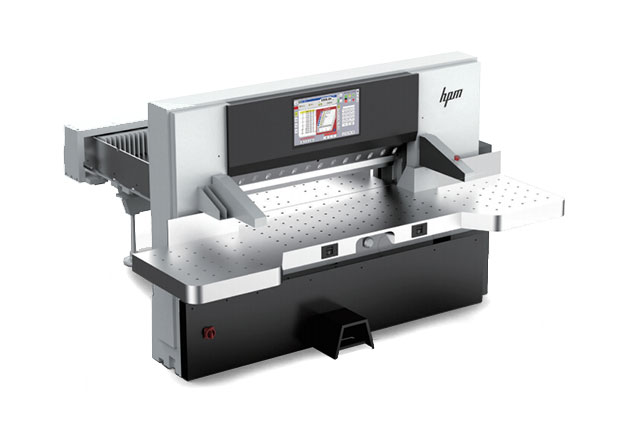
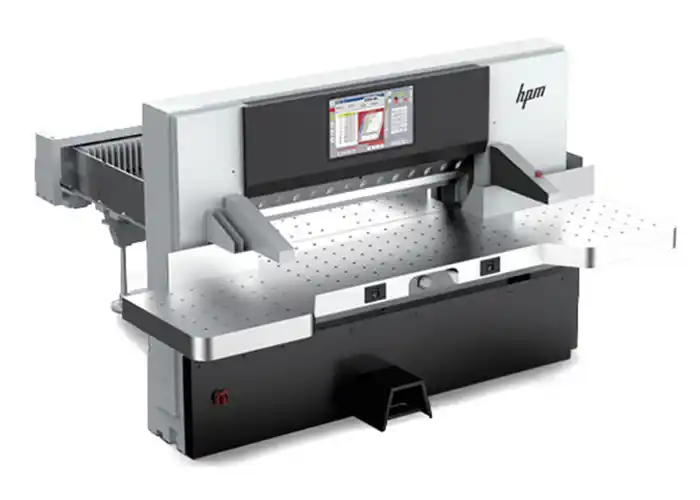
The core distinction lies in control and repeatability. A manual industrial guillotine requires the operator to set the backgauge position, register the stock, and pull the blade—each cut introduces potential variation. In contrast, a programmable cutter stores job programs, automates backgauge movement via servo motor, and can recall exact positions for multi-up jobs. This significantly reduces human error and speeds up production, especially for repeat orders. Accuracy specifications vary by model; for example, the HPM S22 uses servo control for precise positioning. Manual guillotines depend heavily on operator skill, while programmable models can maintain consistency across shifts. The automated workflow also allows integration with prepress and MIS systems, enabling paperless job transfers. However, the guillotine’s simplicity can be an advantage for on-site adjustments and one-off cuts where programming overhead is not justified.
Example: A print shop processing multiple SKUs in high volume will benefit from the programmability of a cutter like the HPM S22, which can parse PDF files directly and generate cutting layouts automatically. Conversely, a restoration studio that trims unique art pieces may find a manual guillotine faster to set up for each job.
When evaluating, consider the typical job mix: if your shop runs many repeat orders, the programmable cutter reduces setup time; if jobs are highly variable and low volume, the manual guillotine offers greater flexibility.
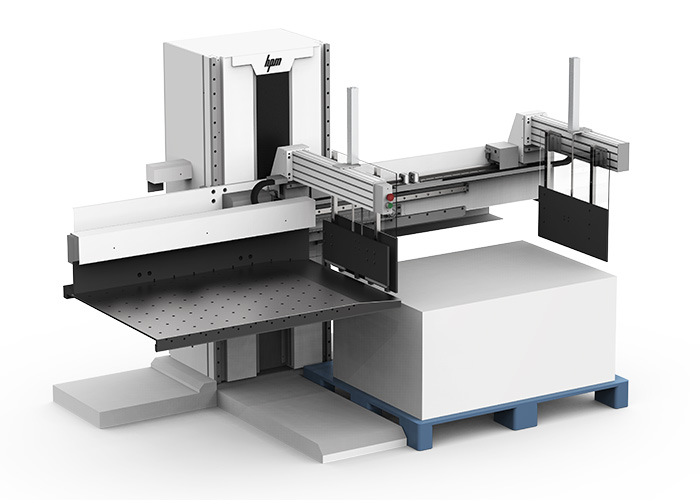
Which industries prefer guillotine cutters over programmable cutters?
Trade binderies, small print shops, and specialty cutting operations often prefer guillotine cutters for their simplicity, lower upfront cost, and operator control over non-standard jobs.
Industries where job variety is high and volume is low—such as fine art print shops, restoration studios, and sample-making departments—benefit from the tactile control of a manual guillotine. Operators can make micro-adjustments to cut position based on visual inspection, which is difficult with a fully automated system. Additionally, in environments where capital budgets are constrained, a manual guillotine offers a lower entry price point and simpler maintenance. Many small binderies still rely on manual guillotines for book trimming and cutting non-standard substrates like leather or fabric.
Conversely, high-volume commercial print finishing, packaging converters, and publishing houses typically favor programmable cutters to reduce labor cost and increase throughput. The decision often hinges on whether the shop runs many short-run jobs with frequent changeovers or long runs with consistent formats. Example: A shop specializing in custom packaging prototypes may prefer manual control to adapt quickly to each new design, while a packaging converter running thousands of identical carton blanks will automate to maintain consistency.
For procurement teams, conducting a job type audit—categorizing runs by volume, repeat frequency, and material diversity—helps determine the best fit.
Can a programmable cutter replace a guillotine for thick stacks?
Programmable cutters can handle thick stacks, but guillotines often provide greater mechanical leverage and clamp force for very dense or stiff materials.
Maximum stack height varies by model. Typical programmable cutters offer stack capacities from 80 mm to 130 mm, while heavy-duty manual guillotines may accommodate up to 165 mm or more. The clamping system on a manual guillotine is directly linked to the foot pedal or hydraulic pump, giving the operator immediate feedback on stock hold-down. Programmable models use hydraulic or electric clamping, which may be less responsive on extremely thick or uneven stacks. For operations regularly cutting thick stacks of heavy board or adhesive-backed materials, a manual guillotine remains a robust choice. However, for standard paper stacks within the machine's rated capacity, modern programmable cutters offer sufficient cutting force and faster cycle times. The trade-off: throughput versus maximum material handling.
Example: A book binder trimming 15 mm stacks of paperback books can productively use a programmable cutter, whereas a packaging plant cutting 150 mm stacks of corrugated board would need a heavy-duty guillotine.
When evaluating, check the manufacturer’s specifications for maximum stack height and clamp opening. For instance, the HPM S22 has a specified stack capacity (consult datasheet). Always test your specific material and thickness before committing to a machine type.
Decision framework by evaluation dimension
When comparing guillotines and programmable cutters, consider the following trade-offs. Specifications vary by supplier; always request certified datasheets.
Cutting accuracy
Manual guillotine: Accuracy depends on operator skill and machine condition. Typical achievable tolerance is in the range of ±0.5–1.0 mm, but this is not guaranteed.
Programmable cutter: Accuracy is controlled by servo motors and can reach ±0.1–0.3 mm, depending on the model and maintenance. Verify with manufacturer.
Buyer note: For tight-tolerance jobs, a programmable cutter reduces variability. However, if the operator is experienced and the machine well-maintained, a guillotine may still meet requirements.
Stack height capacity
Manual guillotine: Often designed for taller stacks, up to 165 mm or more on heavy-duty models.
Programmable cutter: Typically limited to 80–130 mm, though some high-end models exceed that.
Buyer note: If your production regularly cuts stacks over 130 mm, a programmable cutter may not be suitable without specific configuration.
Labor skill requirements
Manual guillotine: Requires trained operator; setup and cutting demand experience.
Programmable cutter: Guided interface reduces skill demand; operators can be trained in days.
Buyer note: For shops with high turnover or limited skilled labor, programmable models lower training investment.
Repeat job suitability
Manual guillotine: No memory for repeat orders; each job requires manual setup.
Programmable cutter: Stored programs allow instant recall; suitable for repeat runs.
Buyer note: If your workload includes frequent repeats, programmability pays back quickly.
Integration with digital workflow
Manual guillotine: Standalone; no connectivity.
Programmable cutter: Supports network job submission, CIP4, JDF; fits Industry 4.0 environments.
Buyer note: If your plant uses digital production planning, a programmable cutter reduces manual data entry and errors.
FAQ
What is the main advantage of a guillotine cutter?
The main advantage is simplicity and operator control. Guillotines allow instant manual adjustments, lower upfront cost, and greater mechanical clamping force for thick or difficult materials.
How does cutting accuracy compare between the two?
Programmable cutters offer higher and more consistent accuracy due to servo-controlled backgauge, while manual guillotines depend on operator skill. Verify exact numbers with manufacturer datasheets.
Which cutter type is better for short-run jobs?
For short-run jobs with frequent size changes, manual guillotines can be faster due to no programming time. However, if the same sizes repeat often, programmable cutters save time in the long run.
Can a programmable cutter handle the same stock as a guillotine?
Not always. Programmable cutters typically have lower maximum stack height and may struggle with very dense or coated stocks. Always verify specifications with your material.
Conclusion
Choosing between an industrial guillotine and a programmable paper cutter depends on your operational priorities: accuracy and repeatability versus flexibility and cost. For high-volume, consistent work with minimal operator intervention, a programmable cutter offers clear advantages. For low-volume, variable work requiring tactile control, a manual guillotine remains valuable. Assess your typical job mix, labor skill, and budget, then validate against machine specifications. For a broad overview of available options, Explore HPM paper cutting machines overview to see how modern machines match your requirements.