
 English
 Français
Jul 18, 2026
Jul 18, 2026
Jul 17, 2026
Jul 14, 2026
Apr 09, 2026
Mike Dooley
For many print shop owners, the finishing stage is a silent profit killer. You’ve printed a perfect run of brochures, flyers, or books – but then the guillotine becomes a bottleneck. Operators rush to align stacks, clear trimmings, and reset back gauges. One miscalculation, and an entire batch is scrap.
This scenario plays out daily in small to mid‑size print shops. The real question isn’t whether you need better cutting equipment – it’s how to design a paper cutting line that eliminates repetitive manual steps and keeps your jobs moving.
A single hydraulic or electric cutter works fine for low volumes. But as order quantities grow and turn‑around times shrink, the limitations become obvious:
Manual feeding & unloading – Every ream must be positioned, cut, then removed by hand.
Frequent repositioning – Multiple cuts on the same sheet require repeated operator intervention.
Waste handling – Trimmings pile up, creating safety hazards and cleaning delays.
Inconsistent accuracy – Operator fatigue leads to drift in stack alignment.
According to industry benchmarks, a standalone paper cutting machine can spend up to 40% of its cycle time on non‑cutting actions (loading, aligning, unloading, waste removal). That’s a huge drag on your hourly output.
A true “paper cutting line” isn’t one machine – it’s an integrated workflow. Here’s how professional print shops structure it:
1. Automated loading & jogging
A lifting trolley or automatic pallet feeder brings the stack to the correct height. A jogging table vibrates the pile so edges are perfectly aligned before entering the cutter. Result: No more manual tapping or crooked stacks.
2. High‑precision cutting with programmable back gauge
The cutter itself should store job recipes (size, thickness, cut sequence). Operators recall a job number, and the back gauge moves automatically. Some systems even include a “cut and unload” mode that ejects the finished pile onto a conveyor.
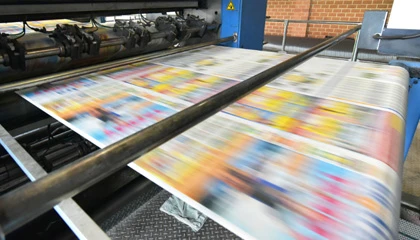
3. Automatic trimming removal & stacking
After each cut, an air blast or conveyor belt carries waste strips to a bin. The finished stacks move to a delivery table or directly to a banding station. This continuous flow cuts idle time dramatically.
Even with good equipment, shops sabotage their own efficiency. Watch out for these pitfalls:
Over‑sized upstream equipment – If your press outputs larger sheets than the cutter can handle, you’ll add an extra trimming step. Match formats.
Ignoring air requirements – Pneumatic stack lifts and waste blowers need clean, dry air. A neglected compressor causes erratic performance.
Poor workflow layout – Operators should not walk around the cutter to load or unload. A straight‑through or L‑shaped line (with conveyor exit) is optimal.
If you are planning to upgrade or build a new cutting line, understanding the mechanical integration is critical. You can explore different automated cutting configurations here to see how loading, cutting, and stacking modules fit together.
A paper cutting line is not for every shop. Ask yourself three questions:
Volume – Do you cut more than 50 reams (or 10,000 sheets) per shift?
Variety – Do you repeat the same cut sizes frequently? Programmable memory pays off quickly.
Labor cost – Are skilled operators spending over 30% of their day on loading/unloading?
If you answer “yes” to at least two, a linked cutting line will likely pay for itself within 12–18 months through labor savings and reduced waste.
For lower volumes, a well‑maintained standalone unit with a digital back gauge may still be the right choice. The key is to avoid over‑automating simple jobs – but never underestimate the value of consistent accuracy.
Even the best paper cutting line will drift out of spec without proper care. Follow these professional practices:
Blade inspection every 20,000 cuts – Dull blades tear rather than shear, leaving fuzzy edges and increasing dust.
Daily cleaning of the back gauge rails – Paper dust and adhesive residue cause positioning errors.
Monthly check of hydraulic oil – Contaminated oil damages seals and reduces clamping force.
Quarterly calibration – Use a certified test strip to verify cut accuracy to ±0.3mm.
A simple logbook (or digital maintenance tracker) helps you spot wear patterns before a breakdown halts production.
Beyond efficiency, a smooth cutting line improves your service quality. You can offer tighter tolerances (e.g., ±0.2mm for luxury packaging), faster turnaround on reprints, and cleaner edges without nicks. For print shops that also do bookbinding, a cutting line with a built‑in creasing or scoring module opens new product lines – from greeting cards to presentation folders.
One European print house shared that after installing a coordinated cutting line, they won a contract for a high‑end art catalog because they could guarantee register accuracy across 5,000 copies. The client had rejected three other shops for inconsistent trimming.
Designing a paper cutting line is about matching your volume, floor space, and job mix with the right sequence of equipment. Start by auditing your current cutting process – time each step (loading, aligning, cutting, unloading, cleaning). The biggest time sinks often surprise owners.
If you see that manual handling eats more than 20 seconds per cycle, it’s time to consider automation. And if you want to see how modular components (joggers, conveyors, waste removers) integrate with a reliable cutter, check out HPM’s integrated finishing solutions. They offer pre‑sales layout consulting to help you avoid the common mistakes listed above.
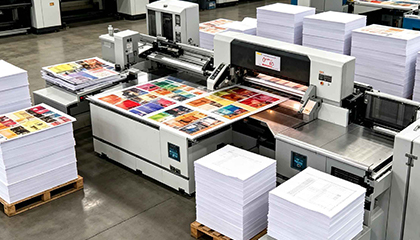
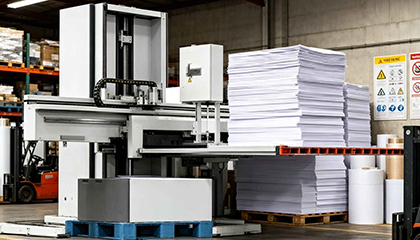
A paper cutting line is not just a machine purchase – it’s a workflow investment. The best shops treat it as a system, not a standalone tool. Start small, measure gains, and scale as your orders grow. Your operators will thank you, and your profit margin will show the difference.
Have you encountered a surprising bottleneck in your finishing department? Share your experience in the comments – or contact HPM for a free workflow analysis to see exactly where your cutting line could improve.
GET A QUOTE