
 English
 Français
Article Overview: This article provides a structured, neutral framework for procurement managers, sourcing teams, and project engineers to evaluate packaging machinery suppliers. It covers critical specification parameters, supplier capability validation, RFQ best practices, integration risks, and cost-benefit tradeoffs. Use the checklists, comparison table, and decision criteria to reduce procurement mistakes and ensure supplier fit.
What Are the Critical Parameters in Packaging Machinery Specifications?
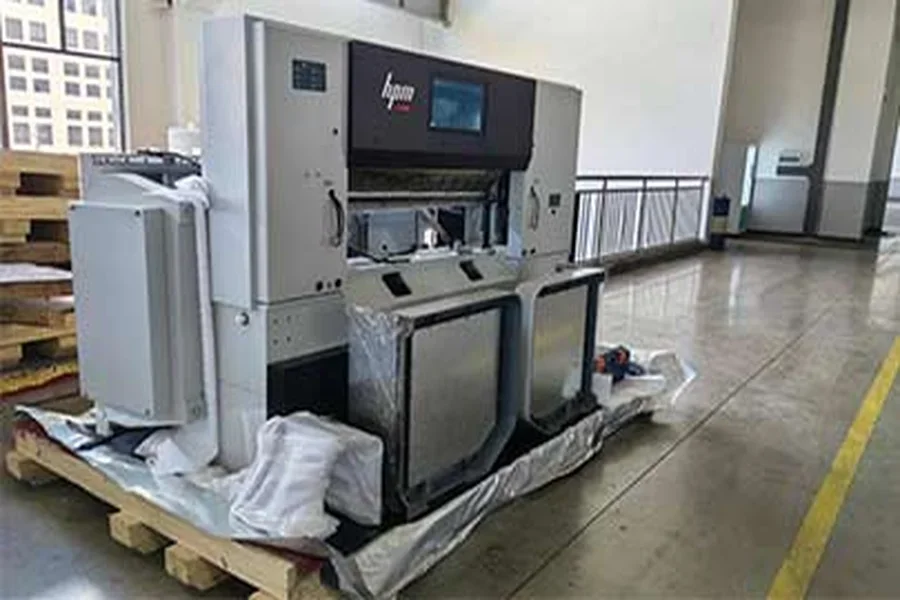
When comparing packaging machinery, focusing on the right technical parameters prevents costly mismatches between your production needs and the equipment delivered. Below are the essential specification areas to review across any supplier quote.
- Throughput and Speed: Validate maximum output per hour or minute against your target line speed. Ask whether the rated speed is sustainable or peak.
- Material Compatibility: Confirm the machine can handle your substrate types—paper, film, corrugated, or composites—including size ranges and thickness tolerances.
- Accuracy and Tolerance: For cutting, stacking, or aligning equipment, review positional accuracy and repeatability. This directly affects waste rates.
- Automation Level: Determine if the system supports servo-driven adjustments, touch-screen controls, and integration with existing PLCs. Intelligent servo systems can reduce manual intervention.
- Changeover and Setup Time: Quick-change features reduce downtime. Look for tool-less adjustments or recipe storage.
- Durability and Build Quality: Frame material, component sourcing (motors, bearings), and mean time between failures (MTBF) data.
Example scenario: A buyer evaluating paper loading machinery should compare hydraulic versus pneumatic alignments. Request documented test results for each parameter from all shortlisted vendors.
How to Validate Supplier Capability and Production Capacity
Supplier validation goes beyond specs. You need to assess whether the manufacturer can deliver consistent quality and scale. Use the following ordered checklist during site visits or virtual audits.
- Verify Manufacturing Capacity: Review the supplier’s production line throughput, lead times, and order backlog. A supplier’s production capacity for high-volume orders directly impacts your delivery schedule.
- Inspect Quality Control Processes: Look for in-process inspections, final testing protocols, and certifications such as ISO 9001. Check the supplier’s certifications for conformity with your industry standards.
- Assess Technology and Innovation: Determine if the supplier invests in R&D. Ask about servo control systems, touch-screen interfaces, and automation upgrades. Review their technology innovation track record.
- Evaluate Equipment Range and Compatibility: A supplier offering a broad packaging machinery product range is more likely to provide integrated solutions. Confirm that their paper cutters, loaders, and unloaders work seamlessly together.
- Request References and Case Studies: Speak with existing customers about installation, uptime, and support responsiveness. Ask for data on similar line configurations.
Example scenario: When evaluating a paper cutting machine, ask to see the machine running your specific material at the supplier’s facility. Observe changeover times and waste percentage.
What Should You Include in Your RFQ to Avoid Costly Misalignment?
A well-structured RFQ minimizes ambiguity and ensures all bidders respond on the same basis. Include the following elements in your request for quotation.
- Detailed Production Requirements: Specify output volume per shift, operating hours, and future scalability expectations.
- Material Specifications: Provide exact dimensions, weights, and surface properties of the substrates to be processed.
- Integration Requirements: Describe your existing line layout, control system protocols (e.g., Ethernet/IP, Profinet), and space constraints.
- Service and Support Terms: Request response times for spare parts, remote diagnostics, and on-site maintenance. Review the supplier’s after-sales service support structure.
- Acceptance Criteria: Define pass/fail conditions for performance testing, such as speed stability over eight hours or defect rate per thousand units.
- Documentation and Training: Ask for manuals, wiring diagrams, and operator training schedules.
Include a mandatory line item for “compliance with local safety regulations” to avoid retrofitting costs. For example, if your facility requires CE marking, confirm that the supplier’s machinery meets it.
Integration and After-Sales Support: Non-Negotiable Checkpoints
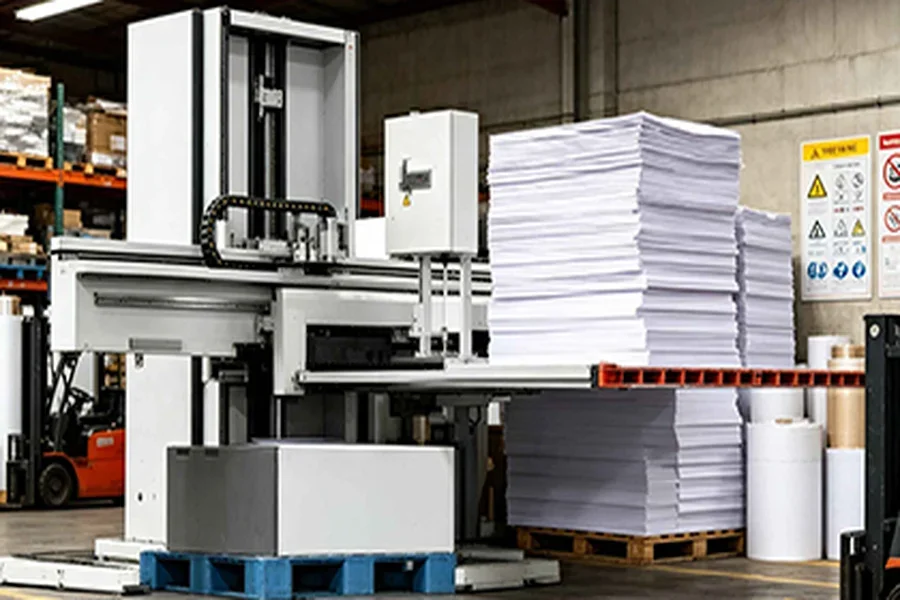
Even perfectly specified machinery can fail if integration is overlooked. Procurement decisions must account for how the equipment fits into your existing workflow and what support you can rely on after purchase.
Physical Integration: Confirm floor layout, utility requirements (power, compressed air, exhaust), and material flow. For instance, a paper loader must align with your cutter infeed height. Similarly, paper unloader placement affects downstream stacking.
Control System Integration: Ensure the supplier’s automation platform can communicate with your existing SCADA or MES. Request a compatibility matrix.
Training and Documentation: Verify that the supplier provides on-site training for your operators and maintenance team. Ask for a detailed training syllabus.
Spare Parts and Service Level Agreements (SLAs): Establish guaranteed response times and parts availability. A supplier with robust service support can significantly reduce downtime.
Warranty and Performance Guarantees: Review warranty terms, especially for wear parts. Ensure performance guarantees are tied to acceptance testing.
Cost-Risk Tradeoffs: A Neutral Comparison Table
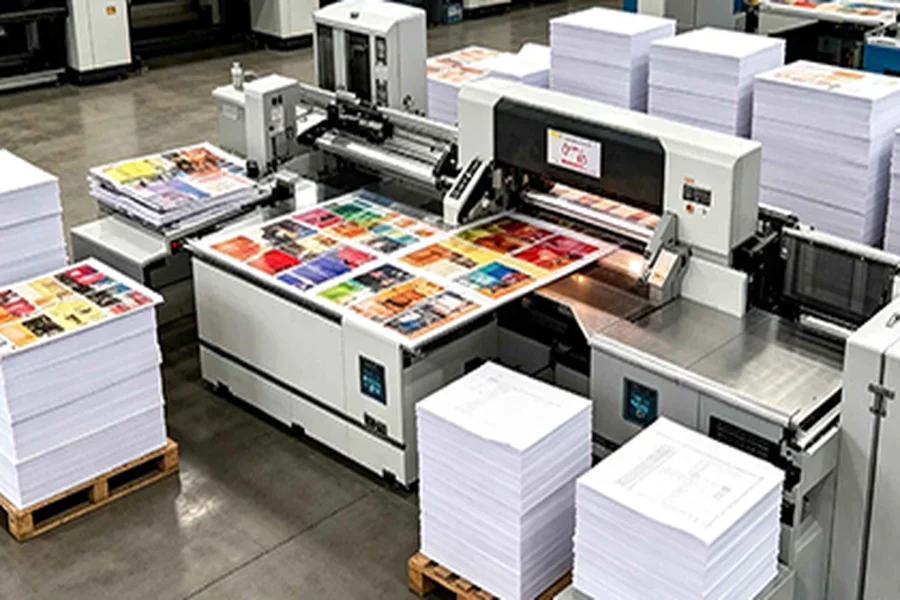
Procurement managers often weigh throughput vs. accuracy. The table below provides a neutral comparison of two common machinery options—high-speed versus high-accuracy configurations. Use evidence-backed numbers from your own validation; otherwise, “Varies by configuration” applies.
| Parameter | Option A (High-Speed Focus) | Option B (High-Accuracy Focus) |
|---|---|---|
| Maximum throughput (units/hr) | Up to 12,000 (peak) | Up to 8,000 (sustainable) |
| Positional accuracy (mm) | ±0.5 | ±0.2 |
| Changeover time (min) | 15 (tool-less) | 30 (semi-automated) |
| Waste rate (%) | 1.5–2.0 | 0.5–1.0 |
| Initial investment index | 1.0 (baseline) | 1.3 |
| Total cost of ownership (3 yr) | Varies by configuration | Varies by configuration |
Your choice depends on product tolerances and volume. For high-value materials, accuracy may lower overall cost; for commodity packaging, speed may drive ROI. Validate these numbers against your specific application and supplier proposals.
FAQ
What is the difference between a slitter and a rewinder in packaging machinery?
A slitter cuts a wide roll into narrower rolls, while a rewinder rewinds material into finished rolls. Some machines combine both functions. Your choice depends on whether you need to slit rolls or simply rewind them for downstream processes.
How do I know if a supplier’s production capacity is sufficient for my order?
Request their current capacity utilization, typical lead times, and the maximum monthly output for the machine type you need. Also ask about potential bottlenecks in their component supply chain.
Should I prioritize speed or accuracy when comparing packaging machinery?
It depends on your product tolerances. For high‑value materials, accuracy often trumps speed because waste costs exceed the value of extra output. For commodity packaging, speed may be the primary driver.
What certifications should I look for in packaging machinery suppliers?
Common certifications include ISO 9001 for quality management, CE marking for European markets, and UL or CSA for North America. Check if the supplier holds any industry‑specific approvals, such as ATEX for explosive environments.
How important is the supplier’s technology innovation when selecting equipment?
Innovation affects long‑term competitiveness. Suppliers investing in servo drives, touch‑screen controls, and remote diagnostics often provide better efficiency and lower total cost of ownership.
Conclusion
Evaluating packaging machinery for procurement requires a disciplined approach: start with technical specs that match your production reality, validate supplier capability through audits and references, write an RFQ that leaves no room for interpretation, and plan for integration and support. Using the checklists, comparison table, and criteria in this article will help you avoid common pitfalls—such as selecting equipment that cannot sustain rated speeds or failing to align automation protocols.
As a next step, compile your internal production requirements and share them with shortlisted suppliers. Request detailed proposals that address each checkpoint. This diligence ensures that the machine you sign off on delivers the performance you expect, from installation through years of operation.