
 English
 Français
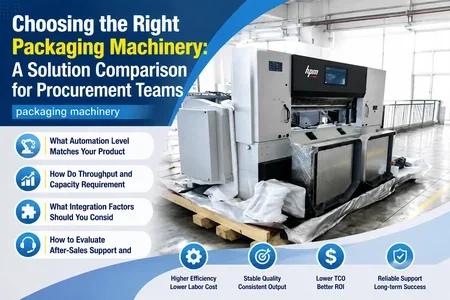
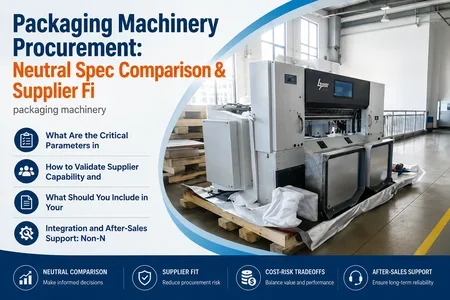
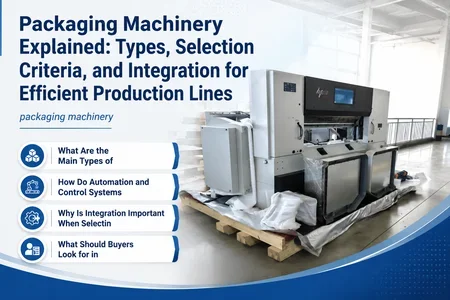
Article Overview: This guide helps procurement teams, CTOs, and technical architects objectively evaluate packaging machinery solutions. We focus on trade-offs, technical fit, operating implications, and buyer-side risks rather than hype. Use this decision framework for RFQ preparation and vendor evaluation.
What Automation Level Matches Your Production Volume?
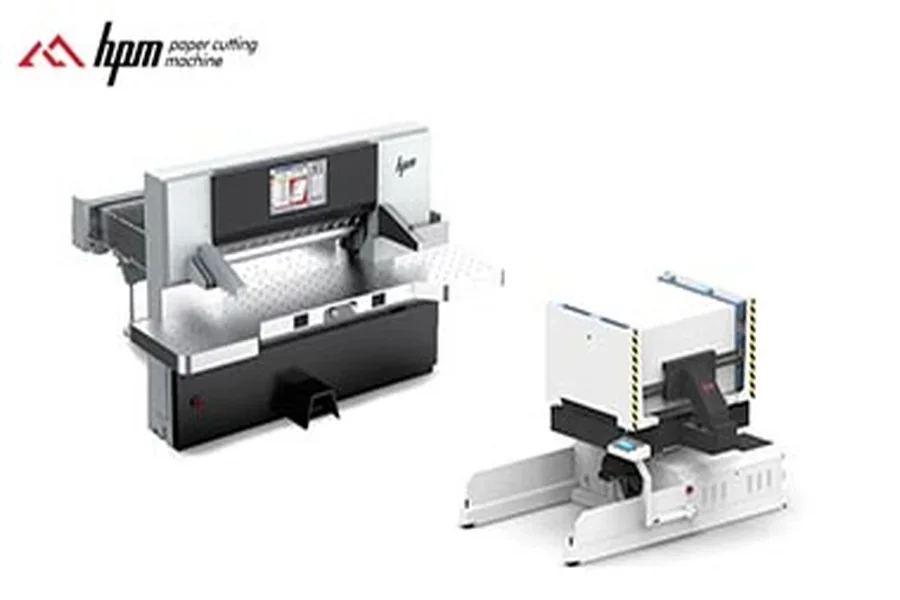
Packaging machinery ranges from manual and semi-automatic units to fully automated integrated lines. The choice depends on production volume, labor costs, and quality consistency requirements. For low-volume, high-mix operations, manual or semi-automatic machines offer flexibility and lower upfront investment. However, they require more operator intervention and may lead to variability in output. Fully automated systems, such as those using servo-controlled stack unloaders or pile turners, reduce human error and increase repeatability. When evaluating, consider not just the machine cost but the total cost of ownership (TCO), including labor, maintenance, and downtime. A thorough production capacity analysis helps match automation level to actual demand.
- Production volume: high volume justifies automation; low volume may not.
- Labor availability: regions with skilled labor shortages benefit from automation.
- Quality requirements: automated systems provide consistent cuts and stacking.
How Do Throughput and Capacity Requirements Influence Your Choice?
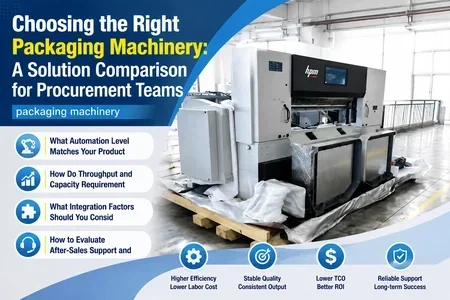
Throughput—measured in sheets per minute or meters per minute—is a critical specification. However, published speeds often reflect ideal conditions. Actual throughput depends on material type, setup time, and maintenance intervals. For example, a high-speed cutter may achieve up to 38 m/min under optimal conditions, but real-world output may be lower due to paper alignment and loading/unloading delays. When comparing options, ask suppliers for throughput data under your specific material grade and size. Also evaluate the capacity of upstream and downstream equipment, such as paper loaders and unloaders, to ensure the line is balanced. A bottleneck in one station reduces overall line efficiency. Conduct a detailed capacity assessment using the Production Capacity for high-volume scenarios to validate supplier claims.
- Request throughput figures with standard deviation, not just peak.
- Verify that auxiliary equipment (e.g., pile turners, loaders) matches the cutter speed.
- Assess changeover time between different job sizes.
What Integration Factors Should You Consider?
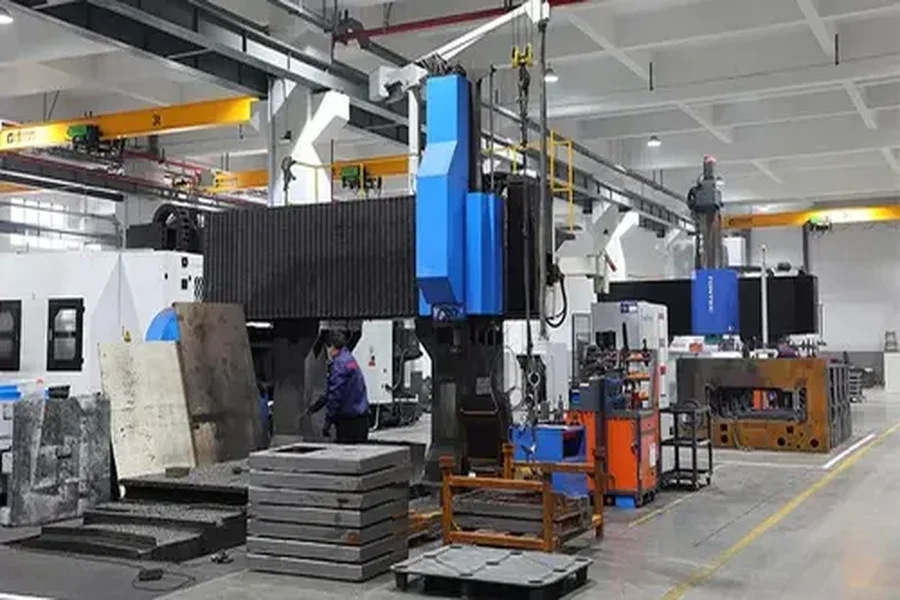
Integration is not just about mechanical fit—it includes electrical, control, and software harmonization. Many packaging machinery lines involve components from different vendors: a paper cutter from one supplier, a stacker from another, and a pile turner from a third. When mixing brands, request detailed interface specifications and test the system at the vendor's site. Some manufacturers offer comprehensive integrated solution packages that include cutters, loaders, unloaders, and pile turners, which simplifies integration. Evaluate control protocols (PLC, SCADA compatibility) and whether the supplier provides a single point of responsibility for line performance. Visiting a technology innovation center can reveal how components work together under real conditions.
- Does the supplier provide a full line solution or only individual machines?
- What control protocols are used (e.g., PLC, SCADA compatibility)?
- Is there a single point of responsibility for line performance?
How to Evaluate After-Sales Support and Total Cost of Ownership
After-sales support is a make-or-break factor. Evaluate the supplier's service network, response time for breakdowns, and availability of training. Some suppliers offer maintenance contracts that include scheduled inspections and remote diagnostics. Also check support documentation for spare parts availability and warranty terms. Beyond support, a total cost of ownership (TCO) model should factor in energy consumption, consumables, and expected lifespan. For example, a semi-automatic cutter may have lower initial cost but higher per-unit labor expense, while a fully automated line reduces variable costs at high volumes. Use TCO analysis to compare options over a 5- to 10-year horizon.
Key Comparison Table: Stand-Alone vs. Integrated Line
| Criterion | Option A: Semi-Automatic Stand-Alone | Option B: Fully Automated Integrated Line | Buyer Note |
|---|---|---|---|
| Automation Level | Operator-dependent; requires manual stacking and alignment | Servo-controlled; includes automatic loading, cutting, and unloading | Consider labor cost trends and quality consistency needs. |
| Throughput (example) | Varies by operator skill; typically lower | Up to 38 m/min (example based on high-speed cutters); validate with your material | Request real-world data; ideal speeds differ from actual. |
| Integration Complexity | Low; standalone machines | High; requires conveyor systems, software synchronization | Assess in-house technical capability for integration. |
| After-Sales Support | Simple maintenance; often local service | Comprehensive support contracts; remote diagnostics | Check spare parts availability and response times. |
| Initial Investment | Lower capex; higher opex | Higher capex; lower per-unit cost at high volumes | Use TCO model for your production forecast. |
Frequently Asked Questions
What is the typical payback period for automated packaging machinery?
Payback periods vary widely based on throughput, labor cost savings, and material waste reduction. For high-volume operations, payback can be 12 to 24 months, but you should run your own financial model using supplier data and your specific production parameters.
How often does packaging machinery require maintenance?
Maintenance intervals depend on usage and environment. For industrial cutters, preventive maintenance is recommended every 500–1000 operating hours, but consult the manufacturer's guidelines. Regular lubrication and blade replacement extend equipment life. Detailed schedules are often available in the supplier's FAQ section.
Can I integrate older machines with new automated lines?
Integration is possible if older machines have compatible interfaces (e.g., standard sensors, PLC). However, retrofitting may require custom adapters and additional controls, increasing cost and complexity. It is often more reliable to source a complete line from one supplier. Check auxiliary equipment compatibility before deciding.
What should I look for in a warranty?
Look for coverage of both parts and labor, a warranty period of at least 12 months, and provisions for expedited spare parts delivery. Some suppliers offer extended warranty options that cover preventive maintenance. Review sample warranty terms from paper unloader documentation as an example.
Conclusion
Choosing the right packaging machinery involves balancing automation level, throughput, integration complexity, and after-sales support. There is no one-size-fits-all solution; the best choice depends on your production volume, labor environment, and long-term operational strategy. Use the comparison criteria in this article as a framework for discussions with suppliers. Always request performance data under your specific conditions and conduct a total cost of ownership analysis. By focusing on objective trade-offs and buyer-side risks, your procurement team can make a more informed decision. For further guidance on integrating these metrics, explore how modern systems can align with your production goals through the technology innovation resources.