
 English
 Français
Article Overview: This article provides an early-stage research framework for technical and procurement leaders evaluating packaging machinery. It explains how site conditions, production capacity needs, delivery timelines, and measurable performance outcomes should guide the selection process, without bias toward any specific manufacturer. Concrete examples from commonly available equipment are used to illustrate key decision points, always emphasizing general industry practices.
What Site Factors Influence Machinery Selection?
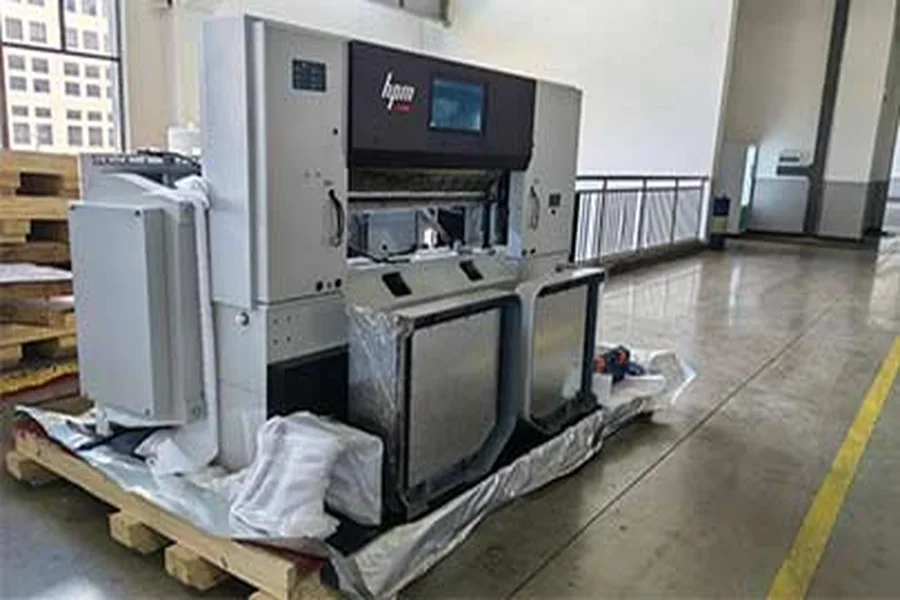
Selecting packaging machinery starts with understanding the physical and operational constraints of your facility. Key factors include:
- Available floor space and layout for material flow
- Existing upstream and downstream equipment compatibility
- Required throughput speeds and batch sizes
- Operator skill levels and training needs
- Maintenance access and spare parts availability
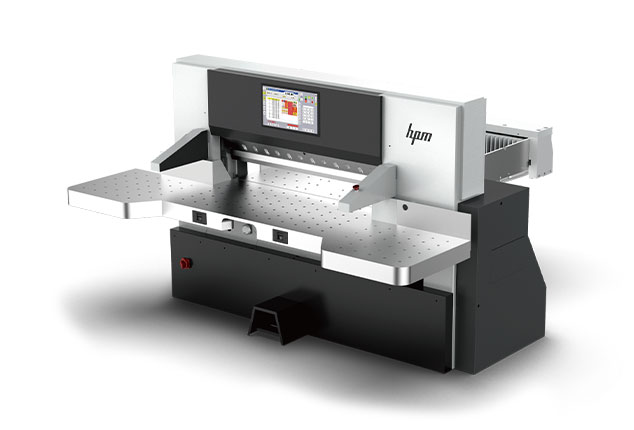
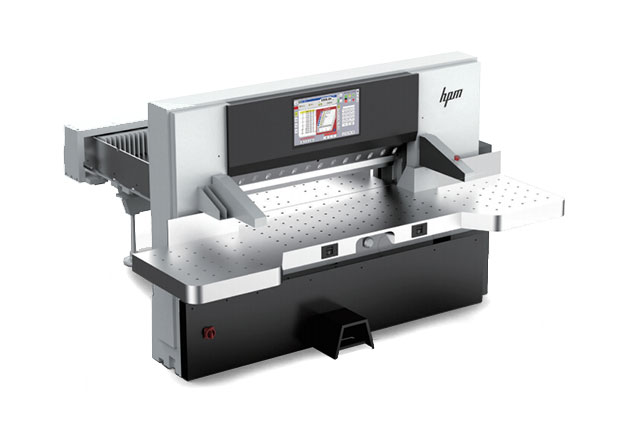
For example, a paper converting line that integrates a pile turner must account for the unit’s footprint, air supply requirements, and the operator interface that will be used daily. Early-stage research should prioritize mapping these factors against your current site layout before narrowing equipment options. Many manufacturers offer virtual layout planning as part of pre-sales support. For more on specific equipment categories, refer to paper cutting machine specifications and how they match common facility designs.
How Does Production Capacity Affect Equipment Choice?
Production capacity directly affects the type of machinery you can justify. Higher-capacity lines demand more robust automation, faster cycle times, and larger material handling systems. Conversely, lower-volume operations may benefit from flexible, semi-automated machinery. A mismatch between capacity needs and equipment specifications often leads to either underutilization or frequent bottlenecks. Evaluating your actual throughput requirements against the manufacturer's stated capacity—typically in units per hour or sheets per shift—helps in selecting a system that aligns with your growth projections. The following table compares two common capacity approaches:
| Evaluation Criteria | High-Volume Automated Line | Flexible Semi-Automated Line |
|---|---|---|
| Throughput (units/hr) | 500–800+ | 100–300 |
| Changeover time | 15–30 min | 5–10 min |
| Operator skill level | Advanced PLC training | Basic interface training |
| Maintenance complexity | High (specialized technicians) | Moderate (in-house possible) |
| Scalability for growth | High for volume expansion | High for product variety |
Choosing between these options requires detailed analysis of your production forecasts. For deeper understanding of how manufacturers structure their operations to meet varying demands, consult a production capacity planning resource that outlines typical scaling strategies.
How to Evaluate Delivery and Installation Timelines
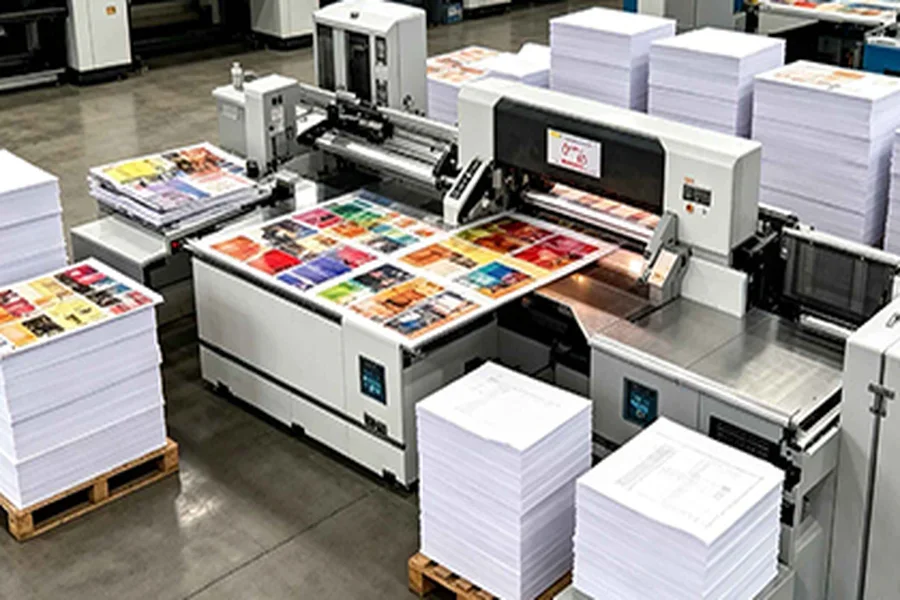
Delivery and installation are critical, yet often underestimated, parts of a packaging machinery project. Key checkpoints include:
- Lead time from order to shipment (typical ranges: 30 to 90 days depending on customization)
- Site preparation requirements such as electrical, pneumatics, and flooring
- Installation crew availability and duration on site
- Acceptance testing protocols before handover
For instance, an intelligent servo-driven paper stack unloader (with a working width from 1050 to 1650 mm) may require a separate control cabinet and network cabling. Confirming these details early prevents surprises during installation. Procurement teams should request a delivery milestone schedule and include penalty clauses for delays in the contract. Reliable installation service support can mitigate risks by ensuring proper setup and alignment with existing systems.
How to Approach Workflow Integration
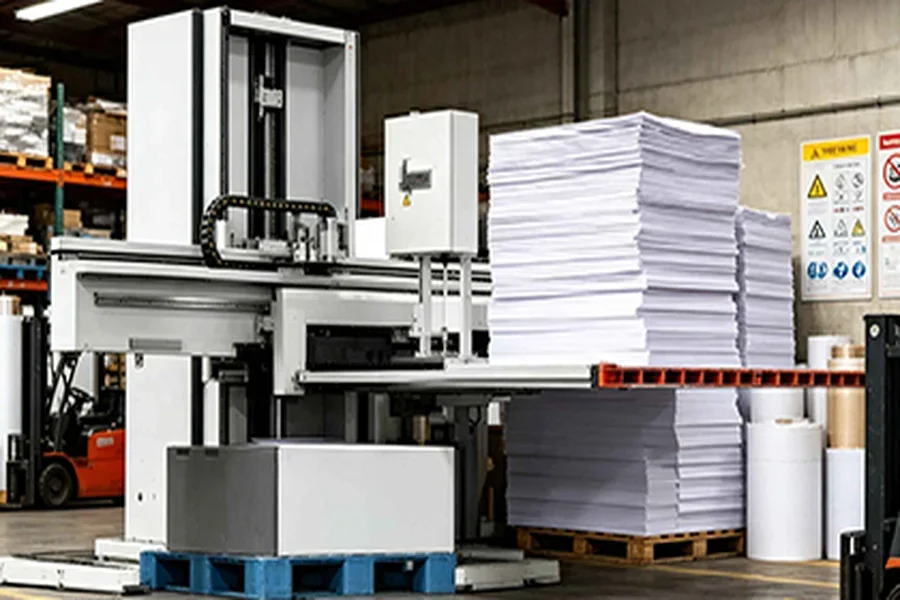
Packaging machinery covers a wide range of applications: cutting, stacking, aligning, wrapping, and palletizing. Integration into existing workflows requires careful consideration of material flow and automation level. A typical paper cutting line combines a paper cutter with upstream pile turners and downstream unloaders to minimize manual handling. For example, a modern paper cutter integrates with paper loaders and paper unloaders to create a continuous operation. When evaluating a supplier, ask for reference installations that match your product mix—whether you process A3/A4 sheets, large formats, or outer wrapping papers. Explore integrated packaging solutions that demonstrate how different machine types can be combined effectively. Additionally, reviewing efficiency-focused machinery systems can provide insight into workflow optimization methods.
How to Measure Post-Installation Performance
After installation, outcomes should be measured against predefined metrics. Common key performance indicators (KPIs) include:
- Throughput (units per shift or per hour)
- Changeover time between jobs
- Scrap rate due to misalignment or cutting errors
- Uptime percentage and mean time between failures (MTBF)
- Operator intervention frequency
For instance, air-alignment pile turners are designed to improve alignment accuracy through air flotation technology, which reduces manual corrections. Similarly, servo-driven unloaders offer faster cycle times compared to hydraulic systems. Capturing baseline data before installation and comparing it with post-installation performance provides a clear ROI picture. Over the long term, reliability depends on quality of components and availability of spare parts—factors you should verify with the supplier’s technology innovation track record and certifications for quality assurance.
FAQ
1. What is the typical lead time for packaging machinery?
Lead times vary widely by configuration and customization. Standard models may ship in 30 to 60 days, while highly customized lines can take 90 days or longer. Always confirm with the supplier.
2. How do I know if a piece of equipment will fit my facility?
Request the equipment’s detailed floor plan and installation drawings. Compare them with your site’s column spacing, clear height, and access paths. Many suppliers offer virtual layout planning as part of pre-sales support.
3. What level of training does the operator require?
Modern packaging machinery often uses touch-screen interfaces and PLC controls. Basic operator training usually takes two to five days. Suppliers typically include on-site training in the installation package.
4. Can packaging machinery be integrated with existing systems?
Yes, but the degree of integration depends on the age and communication protocols of existing equipment. Many modern machines support standard interfaces like OPC UA or Modbus. Check with the manufacturer for compatibility.
5. What maintenance is required for pile turners and unloaders?
Routine maintenance includes lubrication, belt inspection, sensor cleaning, and software updates. Some components, such as air filters on air flotation systems, need periodic replacement. Consult the machine’s manual for specific intervals.
Conclusion
Selecting packaging machinery is a multi-step process that requires careful evaluation of site constraints, production capacity needs, delivery timelines, and post-installation outcomes. Early-stage research should focus on gathering objective data about your own operations and comparing it against supplier capabilities. By using the framework outlined above—examining factors like floor space, throughput, integration, and reliability—you can make informed decisions that lead to successful installations. For a deeper look into how manufacturers structure their own production capacity to meet customer requirements, refer to a comprehensive production capacity system that details typical scaling strategies and operational benchmarks.