
 English
 Français
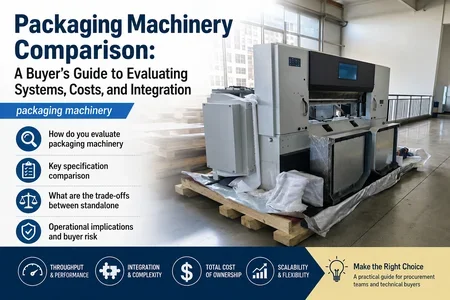
Article Overview: This neutral guide compares packaging machinery configurations—from standalone units to fully integrated lines—for procurement teams and technical decision-makers. It provides objective evaluation criteria, specification comparisons, trade-off analyses, and a structured decision framework to help you select the right system for your production needs. Emphasis is placed on measurable factors such as throughput, integration complexity, total cost of ownership, and scalability, rather than brand preference.
How do you evaluate packaging machinery options?
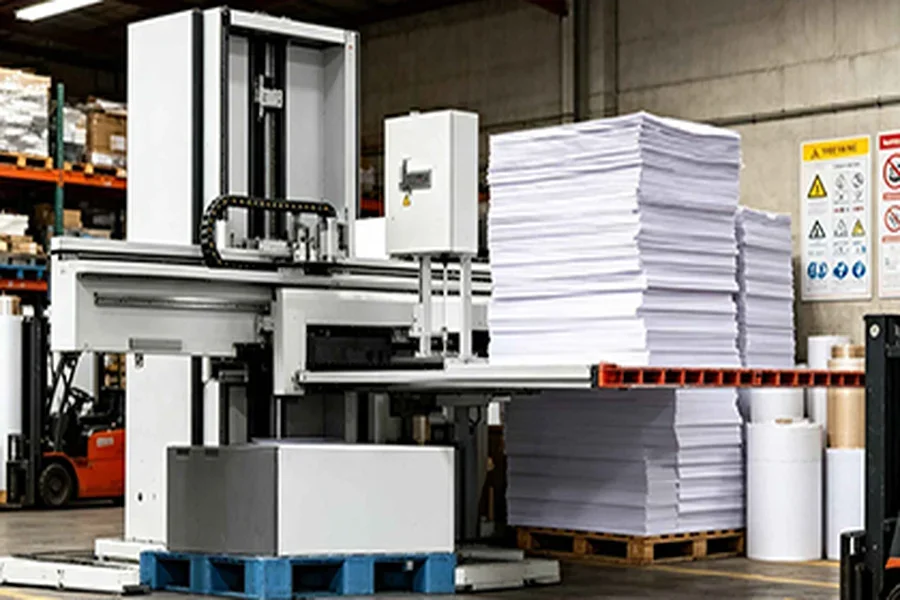
Selecting packaging machinery involves more than comparing price lists. Buyers must consider throughput, integration complexity, maintenance requirements, and long-term scalability. Common configurations include standalone equipment (e.g., a single pile turner or cutter) and integrated lines that combine stacking, cutting, and unloading into a continuous workflow. The choice hinges on production volume, floor space, and workforce skill level.
For example, a shop producing 10,000 reams per day may favor an integrated line with servo-driven unloaders, while a specialty printer running short runs might prefer modular standalone units. The evaluation should start with a clear specification of output requirements, material types, and available utilities. Your Production Capacity constraints often dictate the upper limit of machinery size and speed.
- Throughput: Determine peak and average output per shift.
- Material compatibility: Verify that the machinery handles your paper grade, thickness, and dimensions.
- Automation level: Assess the skill level required for operation and maintenance.
- Integration readiness: Consider whether the equipment can link with upstream or downstream processes.
Key specification comparison
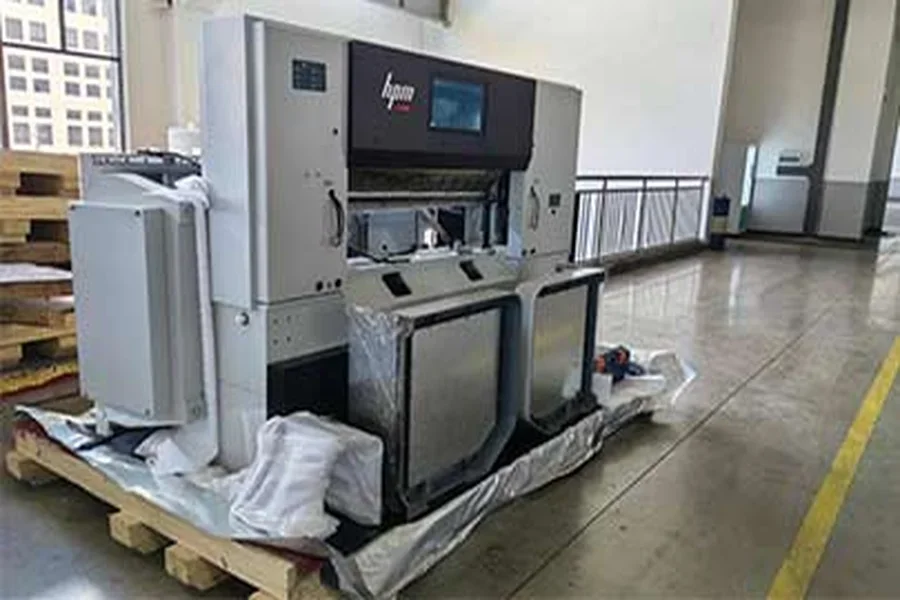
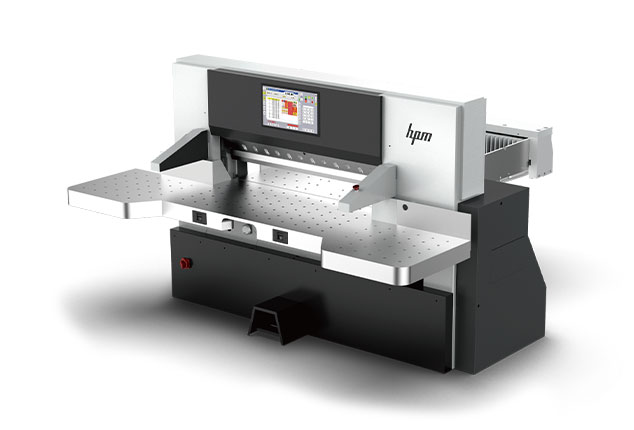
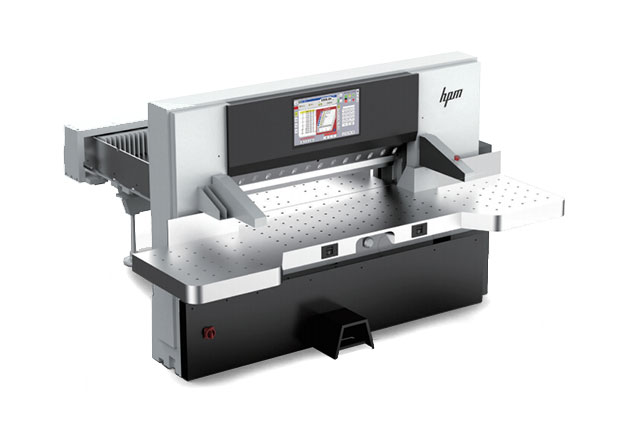
Specifications vary widely across packaging machinery types. To make an objective choice, compare critical parameters side by side. Below is an illustrative comparison of two common equipment categories: a standalone unit (e.g., a pile turner) and an integrated system (e.g., a line combining cutter and unloader). Always validate specifications against your specific production line setup.
| Criterion | Option A: Standalone Unit | Option B: Integrated System | Buyer note |
|---|---|---|---|
| Model range | 130/150/170 (mm format) | 1050-1650 (mm format) | Verify that model covers your substrate dimensions. |
| Operation type | Manual or semi-automated; requires operator intervention | Fully automated with centralized control | Standalone suits lower volume; integrated reduces labor. |
| Speed | Varies by configuration | Varies by line setup | Request cycle time data for your specific product mix. |
| Power consumption | Validate against your spec | Validate against your spec | Energy audits are recommended before procurement. |
| Integration capability | Can be linked to other units via conveyors; may need separate controls | Designed for inline integration; single control system | Consider future line expansion; standalone units are easier to replace. |
When comparing options, prioritize criteria that directly impact your production bottleneck. For more details on equipment types, see our products page.
What are the trade-offs between standalone equipment and integrated lines?
Choosing between standalone machinery and an integrated system involves trade-offs in flexibility, cost, and risk. Standalone units allow incremental investment and easier troubleshooting. However, they typically require more floor space and manual material handling between stages, increasing labor costs and cycle time.
Integrated lines reduce handling steps and improve throughput consistency. They also simplify operator training because all operations are coordinated from a single interface. The downside is higher upfront capital expenditure and greater dependency on a single vendor for maintenance.
- Capital outlay: Integrated lines often cost 30-50% more than equivalent standalone components.
- Maintenance complexity: A single point of failure can halt the entire line; standalone units allow partial operation.
- Scalability: Standalone equipment can be added or swapped incrementally; integrated lines require more planned upgrades.
- Operator skill: Integrated systems may require higher digital literacy due to centralized HMI.
For example, a mid-volume commercial printer might start with a standalone pile turner and cutter, then later add an unloader. A high-volume plant processing continuous sheets would benefit more from a fully integrated line. Evaluate your Technology Innovation roadmap before making the commitment.
Operational implications and buyer risk
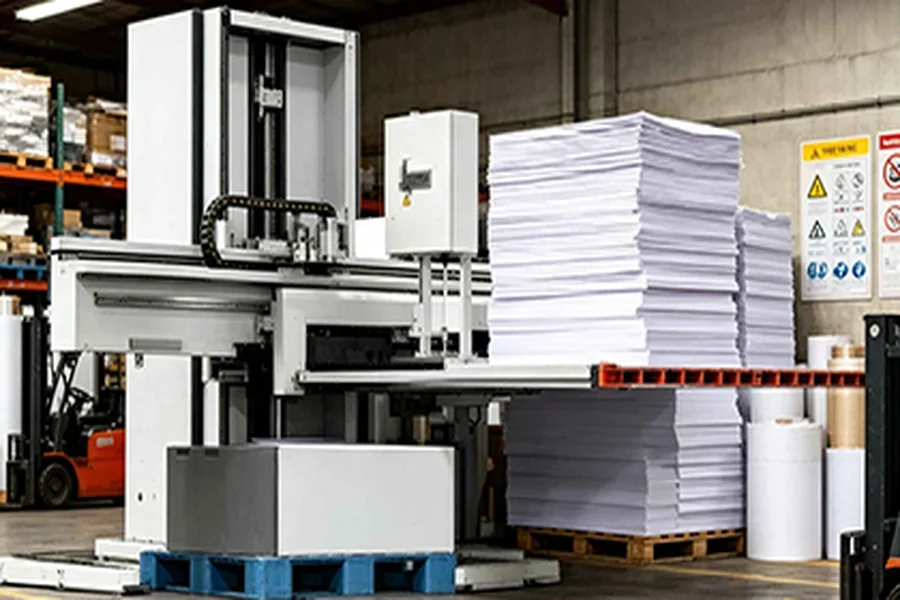
Purchasing packaging machinery carries operational risks that extend beyond the initial spec sheet. Key risk factors include spare parts availability, service response time, and compatibility with existing systems. Buyers should request documentation on mean time between failures (MTBF) and planned maintenance intervals. For instance, maintenance intervals directly affect downtime costs.
Another risk is the learning curve for new automation. Standalone units with touch screens may reduce manual setup time but require operators to be comfortable with digital interfaces. Integrated systems demand programming knowledge for parameter adjustments.
To mitigate risk, many procurement teams conduct a factory acceptance test (FAT) and request a full set of wiring diagrams and spare parts lists. Consider also the vendor's service capability: a supplier that manufactures its own components can often deliver replacements faster. Review our service and support pages for more on vendor evaluation. Additionally, ensure your Production Capacity system aligns with the machinery's output.
Decision framework for procurement teams
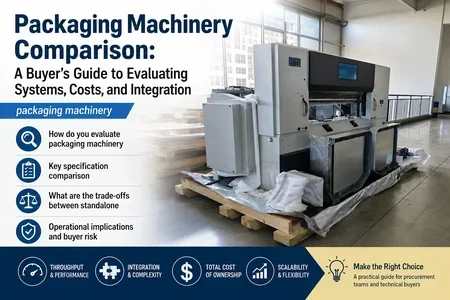
A structured decision framework helps avoid bias and ensures all relevant factors are weighed. Follow these steps:
- Define requirements: Quantify output, material types, floor space, and budget limits.
- Score each option against criteria using a weighted matrix. Include intangibles like vendor reputation and local support.
- Review total cost of ownership (TCO) over 5 years, not just purchase price.
- Validate with site visits to reference installations. Ask for documentation on reliability.
For example, a procurement team evaluating a new paper unloader should compare the integrated system's uptime data against its own maintenance capabilities. Involve operators early in the selection process to identify usability concerns. For additional support, consult our maintenance resources.
What are the key performance indicators for packaging machinery?
Beyond specifications, focus on KPIs such as Overall Equipment Effectiveness (OEE), changeover time, and energy consumption per unit produced. These metrics provide a more realistic view of operational efficiency. Use them to compare options objectively.
FAQ
What is the difference between a pile turner and a paper stack unloader?
A pile turner repositions stacks for alignment or access, while a paper stack unloader automatically removes cut stacks from the machine. Both can be integrated or stand-alone.
How should I size a packaging machine for my production?
Start with your peak output per shift and add a 15-20% safety margin. Consider future growth. Always verify that the machine's format range covers your largest and smallest jobs.
What are the most common hidden costs in packaging machinery?
Installation, training, maintenance contracts, and spare part inventory. Also account for downtime costs during operator learning curves.
Can stand-alone equipment be upgraded to an integrated line later?
Yes, but check compatibility of control systems and mechanical interfaces. Some vendors offer modular upgrades that simplify future integration.
Conclusion
Choosing the right packaging machinery requires objective comparison based on specifications, operational impact, and risk. By evaluating options against your specific production needs, using a structured framework, and verifying performance with evidence, you can make a confident decision. Whether you opt for standalone units or an integrated line, prioritize reliability, maintenance support, and scalability. For further details, explore our solution pages and contact our team for personalized guidance.