
 English
 Français
Article Overview: Selecting a slitter is a capital-equipment decision that affects your converting line's throughput, waste rate, and maintenance cost for years. This memo distills procurement checkpoints, specification priorities, and supplier-evaluation criteria into a practical checklist. It is written for procurement managers, sourcing teams, and project engineers who need to reduce regret after installation.
What Critical Parameters Should You Validate Before Selecting a Slitter?
Before issuing an RFQ, document your material profile (type, thickness, width range, tensile strength) and production volume (runs per shift, changeover frequency). The following parameters are commonly overlooked:
- Knife material and geometry – Matched to your substrate to minimize dust and edge damage.
- Tension control accuracy – Closed-loop versus open-loop systems; critical for film or foil slitting.
- Web guiding precision – Sensor type and placement affects slit-width consistency.
- Maximum line speed versus sustainable speed – Real-world throughput depends on acceleration profiles and unwind/rewind stability.
- Changeover tooling – Quick-change knife cassettes reduce downtime; verify compatibility with future product families.
Your RFQ should specify these items with tolerances. If a supplier cannot provide documented test data for similar substrates, treat that as a red flag. For additional guidance on specifying production volume, review Production Capacity considerations.
How Do You Compare Slitter Suppliers During RFQ Evaluation?
When evaluating multiple supplier proposals, standardize the comparison framework. Supplier manufacturing consistency and delivery reliability are often decisive factors. Use the following ordered checklist to score each vendor:
- Verify reference installations – Request contact information for at least three installations in your industry. Confirm run hours and defect rates.
- Assess service and spare parts availability – Ask about lead times for common wear parts (knives, bushings, belts). Inquire about the supplier's service network and remote support options.
- Review control system integration – Does the slitter communicate with your existing MES or line-controller? Request an interface specification.
- Analyze total cost of ownership – Include energy consumption, blade replacement frequency, and planned maintenance hours per year. Check if the vendor offers a comprehensive maintenance program.
- Evaluate supplier certifications – ISO 9001, CE, or industry-specific standards indicate process discipline. Review the supplier's certificates to verify compliance.
Use the same scorecard for all respondents. This reduces bias and helps your team justify the final selection. For upstream compatibility, also consider how the slitter will interface with your existing paper cutting machine and auxiliary equipment.
Key Decision Criteria for Slitter Specifications
Beyond basic parameters, consider these decision criteria that directly affect operational performance:
- Web handling path – Number of rollers, wrap angles, and anti-static measures influence web stability at high speed.
- Slit width repeatability – Servo-driven knife positioning versus manual stops; for many converting lines, ±0.5 mm is acceptable, but your requirement may be tighter.
- Rewind tension profile – Taper tension or constant tension? Match to your winding core and roll diameter.
- Safety and ergonomics – Light curtains, emergency stops, and ease of access for knife changes affect operator safety and efficiency.
These criteria should be weighted according to your specific production goals. A slitter optimized for short runs with frequent changeovers differs from one designed for high-volume, long-run production.
Manual vs. Automatic Knife Positioning: A Practical Comparison
Choosing between manual and automatic knife positioning depends on your changeover frequency and required precision. The table below highlights typical differences. Always validate against your specific production data.
| Parameter | Manual Knife Positioning | Automatic Knife Positioning |
|---|---|---|
| Setup time per pattern change | 15–45 minutes (operator dependent) | 2–5 minutes (reprogramming + auto-adjust) |
| Slit width repeatability | ±1.0 mm typical | ±0.2 mm typical (servo-driven) |
| Initial investment (relative) | Baseline | +20–40% on machine cost |
| Suitable for | Fewer than 1 change per shift; stable product mix | More than 1 change per shift; high-mix, low-volume |
| Operator skill requirement | Higher (manual setup) | Lower (automated positioning) |
Values are examples; actual performance varies by manufacturer and configuration. Request documented results from your shortlisted suppliers.
Implementation Risks and Integration Considerations
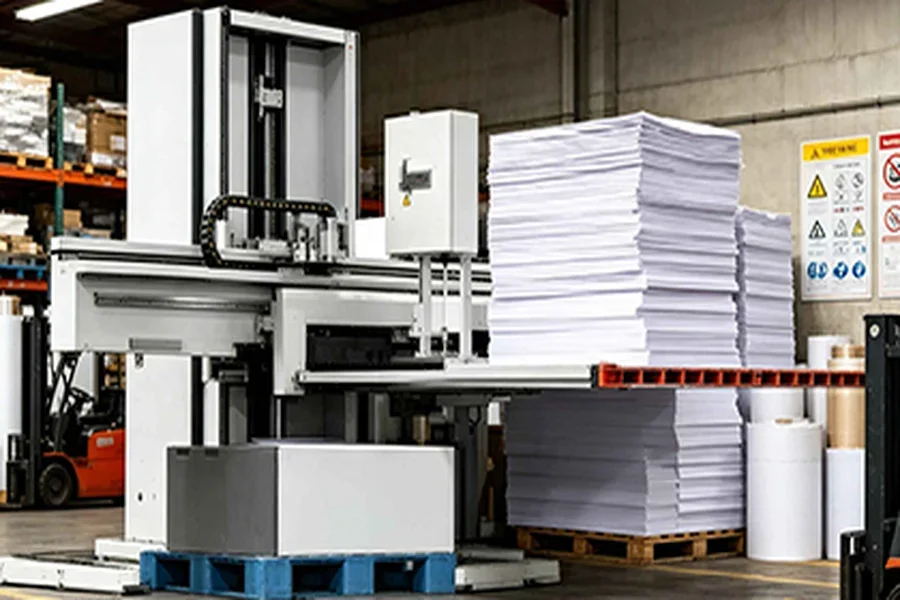
Even a well-specified slitter can underperform if integration is mishandled. The most common post-purchase regrets stem from:
- Incompatible unwind/rewind stands – Verify that the slitter's web width and core sizes match your upstream unwinder or processing equipment such as a paper loader.
- Poor floor planning – Account for operator access, material staging, and future line extensions. Review a scaled layout before finalizing. Consider how the slitter will interface with existing downstream machinery.
- Inadequate training – Insist on on-site commissioning and operator training as part of the contract. Check if the supplier offers post-installation support.
- Missing spare parts – Stock critical wear items at startup. Ask the supplier for a recommended spares list.
Engage your project engineers early in the slitter evaluation. Their familiarity with existing equipment helps identify interface issues before purchase. Many buyers also find it valuable to explore integrated solution packages that bundle slitting with upstream and downstream equipment to streamline line efficiency.
Cost-Risk Tradeoffs and Total Cost of Ownership
Slitter pricing varies widely based on automation level, web width, and material compatibility. A lower upfront cost often leads to higher maintenance expenses, slower changeovers, and reduced OEE. Calculate total cost of ownership over a 5–7 year horizon, factoring in:
- Blade replacement cost and frequency
- Energy consumption per ton of material processed
- Planned and unplanned downtime
- Operator labor for setup and adjustments
- Scrap and waste rates during startups
A slightly higher initial investment in a more automated slitter can pay back within six to twelve months through reduced waste and increased throughput. Request a life-cycle cost simulation from your shortlisted vendors. For broader line optimization, review efficiency solutions that combine slitting with upstream and downstream improvements.
FAQ
What is the most common mistake buyers make when purchasing a slitter?
The most common mistake is selecting a slitter based solely on maximum speed without verifying sustainable throughput for their specific material mix. Many buyers also underestimate changeover downtime and its effect on overall equipment effectiveness (OEE).
How many supplier references should I check before buying?
At least three references from operations similar to yours in terms of substrate, width, and run length. Speak directly with the maintenance and production managers, not just the purchasing department.
Should I choose a slitter with manual or automatic knife positioning?
That depends on changeover frequency. If you change slit patterns more than once per shift, automatic positioning reduces setup time and human error. For stable production with infrequent changes, manual can be cost-effective.
What is a reasonable lead time for a custom slitter?
Typical lead times range from 12 to 20 weeks depending on complexity and the supplier's current backlog. Include commissioning and acceptance testing in the timeline.
What should I include in my RFQ to get comparable quotes?
Include detailed material specifications (type, thickness, width, tensile strength), required slit widths, changeover frequency, desired line speed, and any integration requirements (MES, line controller). Standardize these parameters to ensure apples-to-apples comparisons.
Conclusion
Choosing a slitter without regret means moving beyond brochure specs. Standardize your RFQ evaluation, verify real-world performance, and plan for integration from day one. Use the checklists in this memo to reduce procurement risk and ensure the slitter you select aligns with your line's current and future needs.