
 English
 Français
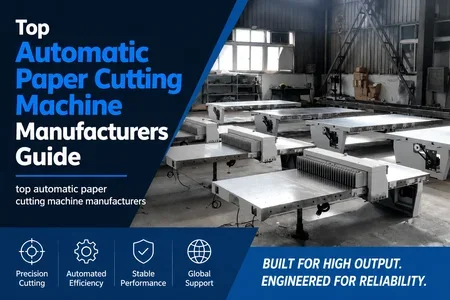
Article Overview: This procurement guide is designed for buyers and decision-makers evaluating a Professional A3/A4 Paper Cutting Machine. It covers critical technical specifications, supplier assessment criteria, common purchasing mistakes, and a structured approach to creating an effective request for quotation (RFQ). By the end, you will have a clear checklist to reduce risk and ensure the chosen machine delivers long-term operational efficiency and consistent cut quality.
Why Precision Matters for A3/A4 Cutting Workflows?
In commercial printing and packaging, the accuracy of your cutting machine directly affects product quality, waste levels, and rework rates. A Professional A3/A4 Paper Cutting Machine typically offers repeatable precision within 0.01 mm. This level of tolerance is critical for applications such as book block trimming, business card cutting, and small-format packaging. Without consistent accuracy, material waste increases and margins shrink. Buyers should validate that the machine’s positioning system—often a ball-screw or servo-driven backgauge—can maintain this precision over repeated cuts, especially at moderate production speeds. For high-volume shops, even a 0.1 mm deviation can compound across thousands of sheets, leading to rejected jobs and customer complaints.
Step 1: Define Your Production Volume and Material Mix
Before requesting quotes, map your typical job sizes (e.g., A3, A4, SRA3) and monthly sheet volume. This determines the required cutting width (e.g., 660 mm for A3) and pile height (often up to 80 mm for entry-level models). Document any specialty materials like laminated sheets, adhesive-backed stocks, or thick cardboard that may need extra clamp pressure or blade dwell settings. For example, a shop producing 20,000 A4 flyers per week may require a different machine duty cycle than one cutting 500 A3 posters daily. Include these parameters in your RFQ to get accurate proposals.
Step 2: Identify Core Specifications for Your RFQ
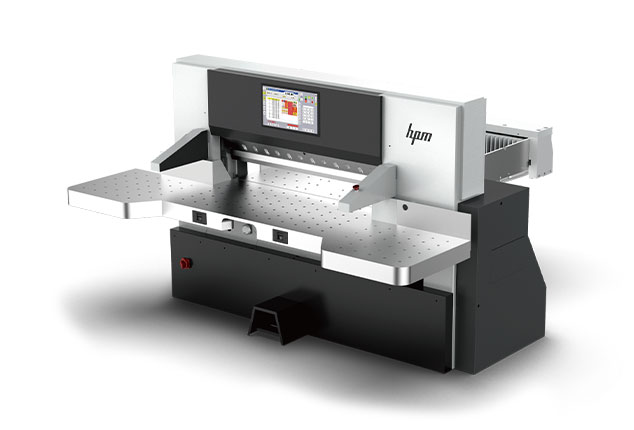
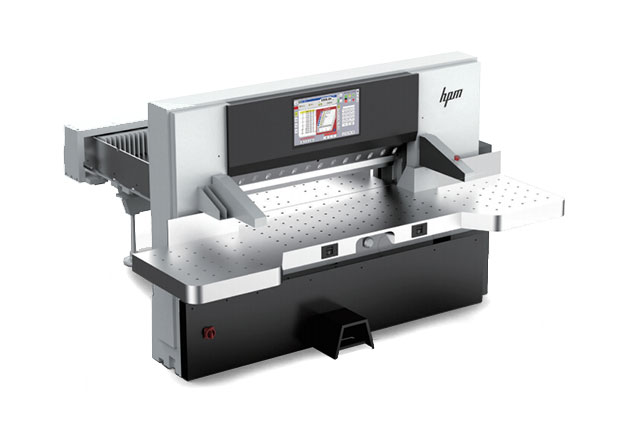
Include required cutting width, maximum pile height, backgauge speed (m/min), and control system type (e.g., touchscreen PLC). For A3/A4 workflows, a cutting width of 660 mm and pile height of 80 mm is common. State your preferred precision tolerance (ask for documented test results) and safety certifications. This helps vendors propose the appropriate model. For instance, a Professional A3/A4 Paper Cutting Machine that integrates a touchscreen controller and programmable backgauge can streamline job setup for mixed-size runs.
How to Evaluate Supplier Capabilities for a Professional A3/A4 Paper Cutting Machine?
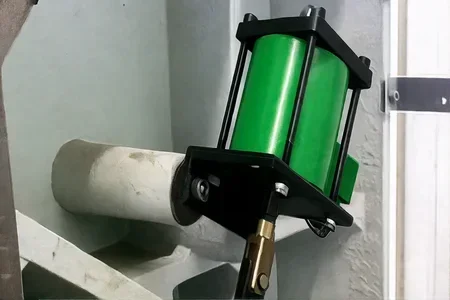
Not all machine builders deliver the same quality. When sourcing from suppliers, assess their manufacturing consistency, component sourcing, and post-sale support. Key evaluation criteria include:
- Precision Testing: Ask for ISO certification or internal test reports showing 0.01 mm repeatability over 10+ cuts. Request a sample cut test using your own materials.
- Safety Compliance: Ensure CE, UL, or equivalent standards for dual-hand operation, rear cover interlocks, and brake systems. Verify documentation.
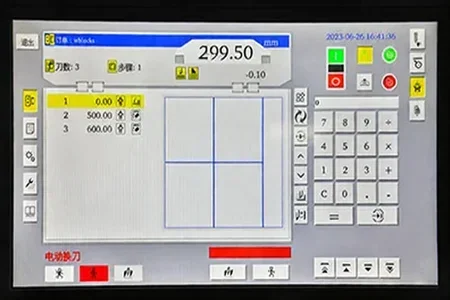
- Control System: Is the touch controller intuitive? Does it support offline programming or USB import for batch jobs? Look for memory capacity to store job recipes (99–999 programs).
- Spare Parts Availability: Confirm that blades, measuring sensors, and hydraulic components are in stock globally or can be shipped quickly.
A practical approach is to request a factory visit or virtual tour to see assembly quality. Check the manufacturer’s production capacity—consistent output suggests robust quality control. Also review their technology innovation track record to gauge long-term reliability.
What Key Technical Specifications Must Be in Your RFQ for a Professional A3/A4 Paper Cutting Machine?
Your request for quotation should clearly specify must-have parameters. Below are the critical technical areas to verify:
- Cutting Length and Width: Minimum length 660 mm to handle A3 oversize. Confirm maximum cutting length matches your largest job.
- Clamping System: Manual or automatic clamp? For consistent pressure across varied stock thickness, automatic clamp with pressure adjustment is recommended.
- Backgauge Drive: Ball screw or belt? Ball screw provides better accuracy and longevity for frequent small-format cuts.
- Blade and Cutting Stick: Replaceable cutting stick design and blade lifecycle (typical 30,000–100,000 cuts per sharpening).
- Safety Features: Photocell barriers, mechanical safety bolts, and two-hand run buttons.
When comparing suppliers, ask for a specification table that directly maps to your RFQ items. Avoid vague phrases like “high precision” without numerical backing. For example, a Professional A3/A4 Paper Cutting Machine with 0.01 mm accuracy and a programmable backgauge can reduce setup time by up to 30% compared to manual models. For more details on standard configurations, refer to a reliable paper cutting machine resource.
How to Avoid Common Procurement Pitfalls When Buying a Professional A3/A4 Paper Cutting Machine?
Buyers often overlook non-obvious factors that affect long-term satisfaction. Here are three frequent mistakes:
- Focusing only on price: Cheap machines may hide poor blade alignment, weak frame rigidity, or no local support. Ask for service lead times and spare parts pricing.
- Ignoring software compatibility: If you use a prepress workflow, ensure the cutter can import cutting data via XML/JDF or USB. Manual programming on small cutters is error-prone for repeat jobs.
- Neglecting operator training: A complex interface reduces productivity. Verify that the supplier provides on-site or remote training and that the touchscreen UI is intuitive.
To mitigate these, incorporate service level agreements into your purchase contract. Also request a sample cut test using your own material to verify real-world accuracy. Consider the total cost of ownership, including energy consumption, maintenance intervals, and blade replacement costs over five years.
Frequently Asked Questions About Professional A3/A4 Paper Cutting Machines
What is the ideal precision for an A3/A4 paper cutting machine?
For commercial print finishing, 0.01 mm repeatability is standard for professional models. This ensures consistent trim on book blocks and card stacks. Lower precision may be acceptable for basic paper trimming but risks job standardisation and customer acceptance.
How do I choose between manual and automatic clamp?
Manual clamp is fine for small batches and light paper. Automatic clamp provides uniform pressure on thicker stacks (like cardboard) and reduces operator fatigue. For a growing shop, automatic is recommended even if budget-constrained, as it improves throughput and consistency.
Can a Professional A3/A4 Paper Cutting Machine handle both A3 and A4 jobs without reconfiguration?
Yes, most models allow quick backgauge positioning via the touchscreen. You can save job recipes to instantly switch between standard sizes. Confirm the machine’s memory capacity for storing programs (typical 99–999 programs) and whether it supports remote recipe upload.
What safety certifications should I look for?
Look for CE marking (European), UL (US), or GB (China) depending on your market. Essential safety features include two-hand run buttons, rear cover interlocks, and photo-electric light curtains. Ensure the supplier provides safety compliance documentation and training.
How often should I sharpen or replace the blade?
Blade life depends on material type, cutting volume, and maintenance. Typically, a blade can deliver 30,000–100,000 cuts before needing sharpening. Replace cutting sticks periodically to maintain cut quality. Include blade and stick costs in your TCO analysis.
What floor space and power requirements are typical?
A Professional A3/A4 Paper Cutting Machine usually requires about 2–3 square meters of floor space and a standard 220V/380V power supply depending on model. Check the supplier’s installation guide for clearance around the machine for safe operation and maintenance access.
Conclusion: Build a Confident RFQ Process for Your Professional A3/A4 Paper Cutting Machine
Purchasing a Professional A3/A4 Paper Cutting Machine is a strategic decision that affects your post-press efficiency and product quality. By following a structured procurement checklist—defining production needs, validating technical specs, questioning supplier capabilities, and avoiding common pitfalls—you can reduce risk and select a machine that truly fits your operations. Use this guide to prepare a clear RFQ, and engage suppliers that offer transparent data and proven support. A well-chosen cutter becomes the backbone of your finishing workflow, enabling consistent output and customer satisfaction. For further insights, explore additional resources on paper cutting machine technology to refine your selection criteria.
Related site pages: Professional A3/A4 Paper Cutting Machine, Home.