
 English
 Français
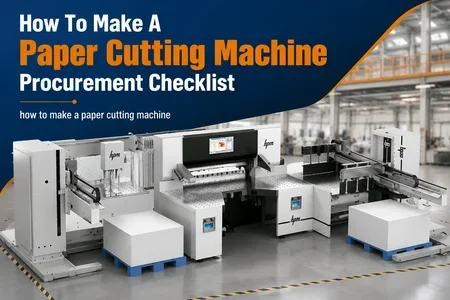
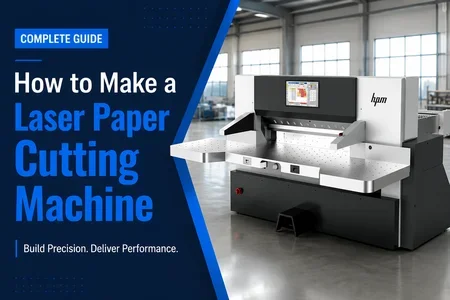
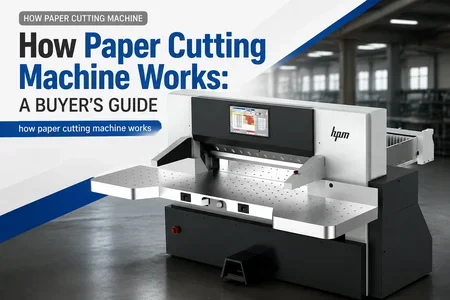
Article Overview: This guide helps procurement managers and decision-makers understand what “how to make paper cutting machine” means from an industrial buying perspective. You will learn key supplier evaluation criteria, how to prepare an effective RFQ, the importance of machine integration, and common pitfalls to avoid. The focus is on selecting a reliable paper cutting machine solution that meets your production needs.
What Does “How to Make Paper Cutting Machine” Mean for Procurement Professionals?
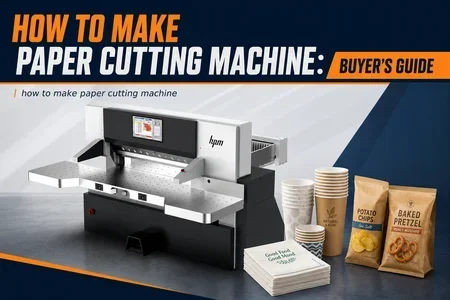
When buyers search for “how to make paper cutting machine,” they are typically evaluating suppliers of ready-to-use cutting equipment rather than planning to build a machine. The phrase signals a need to understand the design, construction, and operational features that define a reliable, production-ready paper cutter. The real procurement question is: how do we select and source a paper cutting machine that ensures precision, durability, and return on investment?
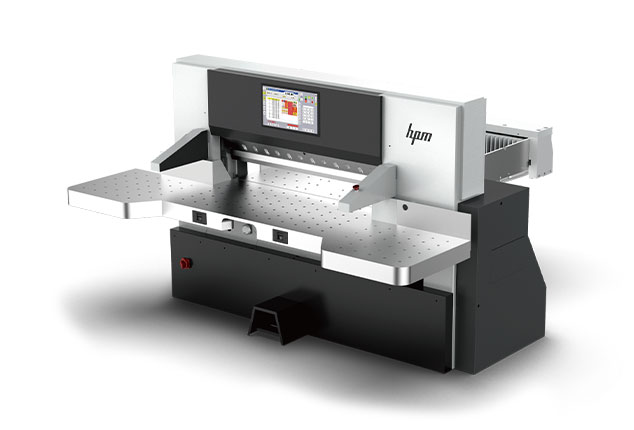
Industrial paper cutting machines—such as hydraulic guillotine cutters and programmable systems—are built around three core subsystems: the cutting mechanism (hydraulic or mechanical), the control unit (programmable logic controller with touchscreen), and the material handling system (loading, alignment, and unloading). Buyers should validate each subsystem against their production parameters before issuing an RFQ.
- Cutting mechanism: Evaluate blade material, cutting force, and stroke control. Hydraulic systems provide consistent force for higher stack heights.
- Control unit: Look for memory for common job sizes, network connectivity for integration, and an intuitive interface.
- Material handling: Assess automatic paper loading, side alignment, and front lay registration. Manual steps increase labor cost and error rates.
Step 1: Define Your Production Parameters
Before contacting suppliers, document your typical paper sizes, cut stack height, daily volume, and required accuracy. For instance, a trade print shop cutting A4 sheets from parent sheets will need a machine with a paper loader and unloader to maintain workflow speed. A professional paper cutting machine designed for A3/A4 work can be paired with paper cutting machine solutions that include automated handling components.
How to Evaluate Paper Cutting Machine Suppliers?
Supplier evaluation is the most critical phase of procurement. A machine that appears cost-effective may lead to high maintenance costs, poor cut quality, and downtime. Use the following criteria to compare suppliers:
- Engineering track record: How long has the supplier manufactured paper cutting machines? Request case studies or reference installations in your industry.
- Component quality: Ask about blade steel, hydraulic seals, guide rails, and electronic controllers. Certified suppliers (e.g., ISO 9001) typically use known brands.
- After-sales support: Confirm availability of spare parts, technician training, and remote diagnostics. A supplier with a local service network reduces downtime risk.
- Machine certification: Check CE, UL, or other relevant safety certifications. These reduce liability during installation.
- Customization capability: Can the supplier adjust software, add safety guards, or modify feed tables for your layout? Many manufacturers offer configurability.
Step 2: Compare Supplier Offerings Objectively
Create a weighted scorecard based on your priorities (e.g., cutting accuracy, automation level, warranty). For example, a low-cost entry-level machine from a general equipment supplier may lack programmable control and safety features. In contrast, a specialized paper cutting machine from a dedicated manufacturer often includes double hydraulic systems, touchscreen programming, and compatibility with external loaders. When you search for “how to make paper cutting machine for trade print shops,” the latter choice typically offers lower total cost of ownership due to higher uptime.
What Questions Should You Include in an RFQ for a Paper Cutting Machine?
An effective RFQ includes technical specifications, service requirements, and commercial terms. Use this checklist to ensure completeness:
- Cutting width and length: Specify maximum and minimum paper sizes.
- Cut height: Indicate stack height in millimeters (e.g., 80 mm, 120 mm). Higher cut height requires stronger hydraulics.
- Automation level: Choose between manual, semi-automatic, or fully automatic (with loader and unloader).
- Control features: Request programmable memory positions, display type, and data connectivity (e.g., Ethernet for job management).
- Safety package: Two-hand operation, light curtains, and rear guard are mandatory in many jurisdictions.
- Warranty and training: Minimum one-year warranty, on-site commissioning support, and operator training.
Phase 1: Technical Specification Review
Send each potential vendor a detailed RFQ with your production parameters. Ask them to fill in exact performance data (cycle time, repeatability tolerance, noise level) and confirm compliance with your safety standards. For a typical professional paper cutting machine, expected cutting accuracy is around ±0.2 mm.
Phase 2: Verification and Validation
For high-value purchases, consider a factory acceptance test (FAT) at the supplier’s facility or a virtual walkthrough. Verify the supplier’s efficiency solutions to ensure they can meet delivery schedules and spare parts availability. Request a life-cycle cost analysis including maintenance intervals.
Why Does Machine Integration Matter for Production Lines?
Standalone cutting machines are becoming less common as production flows require seamless integration with printing, stacking, and finishing equipment. Buyers should ask about interfaces with existing conveyors, downstream stacking systems, and data reporting platforms. When you consider “how to make paper cutting machine solutions” for high-volume shops, integration often determines whether throughput is acceptable or optimal.
Key integration checkpoints:
- Physical dimensions: Ensure the cutter’s footprint allows room for automated loading and unloading.
- Electrical/network compatibility: The machine should accept job tickets via common protocols (e.g., JDF, JMF, or REST API).
- Safety interlocks: Automated lines require coordinated safety systems; verify that all components communicate over a safety bus.
Frequently Asked Questions
What is the typical lifespan of an industrial paper cutting machine?
With proper maintenance, a well-built hydraulic paper cutter can last 15–20 years. Key factors include blade replacement, hydraulic fluid changes, and keeping guide rails clean. Request maintenance schedules from suppliers.
How much does a professional paper cutting machine cost?
Prices vary widely based on automation level and cut capacity. Semi-automatic models may start around $15,000–$30,000, while fully integrated lines can exceed $100,000. Always request a detailed quote including installation and training.
Can I integrate a paper cutter from a different brand with existing handling equipment?
Integration is possible if interfaces and communication protocols align. However, using a matched system from a single supplier reduces compatibility risks and simplifies service. Ask suppliers for integration case studies.
What certifications should I look for in a paper cutting machine?
Common certifications include CE (European conformity), UL (North America), and ISO 9001 for quality management. Safety certifications are mandatory. Verify that the machine meets local regulatory requirements.
Conclusion
Understanding “how to make paper cutting machine” from an industrial procurement perspective means focusing on supplier evaluation, technical specifications, integration capabilities, and total cost of ownership. By preparing a thorough RFQ, validating supplier production capacity, and emphasizing after-sales support, you reduce the risk of costly purchasing mistakes. The principles outlined here apply to any industrial paper cutting machine investment. Take the next step by contacting shortlisted suppliers, requesting technical documentation, and scheduling a factory visit or remote demonstration.
Related site pages: how to make paper cutting machine, Home.