
 English
 Français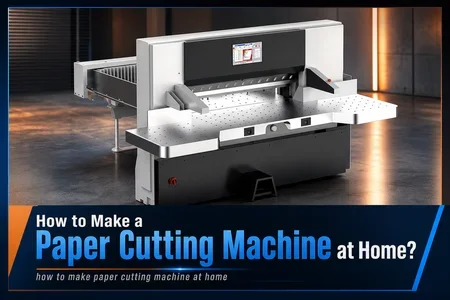
Article Overview: This guide addresses the common search “how to make a paper cutting machine at home” and explains why most in-house projects transition to commercial equipment. It provides procurement managers and sourcing teams with a practical checklist for evaluating paper cutting machine solutions, from RFQ preparation to supplier validation. The focus is on making an informed purchase decision rather than pursuing a DIY build.
Why Search for ‘How to Make a Paper Cutting Machine at Home’?
Procurement professionals often encounter internal requests that begin with a search for “how to make a paper cutting machine at home.” This query typically comes from small print shops, prototyping labs, or educational institutions looking to cut costs or achieve a custom solution. While building a machine from scratch may seem appealing, the reality is that most DIY projects fail to meet production requirements for accuracy, repeatability, and safety.
Before committing resources to an in-house build, it is essential to understand the technical specifications that a commercial machine delivers out of the box. A typical industrial paper cutting machine offers precision within ±0.1 mm, programmable cutting sequences, and hydraulic clamping systems—capabilities that are extremely difficult to replicate in a home workshop. The time and material cost of prototyping often exceed the investment in a purpose-built unit.
What Does a Commercial Machine Offer That DIY Can’t?
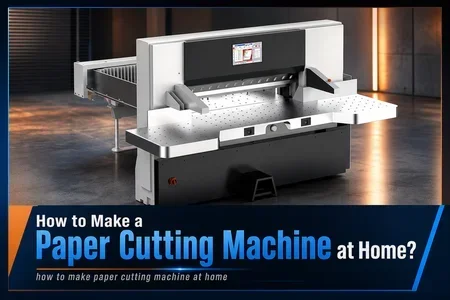
When buyers search “how to make a paper cutting machine at home,” they may overlook key factors that affect long-term operational efficiency. These include:
- Safety compliance: Industrial machines include guards, two-hand controls, and emergency stops required by workplace regulations.
- Cutting accuracy: Home-built machines often lack the rigid frame and precise guides needed for consistent stack cutting.
- Durability: Commercial cutters are designed for continuous operation with minimal downtime; DIY versions commonly suffer from wear after limited use.
- Resale value: Industrial equipment holds residual value; a home-built machine has no secondary market.
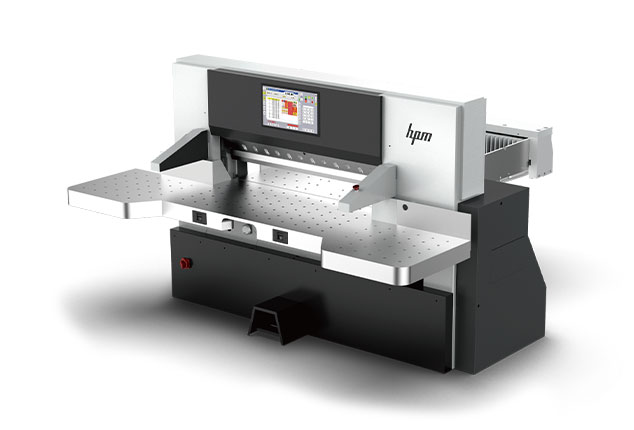
For most businesses, the question is not whether they can build a machine, but whether the resulting device will meet throughput and quality benchmarks. A better approach is to evaluate entry-level commercial models such as the S16 paper cutting machine, which offers professional-grade performance at a price point that competes with a DIY investment when accounting for engineering hours and materials.
How Do Costs Compare Between DIY and Commercial?
A typical DIY attempt to make a paper cutting machine at home involves materials like steel framing, a motor, a linear guide system, and a controller. These materials can cost several thousand dollars, not including tools, labor, and iteration time. In contrast, a base-level commercial paper cutter starts around USD 8,000–12,000 and includes a warranty, technical support, and immediate productivity.
- Material and tooling costs: DIY often requires specialized metalworking tools not found in a standard workshop.
- Engineering and assembly time: Many projects take weeks or months, delaying revenue.
- Testing and calibration: Commercial machines come pre-calibrated; DIY requires extensive trial and error.
- Safety and certification: Meeting workplace safety standards adds hidden expenses.
When these hidden costs are factored in, the commercial route becomes more economical for any production volume beyond a few hundred cuts per week.
How to Evaluate Suppliers When Moving Beyond a DIY Approach
Selecting a supplier for your first commercial paper cutting machine requires more than comparing price lists. The following process outlines validation steps that procurement teams can use:
Step 1: Audit the Supplier’s Manufacturing Capability
Request documentation of the supplier’s production capacity and quality control processes. A manufacturer that casts its own machine frames and sources hydraulics from reputable partners is more likely to deliver consistent products.
Step 2: Request a Cut Sample from Your Stock
Send your actual paper stock to the supplier for a test cut. Compare accuracy, edge quality, and registration across a stack. This step reveals whether the machine can handle your specific material.
Step 3: Validate After-Sales Support
Ask about spare parts availability, training programs, and remote diagnostics. A supplier that offers on-site commissioning and warranty service reduces downtime risk.
If you are sourcing internationally, consider arranging a factory visit or a virtual walk-through. Many reputable manufacturers provide video tours and customer references. This diligence ensures your investment in a paper cutting machine delivers long-term value.
FAQ
Can I really make a paper cutting machine at home that works as well as a commercial model?
In most cases, no. While you can build a simple lever-style cutter for light use, achieving the precision, speed, and safety of an industrial guillotine requires specialized components and engineering. For any production volume above a few hundred cuts per day, a commercial machine is more cost-effective and reliable.
What is the minimum budget for a commercial paper cutting machine?
Entry-level automatic paper cutters from established manufacturers typically start around USD 8,000–12,000 for a 46 cm (18-inch) model. Higher automation and larger formats increase the price. Compare this with the hidden costs of a DIY build: materials, tooling, trial-and-error time, and potential liability.
How do I choose between a semi-automatic and fully automatic paper cutting machine?
Semi-automatic machines require manual clamping and blade activation, while fully automatic models handle the entire cycle. Choose semi-automatic for low volumes or mixed job runs; fully automatic for consistent high-volume production. Your RFQ should include average job size and number of cuts per shift.
What certifications should I look for in a paper cutting machine?
For most markets, CE marking is the baseline. Additionally, look for ISO 9001 certification on the manufacturer side. If the machine will be used in a regulated environment (e.g., pharmaceutical packaging), request material certifications for rollers and blades.
Conclusion
The phrase “how to make a paper cutting machine at home” often represents a starting point for businesses that need better cutting capabilities. Yet the path from a DIY idea to reliable production is fraught with engineering challenges and hidden costs. By shifting focus to commercial paper cutting machine solutions—and using the procurement checklists provided here—sourcing teams can make informed decisions that balance performance, safety, and total cost of ownership. Begin your evaluation with a clear specification and a validated supplier shortlist to ensure your next paper cutting investment supports your production goals.