
 English
 Français
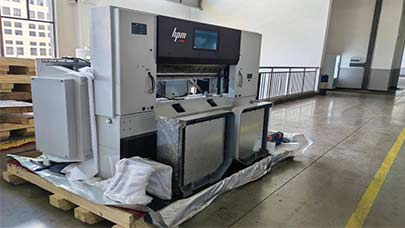
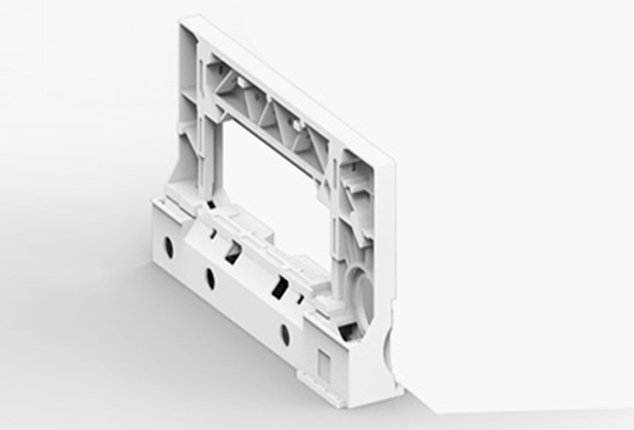
Article Overview: This guide is written for procurement managers, sourcing teams, and project engineers who are evaluating packaging machinery suppliers and preparing a request for quotation (RFQ). It covers the critical decision criteria, technical validation points, supplier capability assessment, and total cost considerations that reduce the risk of costly procurement mistakes. Use the checklist mindset throughout to ensure your evaluation is thorough and practical.
Defining Your Production Requirements Before Engaging Suppliers
The most common procurement pitfall in packaging machinery is beginning the supplier conversation without a clear, documented set of production requirements. Without this foundation, you risk comparing proposals that address different problems, making it impossible to evaluate suppliers on an equal footing.
Start by defining your current and projected production volumes. For example, if your factory plans to increase output by 30% over the next two years, the machinery must accommodate that growth without requiring a complete line replacement. Similarly, specify the material types, sizes, and finishes you handle. A machine optimized for standard A4 paper may not perform well on large-format or coated stocks.
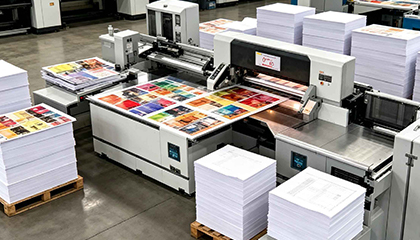
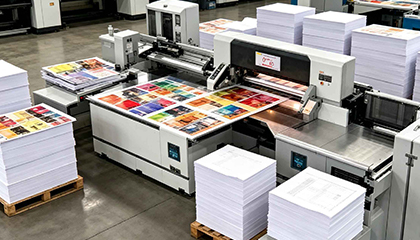
Beyond throughput, consider integration into your existing workflow. Will the packaging machinery stand alone or form part of an automated line? If you are evaluating a paper cutting and handling line, review the upstream and downstream equipment interfaces. Align these specifications with operational constraints such as floor space, power supply, and operator skill levels. Documenting these requirements internally before sending an RFQ forces discipline and ensures that every supplier response can be compared against the same baseline.
Key Technical Criteria for Packaging Machinery RFQs
Once your requirements are clear, the next step is to translate them into technical criteria for the RFQ. Packaging machinery varies widely in automation level, precision, and maintainability. The following areas should be addressed explicitly in your request.
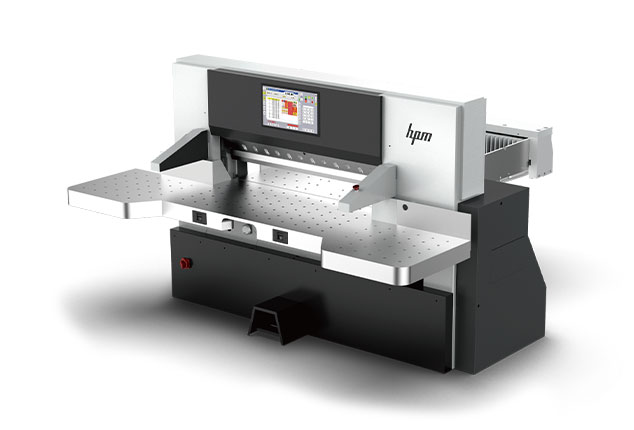
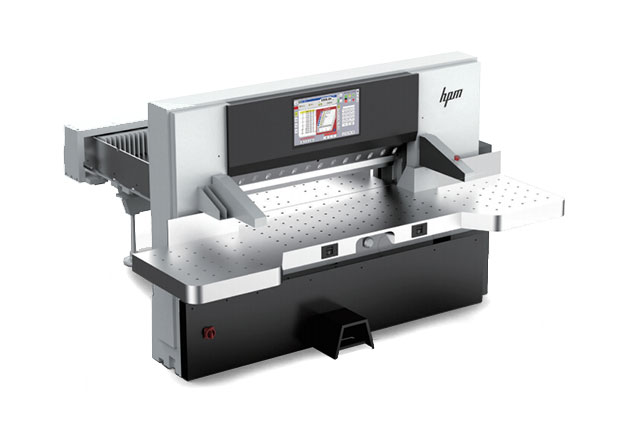
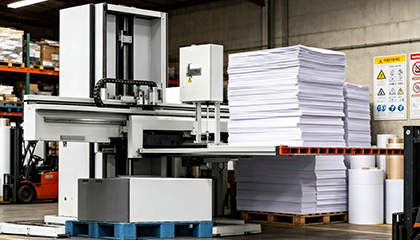
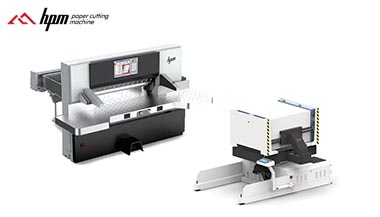
Automation and Control Systems: Modern packaging machinery increasingly relies on intelligent servo systems and programmable logic controllers (PLCs). For instance, an intelligent servo system paper stack unloader used in high-speed paper cutters (available in models such as the 1050-1650 series) improves unloading precision and reduces operator intervention. In your RFQ, specify the degree of automation required—manual, semi-automatic, or fully automatic—and request details on the control interface, ease of programming, and remote diagnostic capabilities.
Precision and Tolerances: For operations involving cutting, slitting, or printing, dimensional accuracy directly affects product quality and waste rates. Ask suppliers to provide documented tolerance ranges under various operating speeds. For example, a paper cutter intended for high-volume production should maintain ±0.5 mm accuracy even at maximum speed.
Maintenance and Serviceability: Equipment downtime is a major cost driver. Request information on planned maintenance intervals, availability of spare parts, and the supplier's service network. Consult industry best practices to align your expectations with common maintenance schedules, and ensure the supplier provides clear documentation.
Evaluating Supplier Capability and Production Capacity
Evaluating a supplier goes beyond the machine specifications. You need to assess whether the manufacturer has the Production Capacity to deliver on time and the technical depth to support you after installation. Request evidence of the supplier's manufacturing facility, including quality control processes, testing protocols, and certification (e.g., ISO 9001). Ask for references from customers with similar production profiles. A supplier that has successfully integrated machinery into a line for another paper product factory is more likely to understand your integration challenges.
Additionally, inquire about lead times and how they manage peak demand. The RFQ should ask for a production schedule for the equipment, not just a delivery date. This helps you gauge whether the supplier's capacity matches your project timeline. For further insight, review the supplier's Technology Innovation approach—machines designed for future upgrades often provide better long-term value.
Total Cost of Ownership and Implementation Risk
Purchase price is only one component of the total cost of ownership (TCO). A low initial price may be offset by higher maintenance costs, lower efficiency, or shorter service life. When comparing proposals, build a TCO model that includes:
- Initial capital expenditure and installation costs.
- Energy consumption per production unit.
- Routine maintenance parts and labor.
- Cost of consumables (e.g., blades, lubricants).
- Expected uptime and mean time between failures (MTBF).
- Operator training and skill requirements.
Also consider implementation risk: how long will the transition take? What support does the supplier provide during commissioning and ramp-up? A supplier that offers on-site training and a clearly defined handover period reduces the risk of productivity loss. To minimize operational disruption, ask for a detailed project timeline and verify references regarding similar installations. Explore Efficiency Solutions that integrate machinery with existing workflows to reduce waste and improve output.
The Procurement Checklist for Final Supplier Selection
As you narrow down your options, use the following checklist to make the final decision. Each item should be verified through the RFQ process or a site visit.
- Technical fit: Does the machinery meet all defined production requirements? Are tolerances and automation levels appropriate?
- Supplier stability: Review financial health, years in business, and market reputation. Check Certificates and compliance with industry standards.
- After-sales support: Confirm service response times, spare parts availability, and warranty terms.
- Scalability: Can the supplier accommodate future capacity increases or line expansions? Review their Production Capacity for expansion scenarios.
- References: Contact at least two existing customers with similar applications.
- Compliance: Ensure the machine meets safety and environmental regulations in your region.
By systematically working through this checklist, procurement teams can avoid common mistakes such as selecting a machine that is over-engineered for current needs or, conversely, one that cannot handle future growth.
Frequently Asked Questions (FAQ)
- What is the most important factor to include in an RFQ for packaging machinery?
- Clearly defined production requirements—including material types, throughput, integration needs, and quality tolerances—are the most critical elements. Without them, supplier responses will be inconsistent and comparisons meaningless.
- How do I assess a supplier's production capacity?
- Request documentation of their manufacturing facility, lead times, and ability to scale. A site visit or virtual tour can provide additional confidence. Use the supplier's own production capacity information as a benchmark.
- Should I prioritize automation level or reliability?
- Both are important, but reliability (measured by MTBF and maintenance intervals) should take precedence. High automation with frequent breakdowns can increase overall costs.
- What are common hidden costs in packaging machinery procurement?
- Installation, training, tooling, energy efficiency, and spare parts inventory are often underestimated. A total cost of ownership analysis reveals these expenses.
- How long does it typically take to commission a new packaging line?
- Depending on complexity, commissioning can range from a few weeks to several months. Your RFQ should request a detailed project timeline with milestones.
- Can I integrate the new machinery with existing equipment from different manufacturers?
- Yes, but it requires careful specification of communication protocols and physical interfaces. Ask the supplier for examples of successful integrations with third-party equipment.
Conclusion
Purchasing packaging machinery is a significant investment that impacts production efficiency, product quality, and long-term operational costs. By approaching the procurement process with a structured, checklist-driven mindset, procurement managers and sourcing teams can reduce risk and make informed decisions.
Start by defining your requirements internally, then issue a detailed RFQ that addresses technical criteria, supplier capability, and total cost of ownership. Validate everything through site visits, references, and documentation. The extra effort upfront pays dividends in fewer surprises during installation and smoother operations over the machine's lifetime.
For further guidance, review available resources on supplier capabilities and automation trends, and do not hesitate to contact suppliers directly with your customized RFQ.