
 English
 Français
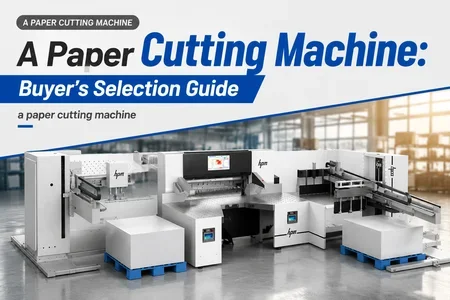
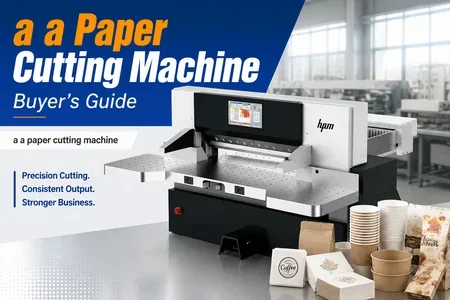
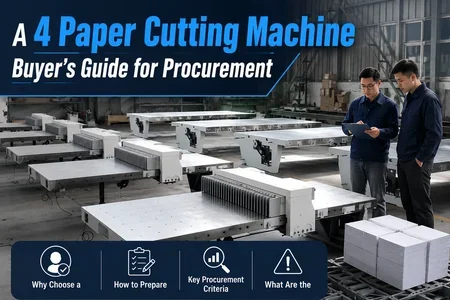
Article Overview: Selecting a roll paper cutting machine involves more than comparing price lists. This article helps procurement managers, sourcing teams, and project engineers build a supplier evaluation framework, prepare an effective RFQ, and avoid common buying mistakes. You will learn what specifications matter, how to assess supplier capabilities, and what to validate before purchase.
What Is a Roll Paper Cutting Machine and When Do You Need One?
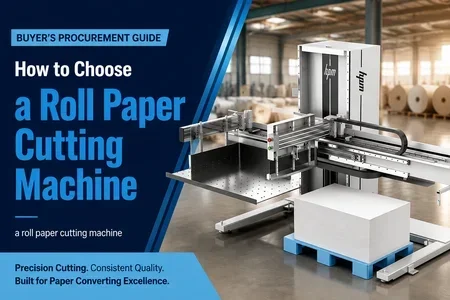
A roll paper cutting machine is designed to cut continuous paper webs into sheets of predetermined sizes. Unlike sheet-fed cutters that handle pre-cut stacks, these machines accept parent rolls and perform slitting or sheeting operations. They are commonly used in packaging, printing, and paper converting industries where roll stock is the primary input.
You need a roll paper cutting machine if your production line handles paper rolls and requires precise sheet dimensions for downstream processes such as printing, folding, or packaging. Typical applications include cutting kraft paper for corrugated board, label stock for roll-to-sheet conversion, and specialty papers for commercial printing.
When considering a purchase, it is important to distinguish between standalone cutters and those integrated with a paper handling line. A standalone unit may suffice for low-volume operations, while a fully automated system with roll stand, tension control, and stacker improves efficiency for continuous production.
Key Specifications to Evaluate in a Roll Paper Cutting Machine
Procurement teams should verify the following technical parameters before issuing an RFQ. Each specification directly affects throughput, quality, and maintenance cost.
- Cutting width and length range: Ensure the machine accommodates your parent roll width and required sheet lengths. Common widths range from 1,050 mm to 1,650 mm, but custom sizes exist.
- Cutting accuracy and repeatability: Look for tolerance specifications (e.g., ±0.5 mm). Higher accuracy reduces waste in downstream processes.
- Cutting speed: Measured in m/min or cuts per minute. Match speed to your production volume. For example, a machine rated at 80 m/min may suit medium-volume lines.
- Max pile height: Determines how many sheets can accumulate before unloading. Taller piles reduce operator intervention but require robust stacking systems.
- Knife type and durability: Check whether the blade is manual, semi-automatic, or automatic. Automatic knife systems with programmable cutting sequences reduce setup time.
- Control system and connectivity: Modern machines offer PLC control, touchscreens, and network interfaces for integration with MES or ERP. Validate software compatibility with your existing systems.
- Safety features: Required certifications (CE, ISO) and safety guards, light curtains, and emergency stops. Confirm compliance with local regulations.
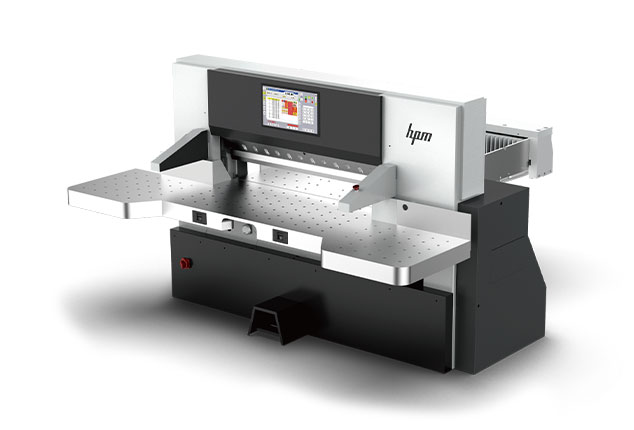
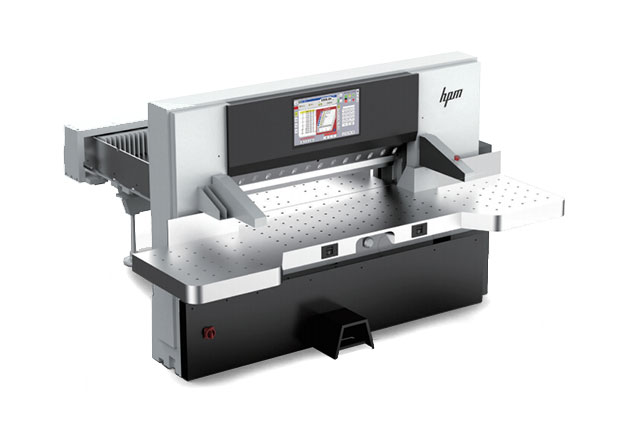
For a detailed specification example, review the a roll paper cutting machine designed for entry-level professional use which targets A3/A4 sheet production.
How to Prepare a Supplier RFQ for a Roll Paper Cutting Machine
An RFQ for a roll paper cutting machine should go beyond basic dimensions. Use the following structured approach to gather comparable quotes.
Step 1: Define Your Production Parameters
Document your roll width, material type (paper grade, basis weight), required cut sizes, daily volume (sheets or tons), and uptime expectations. This forms the basis for machine sizing.
Step 2: Outline Automation and Integration Needs
Specify whether you need automatic roll loading, tension control, sheet stacking, and jogging. Also indicate communication protocol requirements (e.g., OPC UA, Modbus).
Step 3: Request Total Cost of Ownership Information
Ask for spare parts cost, recommended maintenance intervals, power consumption, and expected blade life. This helps compare long-term expenses beyond initial price.
Step 4: Evaluate Supplier Capabilities
Request references from similar industries, visit production facilities (virtually or physically), and verify after-sales support network. Supplier production capacity and quality management systems are critical indicators. You can explore manufacturing capabilities as a reference.
Compare quotes using a weighted scoring matrix that prioritizes your top three criteria (e.g., cut accuracy, speed, and service response time).
What Are Common Procurement Mistakes When Buying a Roll Paper Cutting Machine?
Even experienced buyers can overlook factors that lead to cost overruns or performance issues. The table below highlights three frequent mistakes and how to avoid them.
Mistake vs. Best Practice
Mistake 1: Choosing a machine solely based on maximum speed without evaluating real-world throughput. Best Practice: Request demonstrated throughput at your typical material and cut length.
Mistake 2: Ignoring roll handling integration. Best Practice: Specify roll diameter, core size, and loading method in the RFQ to ensure smooth material flow.
Mistake 3: Failing to verify spare parts availability and lead times. Best Practice: Ask for a recommended spares list and confirm local warehouse or expedited shipping options.
Another common error is underestimating the learning curve for operators. Ensure the supplier provides on-site training and comprehensive documentation. Consider a verification-of-print run during commissioning to confirm cut quality meets your standards.
Finally, do not skip a factory acceptance test (FAT) if possible. A FAT allows you to validate machine performance at the supplier’s facility before shipment, reducing installation risk.
FAQ
What is the typical price range for a roll paper cutting machine?
Pricing varies widely based on size, automation level, and brand. Entry-level semi-automatic units may start around $15,000, while fully automated integrated lines can exceed $150,000. Always request a detailed quote that includes installation, training, and warranty.
How does a roll paper cutting machine differ from a guillotine cutter?
A roll paper cutting machine accepts material from a continuous roll and typically uses rotary or sheeting knives. A guillotine cutter slices pre-stacked sheets with a single vertical blade. For operations using roll stock, a roll-fed machine eliminates the need for pre-cutting and handling loose sheets.
What maintenance does a roll paper cutting machine require?
Weekly tasks include cleaning blade area, checking lubrication, and inspecting tension sensors. Monthly tasks involve sharpening or replacing blades, verifying belt tension, and calibrating sensors. Follow the manufacturer’s schedule outlined in the manual.
Conclusion
Choosing a roll paper cutting machine requires aligning machine specifications with your production workflow, preparing a detailed RFQ, and thoroughly evaluating supplier capabilities. By following the procurement checklist in this guide—specifications, automation needs, total cost of ownership, and supplier audits—you can reduce the risk of costly mismatches. Begin your search by defining your required cut dimensions and production volume, then compare solutions from reputable manufacturers. A well-structured evaluation process will help you secure a roll paper cutting machine that delivers consistent cut quality and operational efficiency for years to come.