
 English
 Français
Article Overview: This guide helps procurement managers and sourcing teams evaluate a a paper cutting machine for industrial or commercial use. It covers key technical specifications, supplier assessment criteria, common buying mistakes, cost-risk tradeoffs, and actionable RFQ steps. Whether you are replacing an older model or setting up a new paper processing line, this article provides a practical framework to reduce procurement risk and improve supplier fit.
What Is a a Paper Cutting Machine?
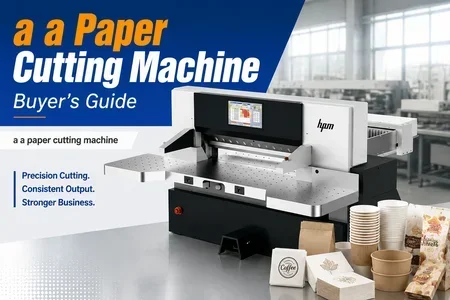
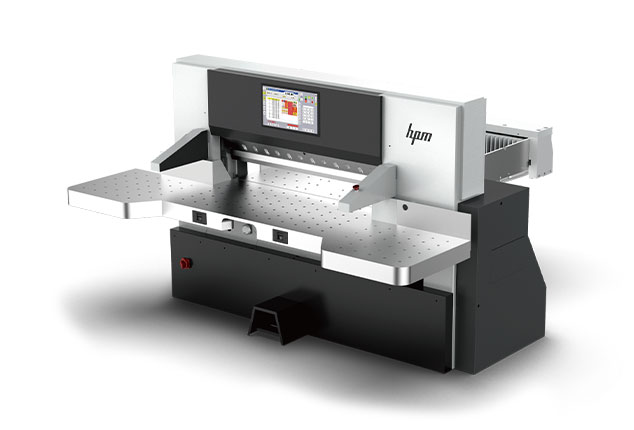
An a a paper cutting machine is an industrial device designed to cut large sheets or rolls of paper into smaller, precise dimensions. In printing, packaging, and paper product manufacturing, these machines are essential for producing A4, A3, letter, and custom sizes. The term “a a” often refers to specific paper format families or repeating patterns in product naming—buyers should clarify the exact configuration when requesting quotes.
Modern a a paper cutting machines range from manual guillotines to fully automated systems with programmable cutting sequences, integrated stack lifts, and digital controls. For B2B buyers, the choice depends on production volume, required precision, and budget. Understanding the core types helps narrow the options.
Step 1: Define Your Paper Format and Volume
List the exact paper sizes (e.g., A4, A3, 8.5×11) and monthly ream or tonnage. This drives the machine width, cut height, and automation level.
Step 2: Choose Between Semi-Automatic and Fully Automatic
Semi-automatic machines require an operator to feed and remove paper; fully automatic lines integrate loaders, unloaders, and conveyors for higher throughput. For high-volume production, a fully automatic a a paper cutting machine with a programmable back gauge is typical.
How to Evaluate a a Paper Cutting Machine for Your Facility?
Supplier evaluation should go beyond price. Consider the following criteria when assessing a a paper cutting machine:
- Cutting Accuracy: Look for tolerance specs—industrial machines typically offer ±0.1–0.2 mm repeatability.
- Safety Features: Two-hand controls, light curtains, and emergency stops are mandatory in most jurisdictions.
- Build Quality: Check frame rigidity, blade material, and clamp pressure. Heavy-duty construction reduces vibration and extends blade life.
- Automation Compatibility: Does the machine support a paper loader or inline stacker? Future integration can reduce labor costs.
Request references from suppliers with similar production contexts. A site visit or virtual demonstration can reveal maintenance ease and operator training requirements. For a configurable a a paper cutting machine for medium-volume production, review model specifications from trusted manufacturers such as the S16 a a paper cutting machine.
Which Technical Specifications Matter Most for a a Paper Cutting Machine?
When reviewing datasheets for a a paper cutting machine, focus on these specs to avoid mismatched performance:
- Max Cutting Width and Depth: Ensure it accommodates your largest paper size plus margin.
- Cut Height (Stack Thickness): Typically 50–130 mm. Higher cut height reduces cycle time for volume jobs.
- Programmable Memory: For repeat jobs, a machine with 100+ program steps saves setup time.
- Power and Air Requirements: Verify compatibility with your facility’s electrical and compressed air supply.
A common oversight is ignoring the blade sharpening interval. a a paper cutting machine that requires frequent blade changes can increase downtime. Ask suppliers about blade life and local sharpening services. Exploring the full range of a a paper cutting machine options helps you compare features across models.
What Are the Key Cost Factors for a a Paper Cutting Machine?
Total cost of ownership goes beyond the purchase price. Consider these factors when budgeting:
- Installation and Infrastructure: Some machines require reinforced flooring or upgraded electrical panels. Include site preparation costs.
- Operator Training: Proper training on safety and programming reduces accidents and increases productivity. Budget for initial and refresher sessions.
- Consumables and Maintenance: Blades, belts, and hydraulic fluids need periodic replacement. Service contracts can average $1,500–$3,000 annually.
- Energy Consumption: Automated lines with conveyors use more power. Estimate kWh per shift and calculate annual cost.
A lower upfront price may result in higher long-term expenses. For a balanced investment, look for an a a paper cutting machine that offers reliable automation and accessible spare parts support. Many suppliers provide a comprehensive selection of a a paper cutting machine solutions to fit varying budgets.
How Does Automation Affect Your Choice of a a Paper Cutting Machine?
Automation level directly affects throughput, labor needs, and job complexity. Semi-automatic a a paper cutting machines require an operator for each cut cycle, making them suitable for low to medium volumes. Fully automatic models with loaders and unloaders can run continuously, needing only occasional supervision.
Phase 1: Assess Your Current Labor Cost
Calculate total operator hours per week for cutting tasks. If labor cost exceeds machine ROI threshold, automation becomes attractive.
Phase 2: Determine Required Throughput
Estimate daily reams or sheets needed. A fully automated a a paper cutting machine can process 300–500 reams per shift, while semi-automatic may handle 100–200.
Integration with upstream and downstream equipment also matters. If you already use a paper loader or stacker, choose a machine that connects seamlessly.
Common Procurement Mistakes When Buying a a Paper Cutting Machine
Even experienced buyers can misjudge total cost of ownership. Here are pitfalls to avoid:
- Focusing only on initial price: Cheaper machines may have lower resale value, higher maintenance costs, and shorter lifespan.
- Neglecting installation requirements: Some machines need reinforced flooring due to weight (up to 2000+ kg). Check floor load capacity.
- Underestimating training needs: Operators must be trained on safety and programming. Include training in RFQ.
- Ignoring spare parts availability: Confirm that blades, belts, and electrical components are easy to source locally.
For a reliable entry-level to mid-range model, consider an a a paper cutting machine with balanced automation and affordability, suitable for growing print shops.
FAQ
What should buyers evaluate first about a a paper cutting machine?
Start with fit, evidence-backed requirements, and supplier proof relevant to a a paper cutting machine before shortlisting vendors.
How can teams reduce procurement risk for a a paper cutting machine?
Use structured comparison, validate specifications early, and review implementation or quality checkpoints with documented evidence.
Related articles
- A 4 Paper Cutting Machine Buyer's Guide for Procurement
- How Much Is a Paper Cutting Machine? Buyer Guide
- What Is the Best Paper Cutting Machine for Print Shops?
Conclusion
Choosing the right a a paper cutting machine involves balancing technical specs, supplier reliability, and total cost of ownership. Use the procurement checklist in this guide to structure your RFQ, evaluate supplier responses, and verify on-site requirements. For further support, explore how integrated solutions can optimize your workflow by reviewing a dedicated a a paper cutting machine model tailored to your production needs.