
 English
 Français
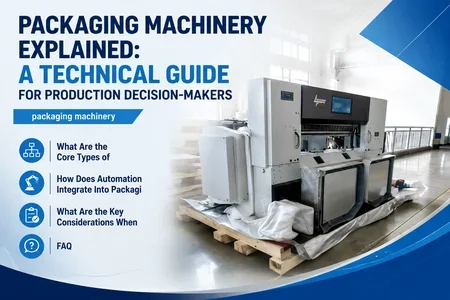
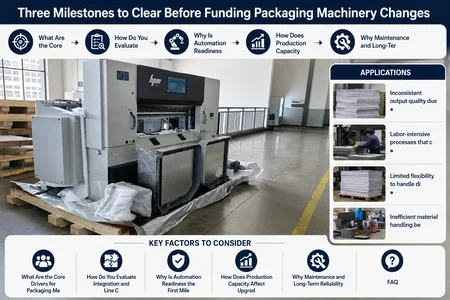
Article Overview: This guide provides a neutral, buyer-oriented comparison of packaging machinery systems. It covers evaluation criteria, performance tradeoffs, specification differences, and decision guidance to help you select the right solution for your production needs. The focus is on solution comparison, not brand promotion.
Key Evaluation Criteria for Packaging Machinery
When selecting packaging machinery, buyers must assess several technical and operational factors. The most critical criteria include:
- Speed and Throughput: Measured in cycles per minute or meters per minute. Higher speeds often require larger motors and more robust construction.
- Material Compatibility: The machine must handle your specific packaging materials — paper, film, foil, or rigid containers — without damage or jamming.
- Precision and Accuracy: For slitting, cutting, or wrapping, tolerances affect product quality and waste. Look for servo-driven controls for consistent repeatability.
- Footprint and Layout: Floor space constraints may dictate compact designs or modular configurations that integrate with existing lines.
- Total Cost of Ownership: Beyond purchase price, consider maintenance, energy consumption, spare parts availability, and operator training requirements.
- Automation Level: From manual loading to fully automated systems with PLC controls and robotic integration. Automation tradeoffs are discussed in the next section.
To evaluate production capacity of a potential supplier, review their manufacturing capabilities and lead times. For instance, a supplier's production capacity directly impacts delivery schedules and the ability to scale with your demand.
Performance Tradeoffs: Speed vs. Flexibility and Automation vs. Cost
No single packaging machine excels in every dimension. Buyers must navigate key tradeoffs:
Speed vs. Flexibility
High-speed machines are typically optimized for one product format or material. When you need to run multiple package sizes or materials, a flexible but slower machine may be preferable. For example, a dedicated high-speed wrapper may handle 120 packages per minute but only with one film width. A modular wrapper may run at 60-80 ppm but accept different films and package sizes with quick changeovers.
Automation vs. Cost
Full automation reduces labor costs and improves consistency but raises capital expenditure. Semi-automatic options offer a middle ground. Consider your labor environment: in markets with high labor costs, automation pays back faster. For low-volume production, manual or semi-automatic systems may be more economical.
Another tradeoff is precision vs. throughput. In slitting applications, tighter tolerance settings may reduce line speed. Advanced servo controls from suppliers with strong technology innovation can mitigate this, but at a higher initial investment.
Specification Differences Across Machine Types
To illustrate key specification differences, the table below compares two common packaging machinery categories: a basic slitter rewinder and a high-speed integrated wrapping system. These are representative examples; actual specs vary by manufacturer.
| Specification | Option A: Basic Slitter Rewinder | Option B: High-Speed Integrated Wrapper |
|---|---|---|
| Speed (max) | 150 m/min | 120 packages/min |
| Material Width | Up to 1600 mm | Up to 600 mm (film) |
| Material Types | Paper, film, foil | Film only |
| Precision (tolerance) | ±0.5 mm | ±1.0 mm |
| Automation Level | Semi-automatic (manual unwind/rewind) | Fully automatic with PLC |
| Footprint | ~5 m x 3 m | ~8 m x 4 m (including conveyor) |
| Cost Range (estimated) | $80,000 – $150,000 | $250,000 – $500,000 |
| Changeover Time | 30–45 minutes | 10–15 minutes (automated) |
Note: All figures are illustrative. Validate specifications against your own requirements and supplier documentation.
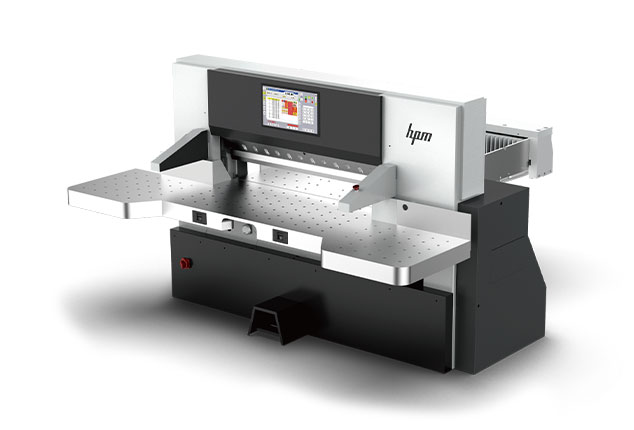
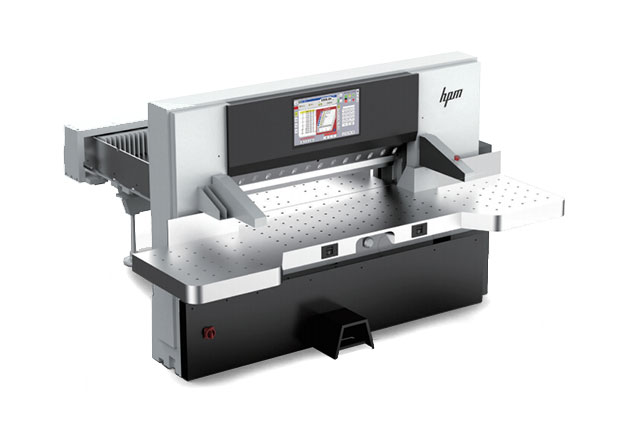
When considering paper cutting machine options, similar tradeoffs apply. For high-volume operations, a dedicated cutter with high precision may complement a slitting line. Conversely, for mixed-production, a versatile paper loader or paper unloader can improve workflow efficiency.
Fit by Use Case: Matching Machine to Your Application
Selecting the right packaging machinery depends on your specific production environment. Below are three common use cases with recommended solution types.
- High-Volume, Single-Format Production: If you run the same package size and material for long periods, prioritize speed and automation. A dedicated high-speed wrapper or slitter with minimal changeovers is ideal. Look for suppliers with strong packaging expertise and proven reliability.
- Mixed-Product, Flexible Production: For facilities that handle multiple SKUs with frequent changeovers, choose modular machinery with quick-change features. A semi-automatic slitter or wrapper with adjustable guides and servo-driven settings reduces downtime.
- Low-Volume, High-Precision Jobs: Specialty converters or custom packaging runs require precise tolerances and gentle material handling. A manual or semi-automatic machine with fine adjustment controls may be better than a high-speed system that risks waste.
Additionally, evaluate the supplier's overall company background and after-sales support. A supplier with comprehensive service offerings can provide training and maintenance that enhance machine uptime. Also consider their sustainability practices, as energy-efficient machines reduce operating costs and environmental impact.
FAQ
What should buyers understand first about packaging machinery?
Start by defining your production requirements: volume, material types, package formats, and available floor space. Then establish a budget that includes installation, training, and ongoing maintenance. Avoid focusing solely on purchase price; total cost of ownership is more important. Also, verify that the supplier holds relevant certificates for quality and safety standards.
How can teams reduce selection risk?
Use a structured comparison process: create a weighted scoring matrix based on your criteria (speed, precision, flexibility, cost). Request performance data and references from manufacturers. Visit the supplier's facility or request a trial run with your materials. Check reviews and ask about spare parts availability. A supplier with demonstrable production capacity for packaging lines can better meet delivery deadlines.
What are common mistakes in machinery selection?
Overemphasizing speed while ignoring changeover time; buying too much automation for low-volume runs; neglecting to account for material waste during setup; and failing to plan for future growth. Also, some buyers skip validation of electrical and pneumatic requirements at their site.
How do I compare different machine configurations?
Create a specification checklist covering speed, width, material types, automation level, footprint, power requirements, and optional features. Use a comparison table like the one above. For additional guidance, refer to resources on efficiency solutions that address common production bottlenecks.
Conclusion
Packaging machinery selection is a multi-dimensional decision. By focusing on evaluation criteria, understanding performance tradeoffs, and matching machine type to your use case, you can make an informed choice. Use the comparison table as a starting point, but always validate numbers against your actual production environment. A neutral, evidence-based approach reduces risk and leads to a solution that balances speed, flexibility, cost, and precision. Remember to consider the supplier's technology innovation track record and overall Production Capacity solution to ensure long-term support and scalability.